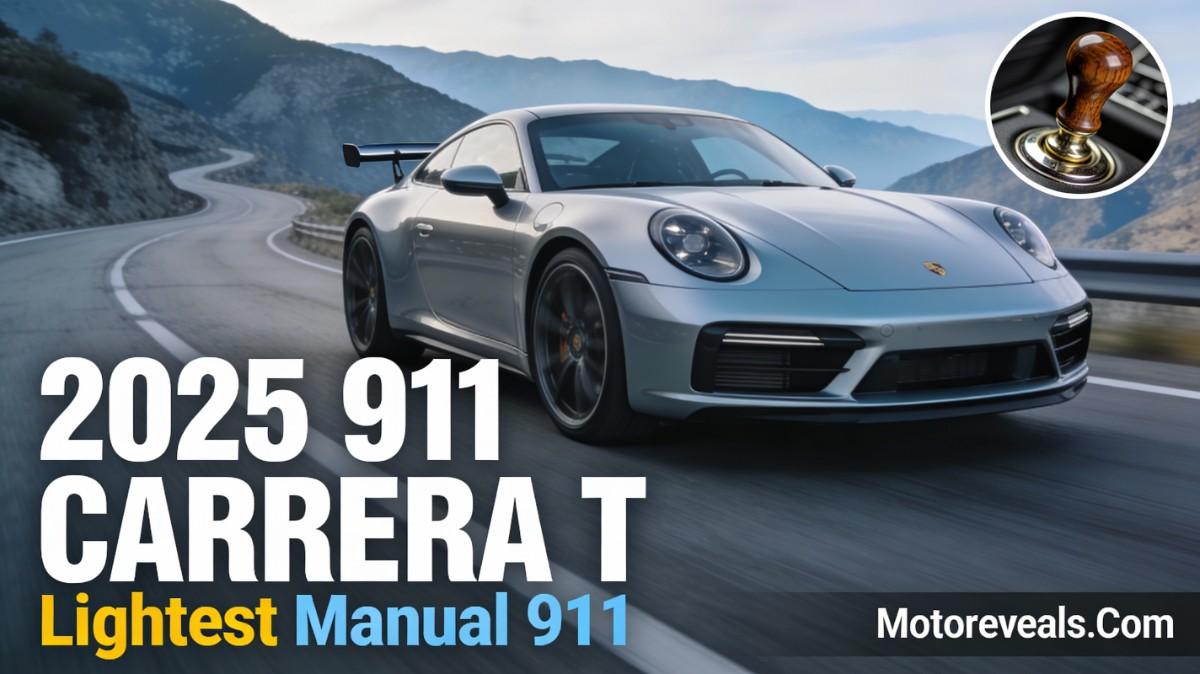
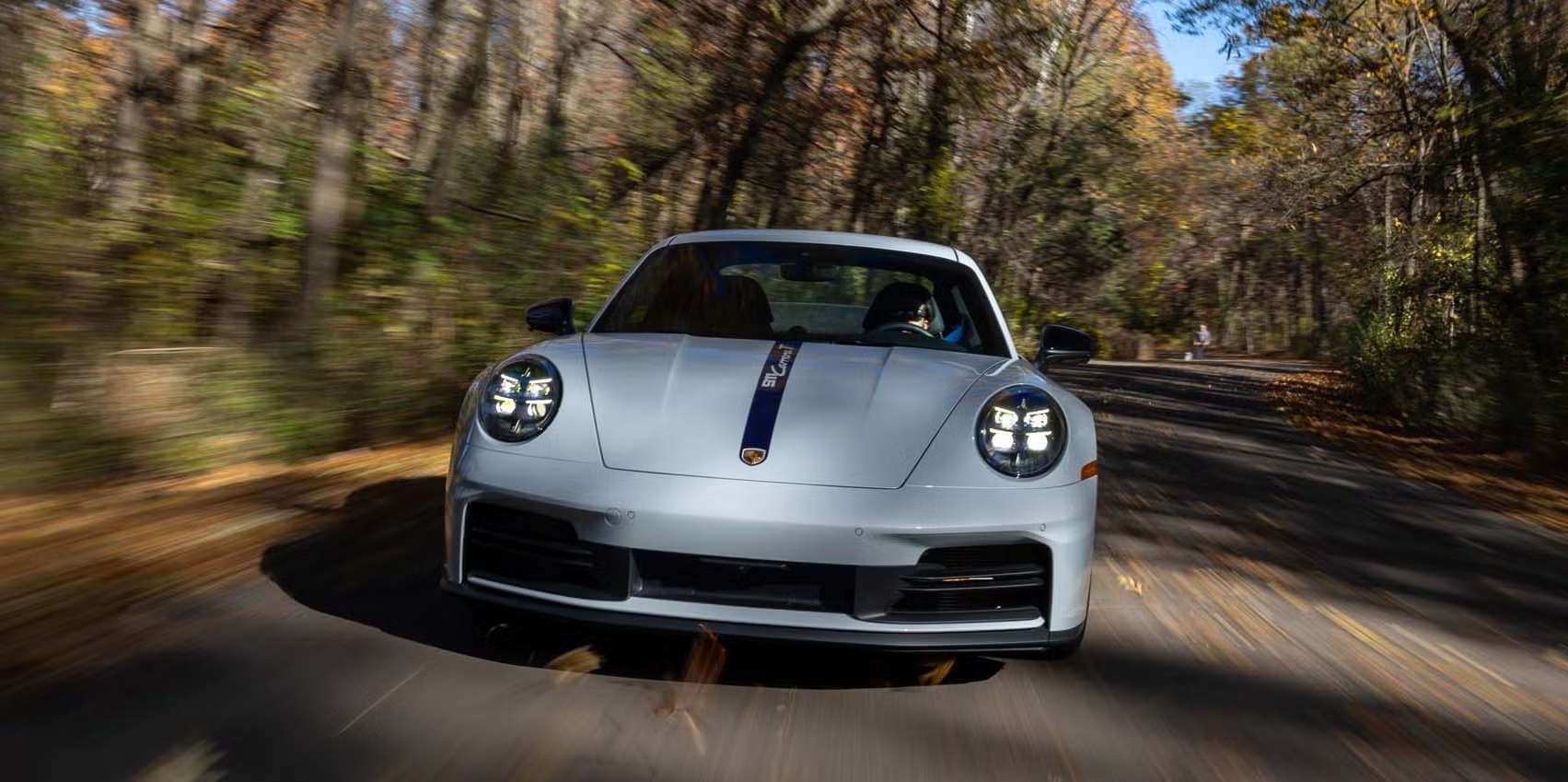
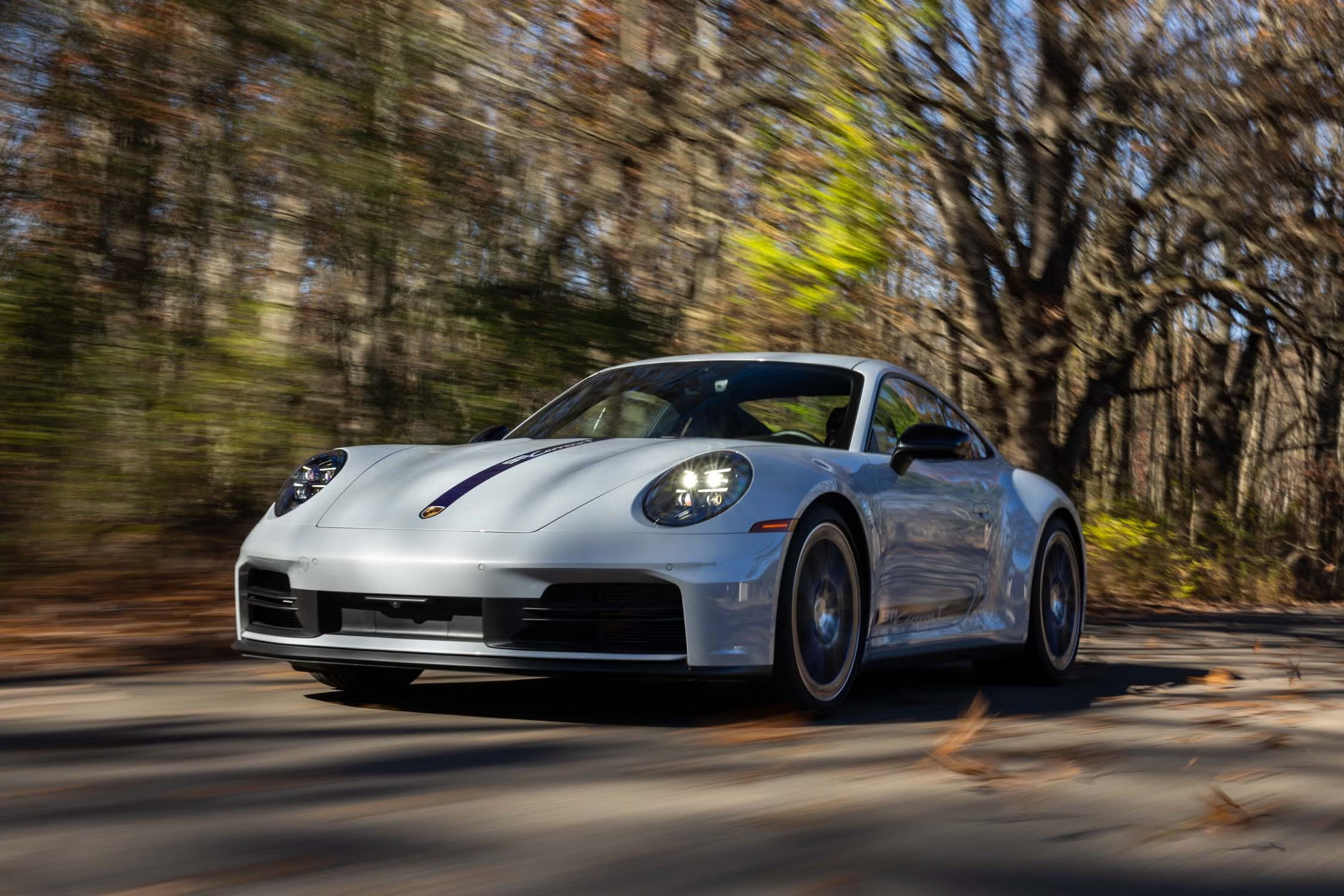
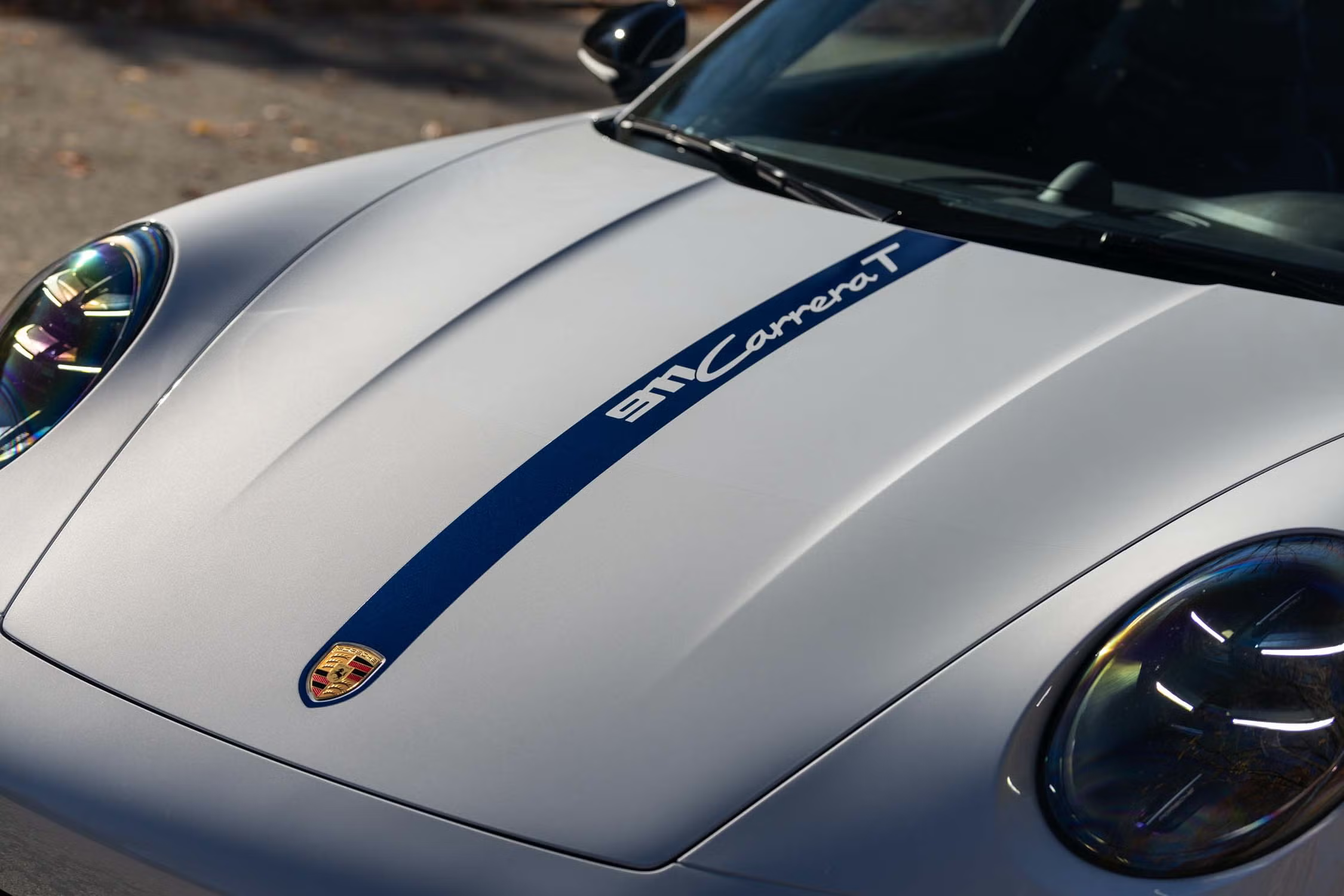
The 911 has always been about continuity as much as speed. Shapes evolve, lap times drop, yet the basic experience—flat-six behind you, steering alive in your hands—remains familiar. The 2025 Porsche 911 Carrera T leans hard into that heritage, not with more power or wild aero, but with something much smaller and more tactile: a wooden shift knob the size of a golf ball. Touch it and you’re holding a direct link to Porsche’s endurance‑racing glory days, and a clue to what this car is really about.
This isn’t the fastest or most powerful 911 you can buy. It’s not trying to be. The Carrera T exists to remind you that the most memorable driving experiences are often about feel, not figures.
2025 Porsche 911 Carrera T Road Test (13)
2025 Porsche 911 Carrera T Road Test (12)
2025 Porsche 911 Carrera T Road Test (11)
2025 Porsche 911 Carrera T Road Test (10)
2025 Porsche 911 Carrera T Road Test (9)
2025 Porsche 911 Carrera T Road Test (8)
2025 Porsche 911 Carrera T Road Test (7)
2025 Porsche 911 Carrera T Road Test (5)
2025 Porsche 911 Carrera T Road Test (6)
2025 Porsche 911 Carrera T Road Test (4)
2025 Porsche 911 Carrera T Road Test (3)
2025 Porsche 911 Carrera T Road Test (2)
2025 Porsche 911 Carrera T Road Test (1)
Interior Feel and Driver Engagement
Settle into the deeply contoured seat, pull the door shut with a reassuring thunk, and the cabin immediately feels more focused than flashy. The driving position is classic 911: low but not buried, pedals ideally placed, and the view over the gently sloping hood framed by front fenders that rise just enough to give you a sense of where the car begins and ends.
Your left hand brushes a familiar detail—a start button on the left side of the steering column, echoing the days of Le Mans-style running starts. But it’s your right hand that discovers the most important piece of the T’s personality: that walnut shift knob. It’s warm, smooth, and just rough enough in the grain to feel organic, not machined. Porsche first turned to wood for weight savings in the early 1970s, bolting mahogany knobs onto the shifters of 908/03s and 917s to shave a few grams in pursuit of every last edge. The T’s knob is walnut, not mahogany, but the message is the same: this car is built around the act of shifting.
The six‑speed manual it commands is the only transmission offered, making the T one of just two 911 variants—alongside the GT3—that still insist you use a clutch pedal. The linkage is short and precise, with a light mechanical notch as you guide the lever across the gate. Throws are compact but not overly tight; there’s enough movement to feel every change, but never so much that it becomes vague.
Instrumentation is a mix of modern and traditional. There’s plenty of digital real estate and the usual array of configurable screens, but the overall impression is businesslike rather than dominated by tech. Materials are high-grade without crossing into ostentation: leather, metal, and discreet trim choices remind you this is a driver’s car first, a luxury object second. It’s not spartan, but neither is it trying to distract you from the job of driving.
Noise is very much part of the engagement. At idle, there’s a subdued flat‑six burble. Lean on the throttle and the cabin fills with intake whoosh, turbo whistle, and a hard‑edged exhaust note that grows into a full‑throated roar as the tach sweeps toward 7500 rpm. At full load, the sound level borders on antisocial; at a steady cruise, it’s still louder than many buyers might expect. But if you’re here for serenity, you’ve picked the wrong 911.
2025 Porsche 911 Carrera T Road Test
2025 Porsche 911 Carrera T Road Test
Weight-Saving Measures and Chassis Setup
The Carrera T is a reminder that lightness is a mindset, not a number. On the scales, our coupe lands at 3355 pounds, making it the lightest 911 in the range this side of the GT3 and GT3 RS. The headline figure—roughly 117 pounds less than a comparably equipped base Carrera—is only part of the story; it’s where the pounds have been removed that matters.
Porsche attacks mass in several ways:
Thinner glass reduces weight high in the body, lowering the center of gravity and cutting inertia in roll.
Less sound deadening strips out what the factory considers unnecessary insulation, adding a little harshness but letting more of the car’s mechanical life reach the cabin.
Rear seat delete comes standard, replacing the 911’s token back seats with a simple parcel shelf. They can be added back at no cost, but the message is clear: this is a two‑seater with priorities.
The manual transmission itself weighs less than the base car’s eight-speed dual‑clutch automatic, chipping away further at the curb figure.
Underneath, the chassis gets hardware normally found higher up the range. Adaptive dampers and the Sport Chrono package are standard. Ride height is reduced by 0.4 inch, and the springs, anti‑roll bars, and damping curves are tuned specifically for the T. There’s rear‑axle steering to trim the car’s responses at both low and high speeds, and a dedicated sport exhaust gives it a more vocal character than the base model.
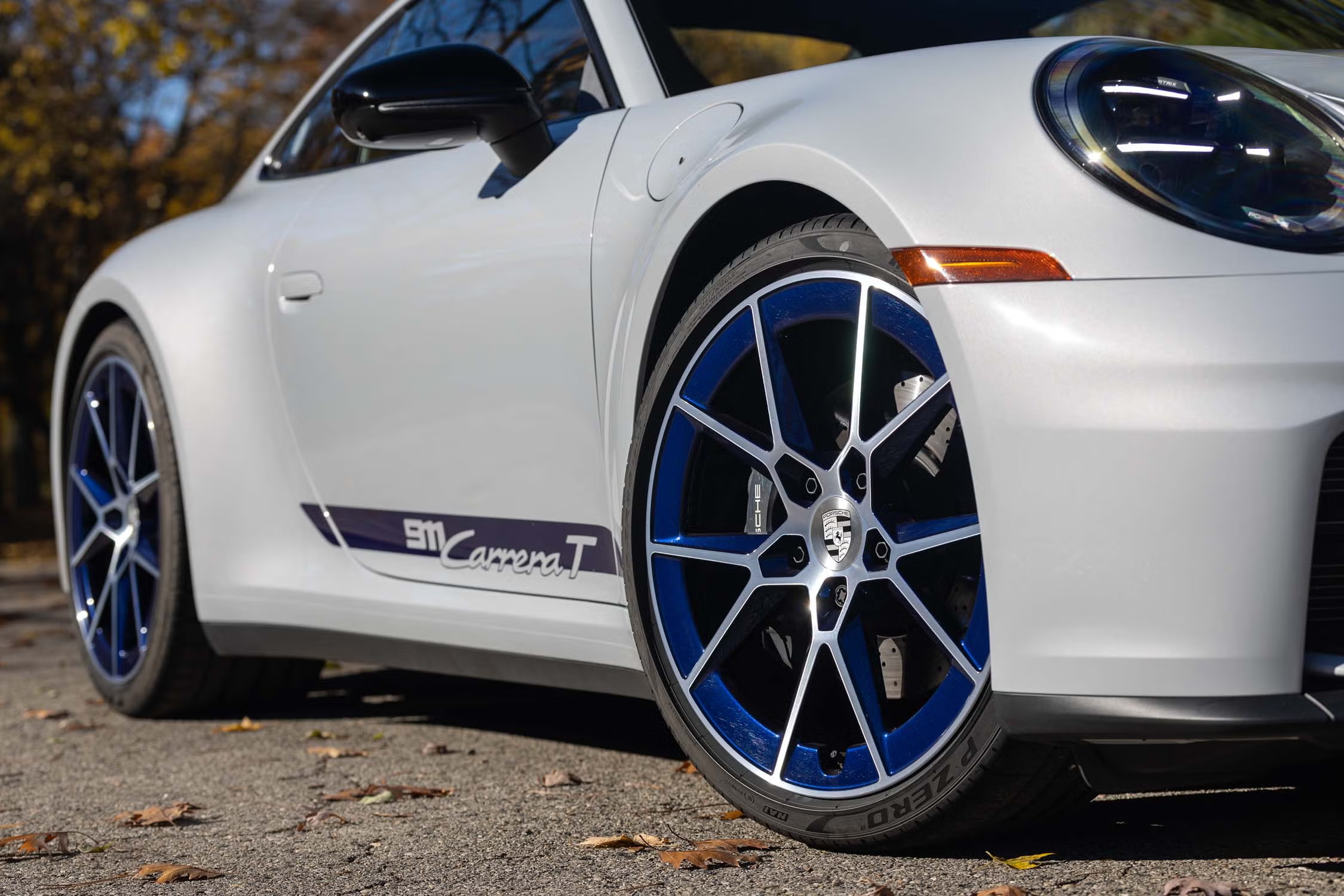
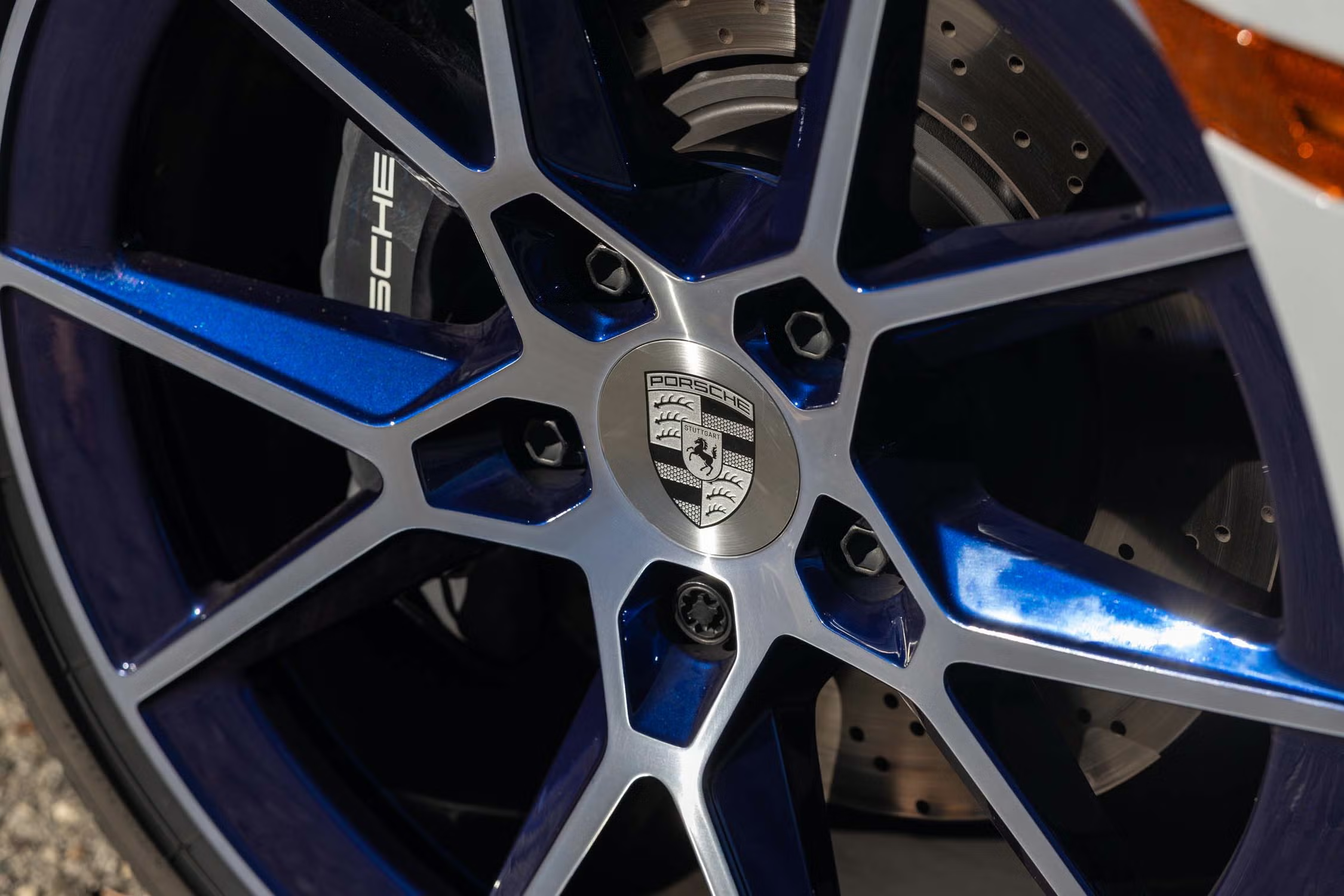
Rolling stock is serious: 20‑inch front and 21‑inch rear wheels wear 245/35ZR‑20 and 305/30ZR‑21 Pirelli P Zero PZ4 summer tires. That footprint, combined with the lower mass and carefully tuned suspension, sets the stage for the handling and grip that define the T’s personality.
2025 Porsche 911 Carrera T Road Test
2025 Porsche 911 Carrera T Road Test
Engine Performance and Real-World Acceleration
On paper, the Carrera T’s twin‑turbocharged 3.0‑liter flat‑six doesn’t shout. Output is 388 horsepower at 6500 rpm and 331 pound‑feet of torque from 2000 rpm, essentially matching the numbers of the base Carrera. In an era of 600‑plus‑horsepower sedans, those figures risk looking modest.
From the driver’s seat, modest is the last word that comes to mind.
Launch the T cleanly—no brutal clutch abuse, just a firm engagement and a decisive throttle input—and it will reach 60 mph in 3.7 seconds and cover the quarter‑mile in 12.0 seconds at 118 mph. Those are serious numbers by any standard; they put the car right alongside far more powerful machines in a straight line. Yet the way it delivers that performance feels distinct from its dual‑clutch siblings.
The manual encourages you to stay engaged. Keeping the engine above its lazy zone is a game in itself: downshift early, keep the revs hovering in the mid-range, and the turbos are always awake. In lower gears, the engine responds to partial throttle with a clear, immediate surge; dig deeper, and it lunges forward with a rising, almost urgent note that belies the spec sheet.
Where the dual‑clutch Carrera fires off brutal, launch‑control starts and snaps off shifts quicker than any human, the T trades a few tenths for involvement. You feel each ratio change. You time your pulls to the rise and fall of the engine. The numbers might be slightly slower, but the emotional pace—the sense of how quickly you’re traveling—feels every bit as intense, if not more so.
2025 Porsche 911 Carrera T Road Test
2025 Porsche 911 Carrera T Road Test
Handling, Steering, Braking, and Ride
The Carrera T’s real party trick isn’t its acceleration; it’s what happens the moment the road stops being straight.
Turn the small, dense steering wheel into a fast corner and the front axle responds with a precision that borders on telepathy. Effort builds progressively as the load comes up, and there’s a clear sense of what the front tires are doing long before you reach the limits of grip. At that limit, the T is capable of 1.07 g of lateral acceleration, and it feels every bit as secure as the number suggests. You lean into a long sweeper and the car just hunkers down and goes where you point it, the rear axle following obediently, ready to tighten or relax the line with small adjustments to throttle and steering.
The weight reduction and specific chassis tuning pay off most in quick transitions. Flick left then right through a sequence of bends and the T changes direction with a kind of eager lightness that heavier 911s can’t quite match. It’s not nervous; it’s simply alert, shrinking around the driver as speeds increase.
Braking performance is equally confidence‑inspiring. Pedal travel is short, and response is linear. From 70 mph, the T stops in 143 feet; from 100 mph, it needs 282 feet. More important than the numbers, the car remains composed and straight under full deceleration, with just enough pitch to telegraph what’s happening without unsettling the chassis.
Ride quality is firmer than a base Carrera but not punishing. At highway speeds, expansion joints and patched sections of pavement send sharp reports through the low‑profile Pirellis, but the structure feels solid and free of rattles. On a smooth back road, the damping strikes a near‑ideal compromise, holding the car tightly enough to keep it flat without losing the ability to breathe over small undulations.
Noise, however, is always present. Measured at 90 decibels under full load, the cabin is loud enough at full throttle to make conversation an afterthought. Settle down to a steady 70 mph and the sound level drops, but it’s still what most people would call “busy.” For a long highway slog, some drivers may wish for more isolation—or a good set of earplugs.
HIGHS and LOWS
HIGHS:
Steering that feels like an extension of your forearms; a manual transmission that makes every mile an event; overachieving twin‑turbo flat‑six; genuine weight savings that you can feel in every corner; that wooden shift knob and the racing history it represents.
LOWS:
Cabin loud enough to flirt with hearing loss over long stints; still a very expensive way to chase purity; highly focused seats that can make entry and exit a chore; the temptation to drive it the way it begs to be driven, even when the road (and the law) say otherwise.
Verdict: A Manual Love Letter to the 911’s Soul
The 2025 Porsche 911 Carrera T is not the quickest 911, nor the most powerful, nor the most flamboyant. That’s precisely why it’s one of the most compelling.
By pairing the base Carrera’s approachable power with a manual-only gearbox, meaningful weight savings, carefully calibrated chassis hardware, and a cabin tuned for the driver rather than the passenger, Porsche has created a car that captures the essence of what a 911 is supposed to be. The T isn’t trying to impress with outright numbers. It’s trying to convince you that fine adjustments to steering, throttle, and shift timing are still worth caring about.
Every time your hand closes around that walnut shift knob, you’re reminded that this is a car shaped by decades of racing and engineering decisions made in the pursuit of feel over flash. It’s loud, expensive, and uncompromising in all the ways that matter to people who still think driving should be an active verb.
Fine driving, like fine dining, has never been cheap. But if you’re willing to pay for an experience rather than just performance, the 911 Carrera T delivers one of the purest, most satisfying expressions of the modern 911 formula you can buy.