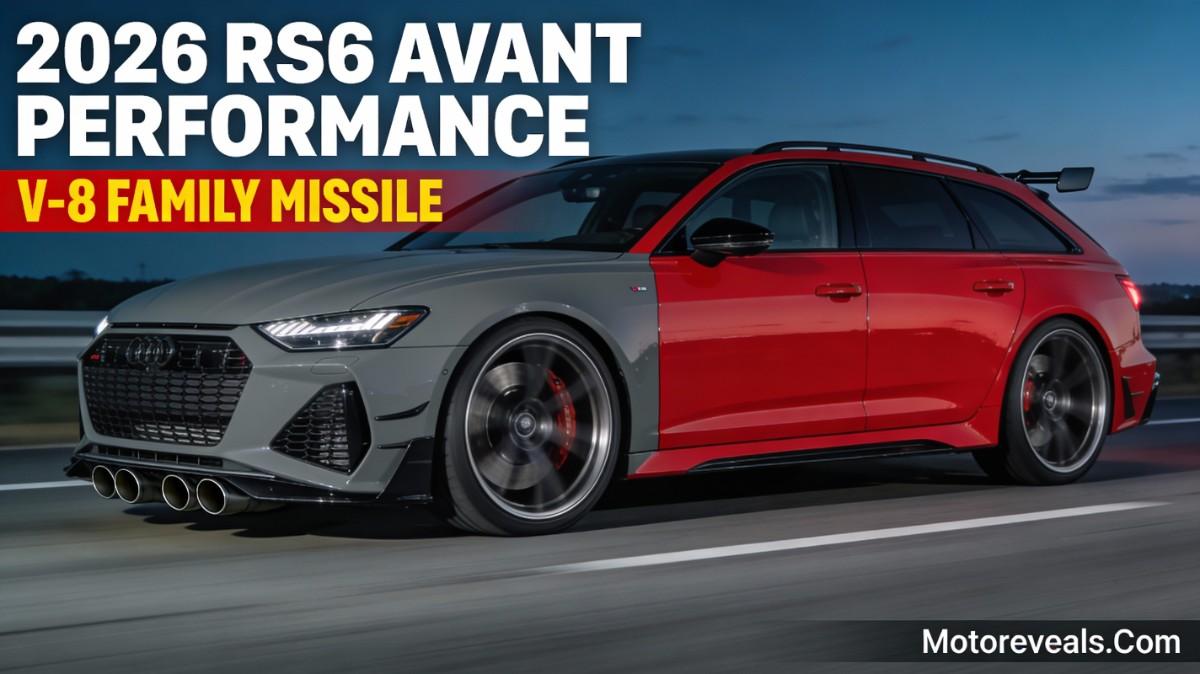
If you made driving enthusiasts design the perfect family hauler, they wouldn’t sketch an SUV. They’d draw something that looks a lot like the 2026 Audi RS6 Avant Performance: low, long, unapologetically wagon‑shaped, and powered by an engine that makes the school‑run feel like an excuse for a fly‑by on the autobahn. It’s the answer to the question: “What if my dream car also had to carry two kids, a dog, and a week’s worth of groceries?”
This RS6 exists precisely because some of us are over towering crossovers and their “command seating positions.” Putting the car back down near the road restores a sense of connection, improves your passengers’ odds against motion sickness, and—when you bolt on big tires and serious hardware—turns a family wagon into a genuinely exciting daily driver.
Audi RS6 Avant (16)
Audi RS6 Avant (15)
Audi RS6 Avant (14)
Audi RS6 Avant (13)
Audi RS6 Avant (12)
Audi RS6 Avant (11)
Audi RS6 Avant (10)
Audi RS6 Avant (9)
Audi RS6 Avant (8)
Audi RS6 Avant (7)
Audi RS6 Avant (6)
Audi RS6 Avant (5)
Audi RS6 Avant (4)
Audi RS6 Avant (3)
Audi RS6 Avant (2)
Audi RS6 Avant (1)
Why This Wagon Exists in an SUV World
The RS6 Avant Performance is Audi’s rebuttal to the idea that performance and practicality require a tall silhouette. In a market stuffed with 600‑hp SUVs, Audi chose to keep its flagship family missile low and sleek. It competes with vehicles like the BMW M5 Touring and Mercedes‑AMG’s hot E‑class wagons, but it also quietly calls out high‑output crossovers: “You have the ride height, we have the stance.”
On paper, the numbers are serious. As tested, the RS6 Avant Performance starts at $133,295, with the example in question loaded up to $161,300 including carbon‑ceramic brakes, 22‑inch wheels, and various luxury and driver‑assist packages. That’s painful money, but it buys a car that can do almost everything: haul, hustle, and still fit into the “cars only” section of a parking structure.
Looks: Low, Wide, and Loud (When You Want)
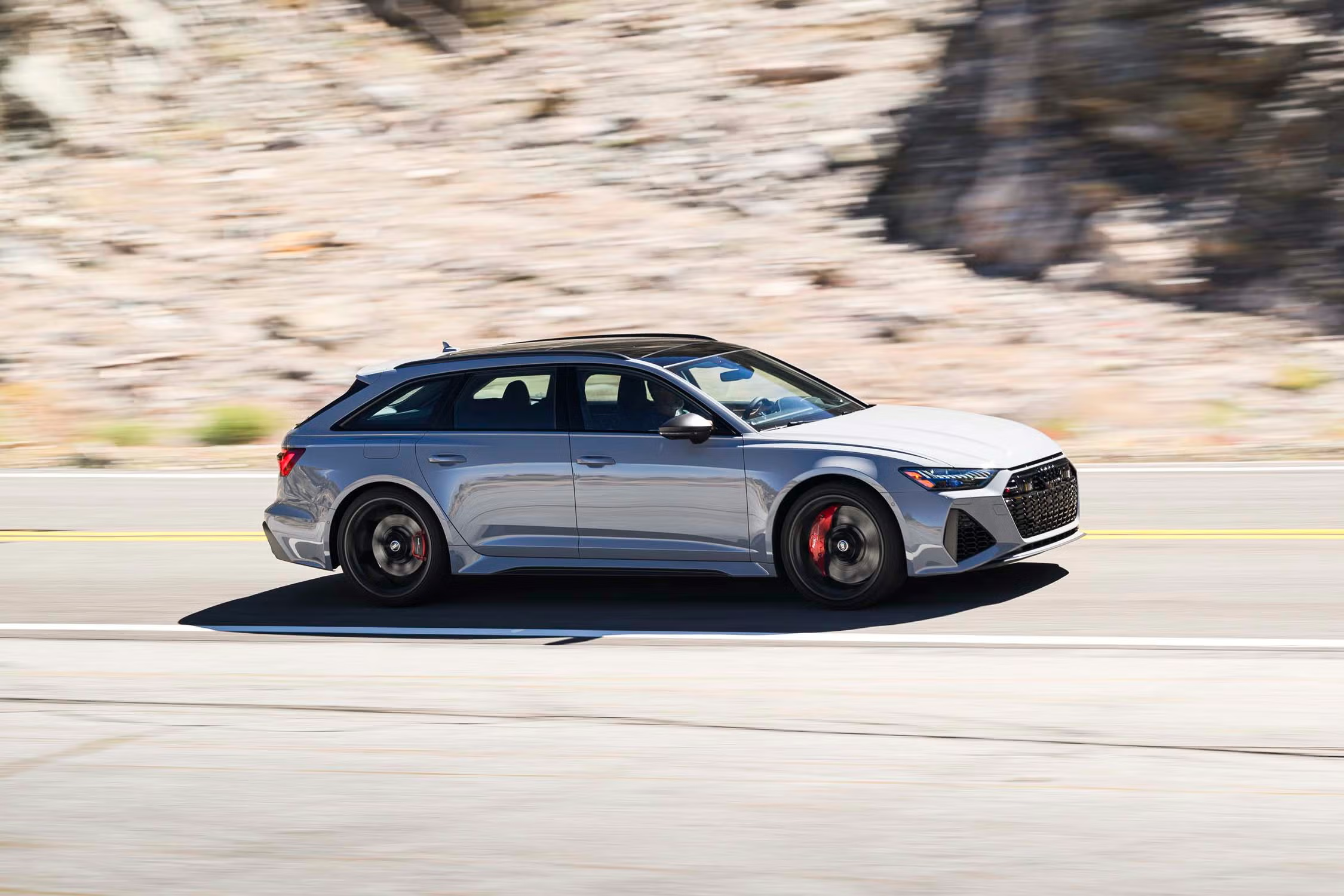
Visually, the RS6 Avant leans hard into its role as the anti‑SUV. It sits low and menacing, with muscular fender flares, gaping intakes, and a stance that makes it look fast even when it’s parked in front of a preschool. There’s none of the faux‑off‑road pretense found in performance crossovers—this is a road car, and proud of it.
Open up the optional RS Sport exhaust and the looks match the soundtrack. At idle, there’s a muted V‑8 thrum; lean on the throttle and it turns into a properly raucous twin‑turbo roar that sounds more “autobahn left lane” than “suburban errand run.” The overall presence is that of a car that always seems to be storming somewhere, even when it’s just idling in the school pickup lane.
Powertrain: Twin‑Turbo V‑8, All the Right Noises
Under the hood lives a 4.0‑liter twin‑turbocharged DOHC V‑8 making 621 horsepower at 6000 rpm and 627 lb‑ft of torque at 2300 rpm. Power is sent through an eight‑speed automatic to all four wheels via Audi’s quattro all‑wheel drive.
Numbers aside, what matters is how it feels. With launch control engaged, the RS6 squats and goes with a relentless surge rather than a high‑strung shriek. There’s no drama in the drivetrain—just a deep shove in your back, all the way through legal speeds and well beyond. You feel the turbos, but they don’t dominate the experience; the V‑8’s torque plateau means you rarely find yourself waiting for boost.
Instrumented testing tells the rest:
0–60 mph:3.2 seconds
Quarter‑mile:11.5 seconds at 121 mph
130 mph:13.5 seconds
150 mph:19.2 seconds
Against the BMW M5 Touring, which reaches 60 mph in 3.1 seconds and runs the quarter in 11.0 at 129 mph, the Audi is a half‑step behind in a drag race. But the context matters: the M5 is a heavier plug‑in hybrid with 717 hp and some SUV‑like mass, carrying about 624 pounds more than the RS6’s 4857‑pound curb weight. The BMW is quicker, but it pays for it in complexity and heft.
Compared with the 2021 RS6 Avant, the new car’s extra power shows up more at higher speeds than in the first 60 mph. The older car hit 60 in 3.1 seconds, but the 2026 car pulls ahead by 130 and 150 mph thanks to that added top‑end punch. Different test conditions (91 vs 93 octane and surface friction) likely explain the small launch discrepancy; either way, the current RS6 is still brutally fast in any context.
Audi RS6 Avant Exterior
Handling, Steering, and Braking: Wagon That Bends Physics
On paper, the RS6 Avant Performance shouldn’t be a handling hero. It carries 55.1 percent of its weight on the front axle, and it’s rolling on massive 285/30ZR‑22 Continental SportContact 7 tires at all four corners. Audi didn’t stagger the tires—no skinny fronts here—so grip is consistent all around.
The payoff shows up on the skidpad: the 2026 car pulls a full 1.00 g of lateral acceleration, a big jump from the 0.94 g we saw from the 2021 RS6 on Pirelli P Zero PZ4s and ahead of the heavier M5 Touring’s 0.92 g. That’s serious sports‑car territory from a five‑passenger wagon with 70 cubic feet of maximum cargo space.
The magic comes from a combination of all‑wheel steering, a new lighter and more compact center differential, and a torque‑vectoring rear differential. Point the RS6 at an apex and it just rotates, with little of the nose‑heavy understeer you’d expect from the spec sheet. Roll into the throttle and the rear diff sorts out traction so efficiently that you’re thinking about the next braking point before you’ve finished exiting the current corner.
Braking performance borders on outrageous. With the optional carbon‑ceramic brakes (17.3‑inch front, 14.6‑inch rear rotors), the car stops from 70 mph in just 140 feet, 20 feet shorter than the older RS6 we tested with iron rotors. Multiple full‑ABS stops returned the same figure with no fade, underscoring the benefit of the tires and brake package working together. The 100‑to‑0 mph stop takes 304 feet, impressive for a wagon this heavy and capable of 190 mph.
Audi RS6 Avant Interior
Ride Quality and Everyday Driving
The impressive part is that the RS6 doesn’t punish you for its numbers. The steering is quick at 2.2 turns lock‑to‑lock, and rear‑wheel steering turns opposite at low speeds to help tighten up U‑turns and parking‑lot maneuvers. It still feels like a long car in tight spots, but the rear‑steer keeps it from feeling unwieldy.
Despite the 22‑inch wheels and low‑profile tires, the ride is firm rather than abusive. You feel the sharp edges of big potholes and expansion joints, but the body itself is well isolated from the chaos below. Audi’s air‑spring setup here strikes a more livable balance than some steel‑spring “Performance” suspensions; the car feels tied down without shaking the fillings out of your passengers. Lightweight wheels—about 11 pounds less unsprung mass per corner on this specific spec—undoubtedly help.
Noise levels are part of the charm. With the RS Sport exhaust open, the V‑8 sounds every bit the part of a performance flagship; close it down and the car is civilized enough not to wake the neighborhood at 6 a.m. Tire thrum and wind noise are present but not intrusive—your family will complain more about your right foot than the cabin acoustics.
Cabin, Tech, and Family Usability
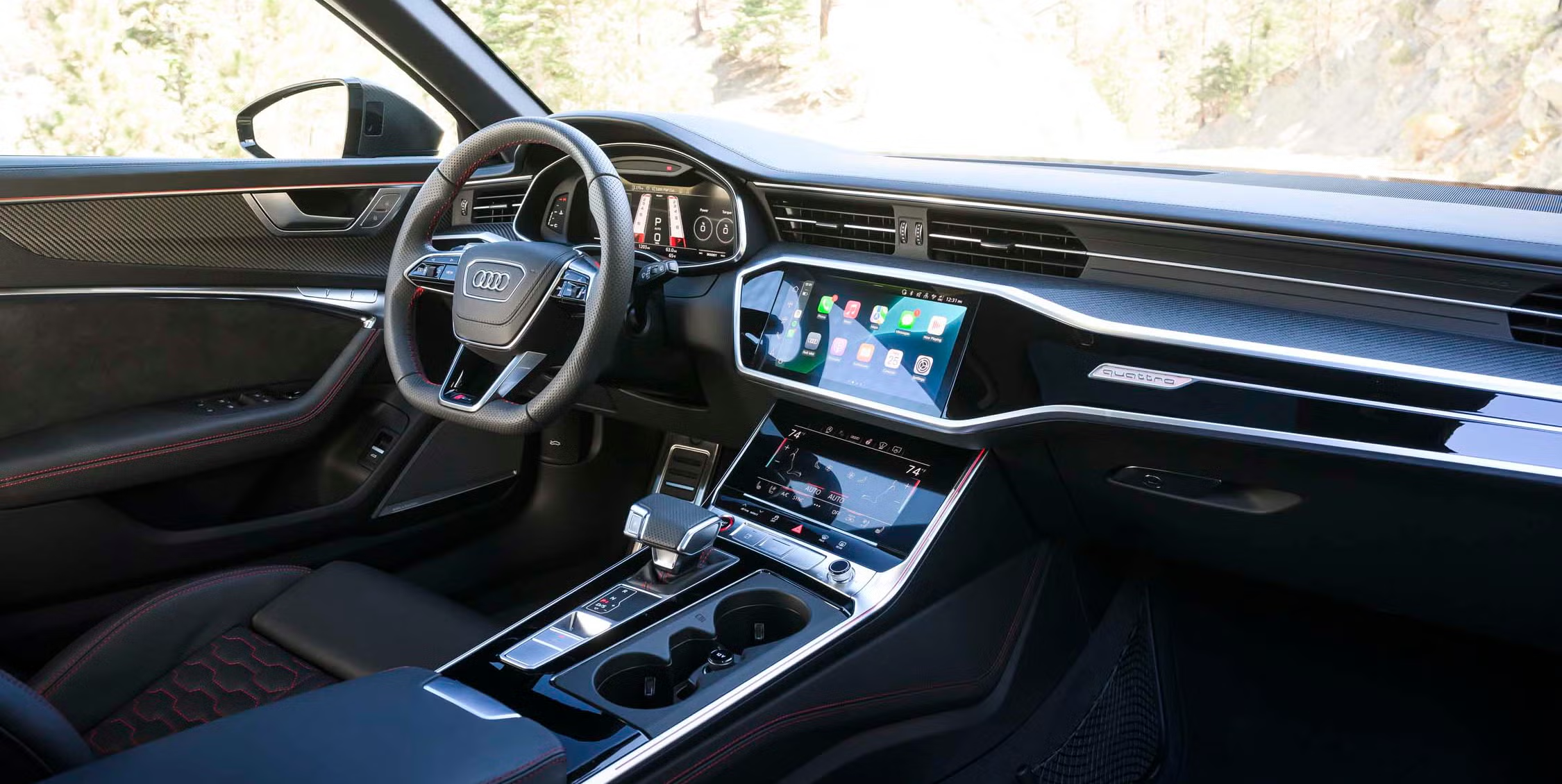
Inside, the RS6 Avant shows its platform age in subtle ways. The design still looks modern, but the sea of piano‑black trim and reliance on haptic glass panels for many functions make it feel a half‑step behind Audi’s newest interiors. It’s better than some full‑touch layouts—Audi still leaves a few physical controls—but anyone who loves simple knobs and buttons will grumble more than once.
There are upsides. Dolby Atmos audio arrives for 2026 via in‑car Amazon Music or Tidal, turning the cabin into a rolling concert hall if you’re willing to pay for the right streaming and audio package. Screen count is high, but so is display quality; the instruments, infotainment, and secondary panels all look sharp and respond quickly.
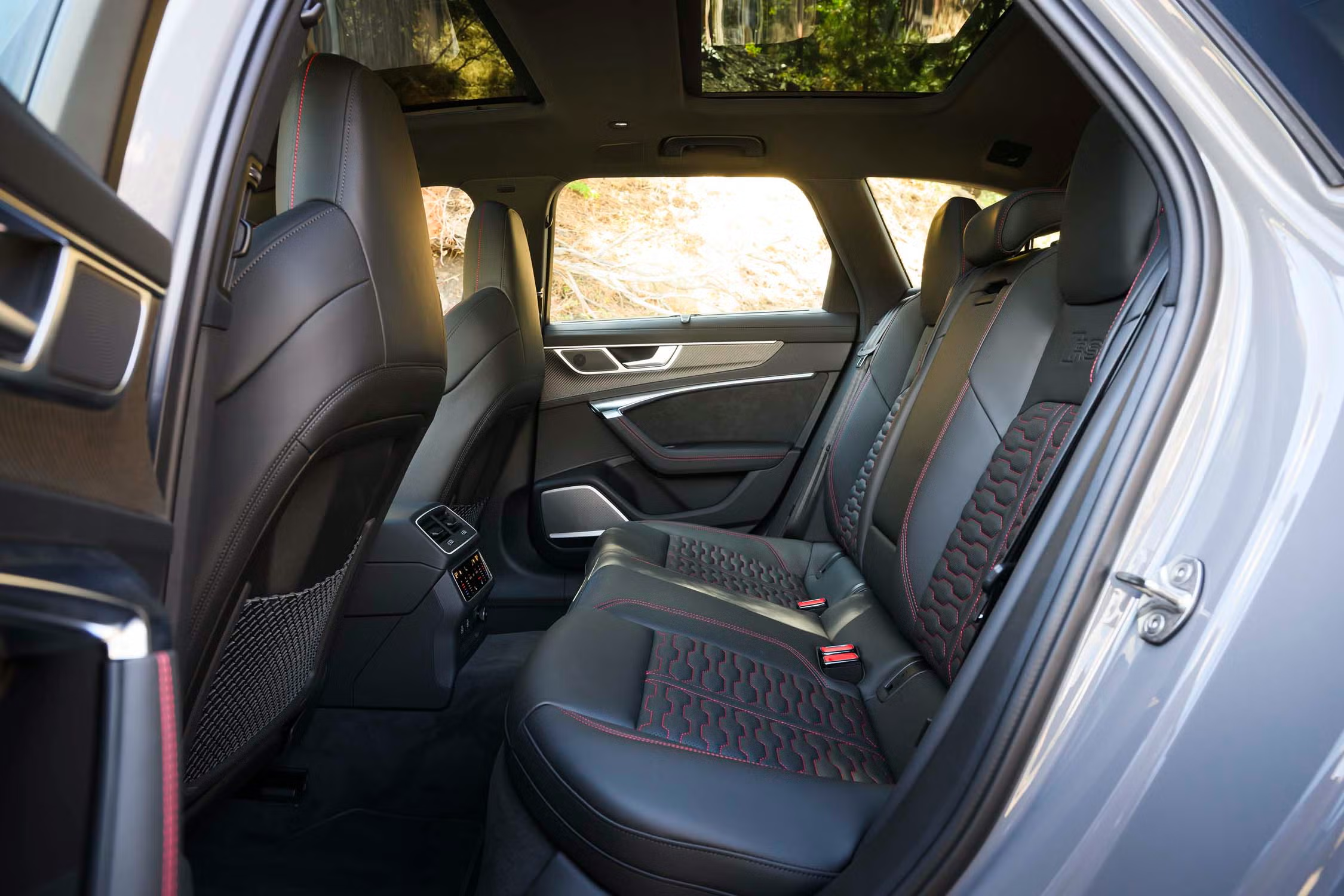
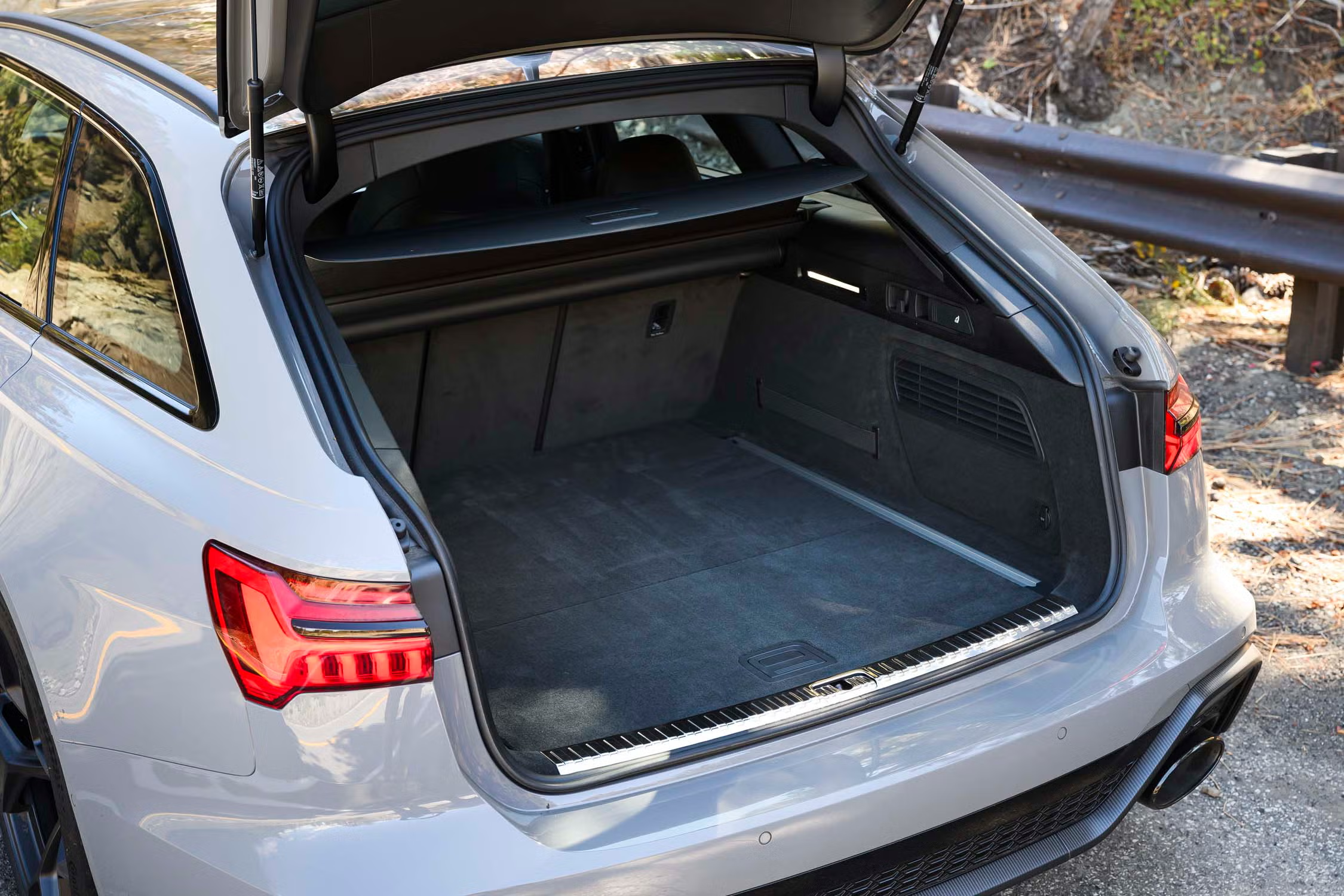
Space is where the wagon layout pays real dividends. Front and rear seating is generous—adults fit happily in back—and there’s about 30 cubic feet of cargo space behind the rear seats, expanding to 70 cubic feet with the rear seatbacks folded. Load‑in height is a car‑like 24 inches, which makes heaving in strollers, sports gear, or the inevitable warehouse‑club haul noticeably easier than in a tall SUV.
For a family of four, this really can be a one‑car solution: school runs, road trips, Home Depot runs, all handled with the same vehicle that turns an on‑ramp into a private hillclimb.
Audi RS6 Avant Interior
Audi RS6 Avant Interior
HIGHS and LOWS
HIGHS:
V‑8 sound and fury with real character; huge grip and exceptional braking; wagon body that actually hauls things; ride that’s firm but livable; feels special at 25 mph and 125 mph alike.
LOWS:
Thirsty—EPA combined 16 mpg and 18 mpg observed; touchscreen and haptic control overload; more piano‑black trim than anyone asked for; starting at $133,295 and rising to $161,300 as tested.
Counterpoint: Reality Check from the Driveway
It’s easy to fall in love with the RS6 from behind the wheel. From the driveway, with a calculator, it’s tougher. That gas‑guzzler tax stings more knowing a similarly thirsty SUV can dodge it on a technicality, and the as‑tested price lives firmly in “fantasy garage” territory for most of us.
From a practical standpoint, though, it’s hard not to admire how thoroughly this thing covers the use‑case map. One editor imagines loading up kids, sports gear, and groceries with Carl Carlton’s “She’s a Bad Mama Jama” on the stereo, using the weekend errands as an excuse to revel in the V‑8. Another loves the way it drives but grumbles about navigating multiple screen‑dimming menus at night, wishing the car’s tech were as straightforward as its power delivery.
Verdict: The Wagon Enthusiasts Deserve, at a Price
The 2026 Audi RS6 Avant Performance is that rare car that hits both sides of the brain. Logically, it makes sense: it’s spacious, all‑weather capable, and versatile enough to replace both a performance car and a family crossover. Emotionally, it’s even better: a low, loud, devastatingly effective wagon that makes you look forward to every errand and every school run.
The downsides are real. It’s expensive enough to live mostly in dream garages, it drinks like a proper V‑8, and its interior controls can feel like an exam in touchscreen patience. But judged as what it is—a do‑it‑all hauler for people who still care about driving—the RS6 Avant Performance is one of the most compelling arguments against the SUV status quo.
If you measure cars by how they make you feel and what they can do, this is as close as it gets to having everything in one longroof. Just budget for fuel, carbon ceramics, and a healthy sense of humor when you sign the finance papers.