2026 Honda Pilot Gets Brawnier Face and Modern Tech Overhaul
Honda’s popular three-row SUV receives meaningful updates including standard 12.3-inch touchscreen, enhanced cabin refinement, and expanded standard equipment across all trims.
Honda has unveiled the refreshed 2026 Pilot ahead of its debut at the Los Angeles auto show, introducing updates that address owner feedback while keeping the SUV competitive in the increasingly technology-focused three-row segment. The fourth-generation Pilot has proven successful since its launch, becoming Honda’s fifth-best-selling model, and these changes aim to maintain that momentum through the mid-cycle point.
The updates focus on three primary areas: more aggressive exterior styling, significantly enhanced interior technology, and improved cabin refinement through additional sound insulation and steering calibration changes.
2026 Honda Pilot (12)
2026 Honda Pilot (11)
2026 Honda Pilot (10)
2026 Honda Pilot (8)
2026 Honda Pilot (9)
2026 Honda Pilot (7)
2026 Honda Pilot (6)
2026 Honda Pilot (5)
2026 Honda Pilot (4)
2026 Honda Pilot (3)
2026 Honda Pilot (2)
2026 Honda Pilot (1)
Tougher Exterior Styling
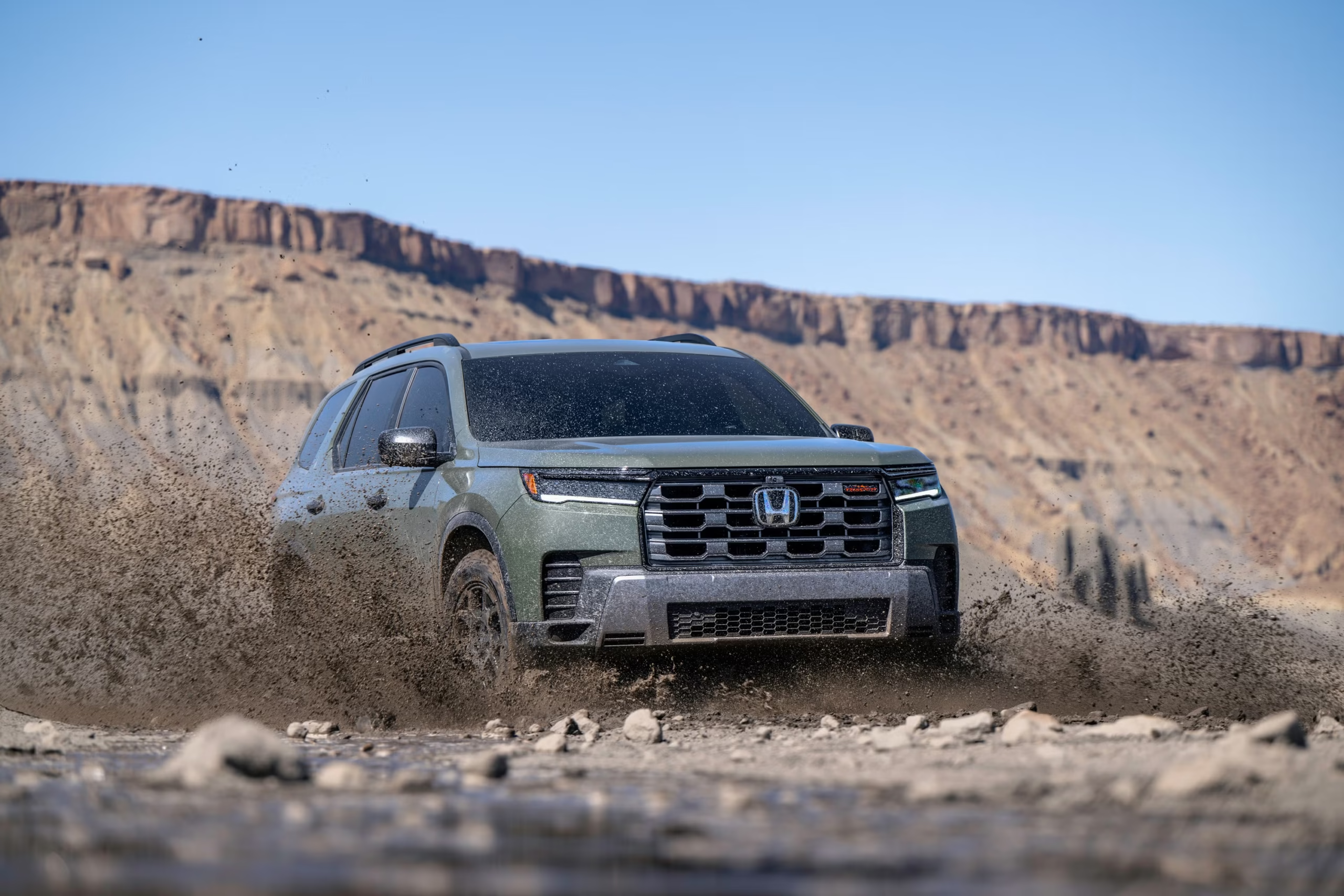
The Pilot’s front end receives the most substantial visual changes. The grille has been enlarged and squared off, giving the SUV a more imposing presence that better aligns with customer preferences in the segment. The front bumper adopts a blockier design, featuring a large rectangular lower intake section that creates a pronounced chin. Flanking this central element are more vertically oriented air ducts and repositioned fog lights that emphasize width.
These changes bring the standard Pilot lineup closer in appearance to the rugged TrailSport variant, which continues to be differentiated primarily by its distinctive gray grille finish. Bumper trim varies by model: the EX-L, TrailSport, Touring, and Elite receive silver-painted elements, while the Sport and Black Edition feature black trim for a more monochromatic appearance.
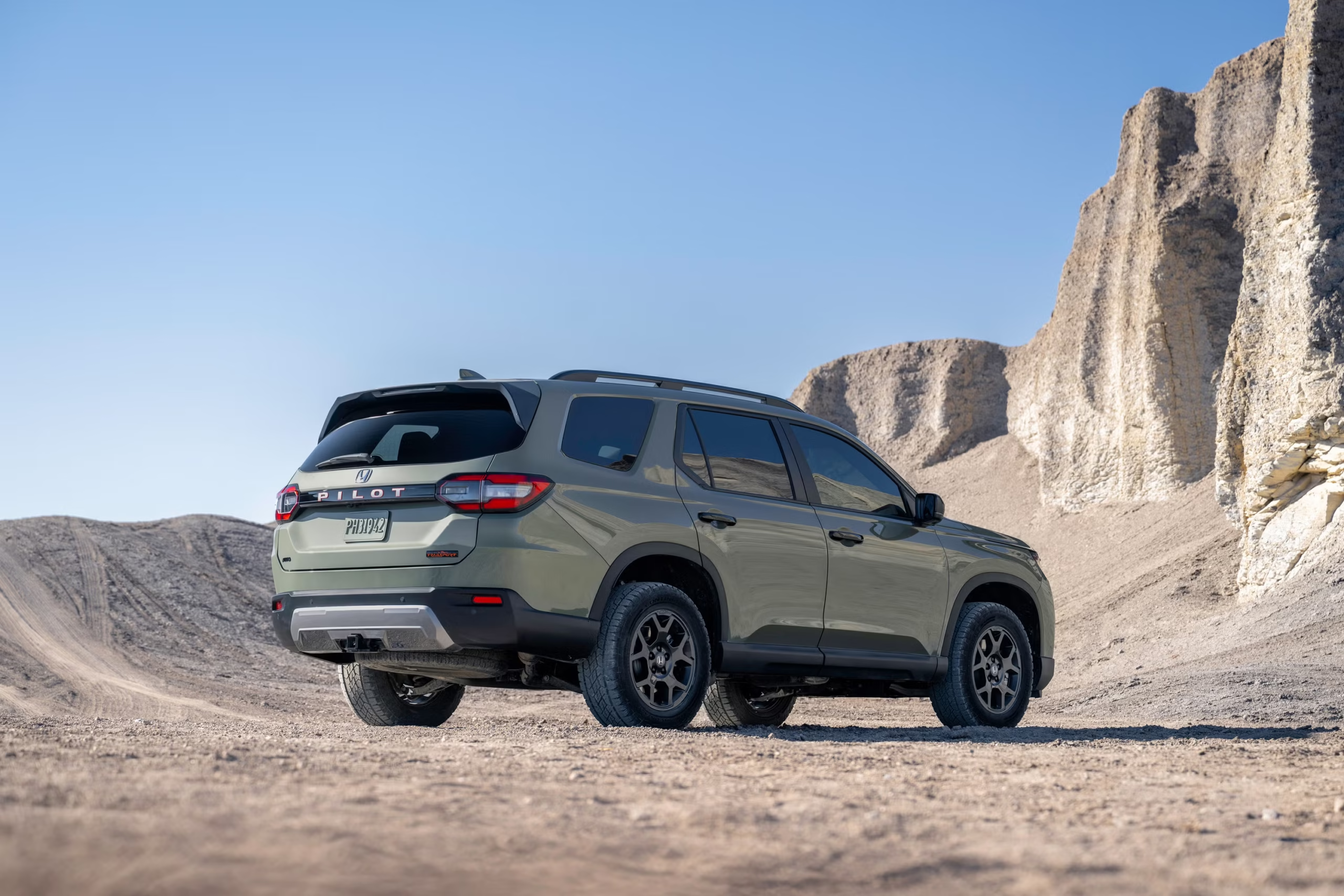
The rear fascia remains unchanged from the outgoing model. Two new exterior colors join the palette: Solar Silver Metallic and Smoke Blue Pearl, expanding choices for buyers seeking contemporary color options.
2026 Honda Pilot
Technology Leap Inside
The cabin receives Honda’s most significant technology update for the Pilot platform. A 12.3-inch touchscreen becomes standard equipment across the entire lineup, replacing the previous base 7.0-inch unit and mid-tier 9.0-inch screen. This change eliminates the frustrating tiered approach to technology that previously required buyers to upgrade trims significantly for modern screen sizes.
Similarly, the 10.2-inch digital gauge cluster—formerly exclusive to Elite and Black Edition trims—now comes standard on every Pilot. This democratization of technology across trim levels represents a meaningful improvement in value proposition and addresses competitive pressure from rivals offering large screens as standard equipment.
The infotainment system itself has been reworked beyond just screen size. The user interface receives optimization aimed at reducing the number of taps required to access frequently used functions. Wireless Apple CarPlay and Android Auto come standard, along with 5G Wi-Fi capability for improved connectivity. These aren’t revolutionary changes, but they represent the kind of refinement customers expect in a mid-cycle refresh.
Enhanced Driving Refinement
Honda claims improved steering feel through recalibration of the electric power steering system, specifically adding more weight at center for better highway composure. This addresses a common criticism of modern electric power steering systems that can feel overly light and disconnected during straight-line driving.
Cabin refinement receives attention through multiple sound-deadening measures. Semi-tempered door glass replaces the standard glass, reducing wind noise intrusion. Additional insulation in the doors and hood further dampens exterior noise. The Touring and Elite trims gain enclosed fender liners that block road noise from reaching the cabin—a detail typically reserved for luxury vehicles.
These changes won’t transform the Pilot into a luxury-level quiet cabin, but they should make longer drives more comfortable and reduce fatigue during extended highway use.
Expanded Standard Equipment Across Trims
Honda has added equipment across the lineup rather than reserving improvements exclusively for top-tier models. The base Sport trim gains a power tailgate as standard equipment—a feature that should have been included from the beginning, given the segment’s family-focused nature. The EX-L adds roof rails, providing practical utility for buyers who occasionally need additional cargo capacity.
Safety receives attention through a new post-collision braking system now standard on all Pilots. This feature automatically applies brakes after detecting a collision, helping to mitigate secondary impacts—a genuinely useful addition that addresses real-world accident scenarios.
2026 Honda Pilot
Trim-Specific Updates
The TrailSport, Pilot’s off-road-oriented variant, gains heated rear outboard seats and a new brown leather upholstery option with orange accent stitching. The previous Diffused Sky Blue Pearl paint—the color the TrailSport launched with—has been replaced by Ash Green Metallic, presumably responding to lukewarm customer reception.
The Touring trim receives interior updates including high-contrast seating accents and door panel stitching, along with a new brown leather option. More significantly, the Touring now includes the 360-degree surround-view camera system previously limited to Elite and Black Edition models. New Shark Gray 20-inch wheels become available on Touring and Elite trims.
The Elite gains Ultra-Suede seat accents with diamond stitching, elevating perceived premium content. The Black Edition receives the same suede treatment while adding new Berlina Black 20-inch wheels that better complement its monochromatic aesthetic.
Powertrain and Drivetrain
The mechanical package carries over unchanged. The 3.5-liter V-6 continues producing 285 horsepower and 262 pound-feet of torque, paired with a 10-speed automatic transmission. All-wheel drive remains optional on Sport and EX-L trims while coming standard on TrailSport, Touring, Elite, and Black Edition variants.
This isn’t necessarily a weakness—the current powertrain provides adequate performance for the segment, and Honda likely determined that investing in incremental engine updates wouldn’t meaningfully improve the ownership experience or justify development costs for a mid-cycle refresh.
Availability and Pricing
The 2026 Pilot will arrive at Honda dealerships starting next month, maintaining production at Honda’s Alabama manufacturing facility. Official pricing hasn’t been announced, though a modest increase from the 2025 model’s $41,695 base price is expected—likely landing somewhere in the $42,500-$43,000 range depending on how Honda positions the enhanced standard equipment.
Assessment
The 2026 Pilot refresh addresses the right areas without attempting unnecessary reinvention. The technology updates genuinely improve the ownership experience by making large screens and digital gauges universally accessible rather than trim-exclusive features. The sound insulation improvements target a specific weakness in the previous model. The styling changes give the Pilot a more distinctive presence without alienating existing owners.
What’s missing is any meaningful powertrain innovation or efficiency improvement, which may become more noticeable as competitors introduce hybrid variants and more advanced powertrains. But for a mid-cycle refresh focused on maintaining competitiveness rather than revolutionary change, Honda has made sensible choices that should keep the Pilot relevant through the remainder of this generation’s lifecycle.