The storied Cherokee returns with a polished cabin and a fresh hybrid heart — but does it still remember how to be a Jeep?
For Jeep, the new 2026 Cherokee carries more than a familiar badge — it carries expectation. This nameplate has survived market shifts, fuel crises, and the era of crossover sameness. It has been everything from a boxy family hauler to a rock-scrambling trail rat to a mall-parking-lot warrior. And now, in the age of hybrid everything, the Cherokee has returned wearing a sleek face, an elegant interior, and a mission to revive a brand that spent the last few years apologizing for… well, almost everything.
Built on Stellantis’ new STLA Large platform, the new Cherokee promises efficiency, practicality, and just enough ruggedness to justify the Jeep badge. But after a week of driving the Overland 4×4 — the top trim until the Trailhawk arrives — one question lingered louder than the turbocharged four-cylinder under load:
Is this still a Jeep first, or has the Cherokee become just another compact SUV dressed in camouflage print pajamas?
2026 Jeep Cherokee Overland 4x4 First Test (2)
2026 Jeep Cherokee Overland 4x4 First Test (3)
2026 Jeep Cherokee Overland 4x4 First Test (4)
2026 Jeep Cherokee Overland 4x4 First Test (5)
2026 Jeep Cherokee Overland 4x4 First Test (6)
2026 Jeep Cherokee Overland 4x4 First Test (7)
2026 Jeep Cherokee Overland 4x4 First Test (8)
2026 Jeep Cherokee Overland 4x4 First Test (9)
2026 Jeep Cherokee Overland 4x4 First Test (10)
2026 Jeep Cherokee Overland 4x4 First Test (11)
2026 Jeep Cherokee Overland 4x4 First Test (12)
2026 Jeep Cherokee Overland 4x4 First Test (1)
Exterior Design: Familiar Shape, Familiar Story
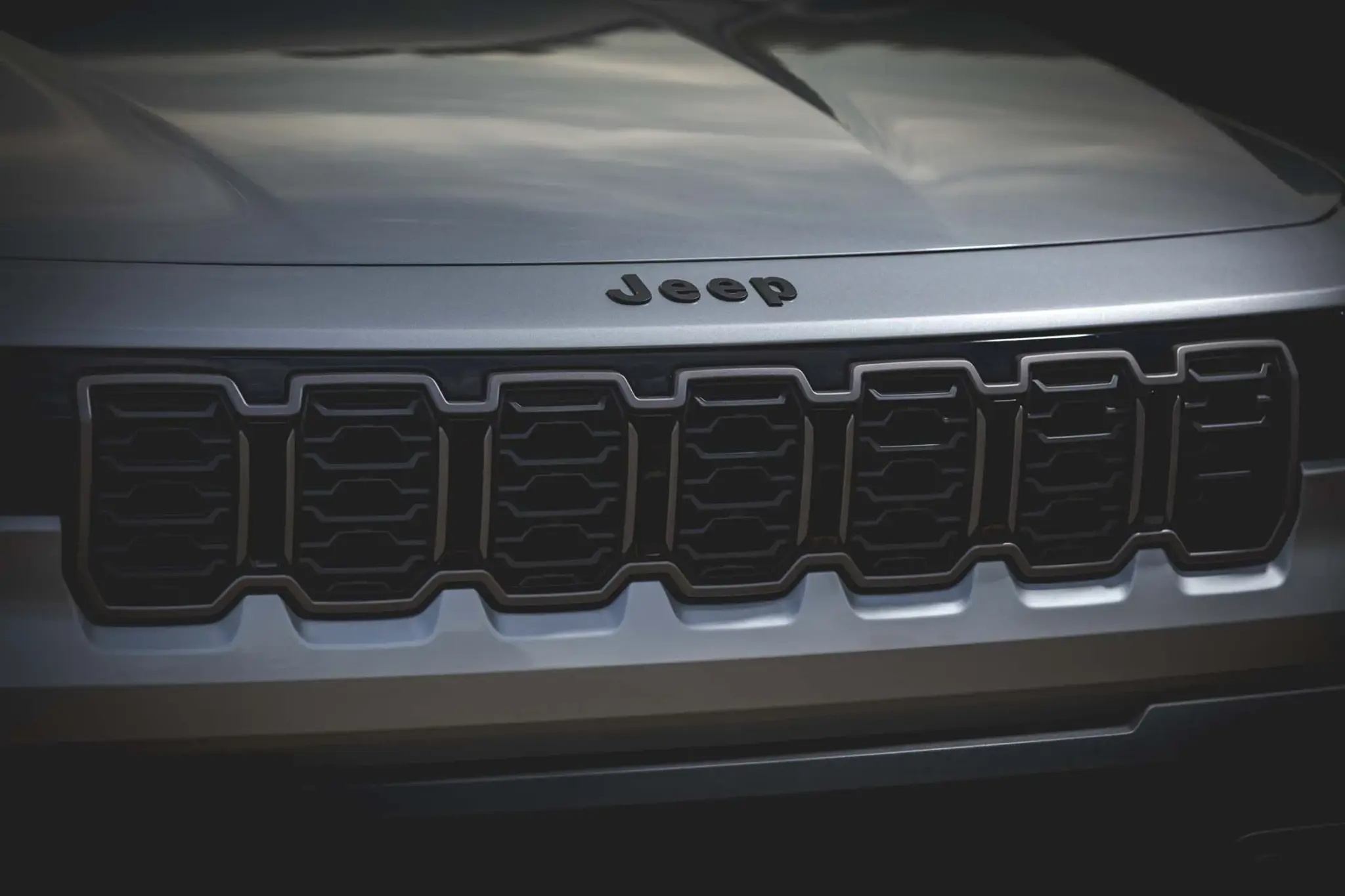
If you squint, the 2026 Cherokee is unmistakably a Jeep. The seven-slot grille remains, now stretched flatter and more horizontally, as if pulled by two designers arguing over width on a conference call. The LED daytime running lights trace a clean line across the fascia, and the body has taken on a more athletic stance. It looks modern, maybe even upscale — but not especially daring.
This isn’t Jeep reinventing itself. This is Jeep attempting to remember who it once was.
Photo caption style: The proportions are clean, crisp, and maybe even handsome. But trail dust doesn’t appear to be its natural habitat.
At 188.1 inches long and riding on a 113.0-inch wheelbase, the Cherokee has grown noticeably, pushing it alarmingly close to the Grand Cherokee’s shadow. Trips to the dealer should be interesting: “Yes, sir, this is the smaller one.”
2026 Jeep Cherokee Overland 4×4 First Test
2026 Jeep Cherokee Overland 4×4 First Test
Interior: The Surprisingly Elegant Part of the Story
Open the door, and the Cherokee makes an excellent first impression. Jeep clearly spent money here, and it shows. Texture combinations layer like a boutique hotel lobby: soft-touch panels, brushed trim, subtle stitching, tasteful ambient lighting. The seats wear intricate Art Deco–inspired perforations, a flourish you’d expect from a concept car interior designer with too much free time.
Jeep interiors haven’t looked this cohesive in years.
Photo caption style: Dual screens dominate the dash, but the cabin feels calm, warm, and more upscale than anything wearing this badge in the past decade.
Screens & Tech
Two screens form the digital centerpiece:
A crisp driver display with customizable layouts
A large central touchscreen running Jeep’s latest Uconnect interface
The screens are well-positioned and bright, but:
Font sizes seem to assume drivers have hawk-like vision
Some animations run at a console-from-2010 frame rate
Climate controls on the left are half-hidden behind the wheel
“It’s a work in progress,” one Jeep engineer quietly admitted off the record, though he quickly added the production software will be “snappier.” We hope so.
Rear Seats
Roomier than ever, the second row finally gives adults actual space. The only quibble is seat cushion length — short enough that you wonder whether Jeep assumes all buyers have legs like Lego minifigures.
Amenities include:
Rear climate vents
Heated seats
USB ports
A household power outlet
The wide-opening rear doors make loading car seats, Labrador retrievers, or duffel bags painless.
Cargo Space
With the seats up, the rear can swallow:
Two full-size suitcases
A stack of duffels
A weekend’s worth of gear
Under the floor sits a cavernous storage bin large enough to hide a backpack, small tools, or the commitment you once made to off-road adventure.
2026 Jeep Cherokee Overland 4×4 First Test
2026 Jeep Cherokee Overland 4×4 First Test
Powertrain: When 210 Horsepower Isn’t Quite Enough
We recorded a 9.4-second 0–60 mph, with some later runs slipping into the 10-second range. That’s not slow — it’s lethargic.
Low-speed responsiveness around town is decent, and the Cherokee surges off the line convincingly enough in Sport mode, but sustained acceleration brings out heavy breathing from the engine and a palpable sense that the hybrid system is trying to keep up.
Crucially, the Cherokee has no visible battery state-of-charge gauge. So when power fades, you’re left guessing:
Is the battery low? Is the motor reducing output? Is the powertrain plotting against you?
Hard to say. Jeep won’t either.
Passing & Highway Behavior
Past 50 mph, acceleration flattens like a pool noodle. Merging onto fast-moving highways requires planning, patience, and sometimes prayer.
And by 80 mph — the speed the Cherokee hits by the end of its 17.1-second quarter mile — the powertrain feels tapped out.
Ride Quality & Handling: The Most Un-Jeep Part
The Cherokee doesn’t ride like a Jeep. It rides better.
The suspension tuning is excellent, bordering on luxurious. Over cracked concrete, potholes, gravel patches, and the occasional suburban craters, the Cherokee floats with surprising serenity.
This is, without exaggeration, one of the nicest-riding compact crossovers Jeep has ever produced.
Steering & Handling
And yet… the steering is vague. Not “comfortably numb,” more “Is this connected to anything?”
Lean into a corner and you’ll find:
Predictable but heavy understeer
Noticeable nose dive under braking
A chassis that begs you not to hurry
During our figure-eight test, the Cherokee delivered:
28.9 seconds @ 0.56 g average
Not dismal, but not encouraging.
With traction control off on a rainy skidpad, we tried coaxing some personality out of it. The Cherokee responded with terminal understeer, a refusal to rotate, and eventually, a loss of electrical assistance as the hybrid battery gave up.
Car and Driver terminology: It does not enjoy lateral violence.
Off-Road Manners: A Jeep That Would Prefer You Didn’t
This is the Overland trim, not the Trailhawk. That distinction matters — a lot.
Jeep says all new Cherokees should retain “Jeep identity” off-road. But the hybrid powertrain and CVT make this version more timid than tenacious.
In sand, ruts, and loose dirt:
The CVT struggles to maintain momentum
Throttle inputs become inconsistent
The AWD system feels more reactive than proactive
Momentum becomes your greatest weapon. Slow technical crawling? Not its strong suit.
We suspect the future Trailhawk — with different gearing, software calibrations, perhaps a beefier hybrid motor — will do better. But in Overland trim, the Cherokee feels like a hiker who came dressed for brunch instead of the trail.
2026 Jeep Cherokee Overland 4×4 First Test
On the Highway: A Calm, Quiet Surprise
Where the Cherokee redeems itself is long-distance cruising. At 70 mph, it is:
Quiet
Composed
Comfortable
Soft-riding without being floaty
The seats, though firmer than expected, remain supportive over hours of highway time. Cabin noise is impressively damped, with only a faint turbo whir and the occasional CVT drone under hard acceleration.
If the Cherokee had a bit more punch for passing, it would be an excellent road-trip companion.
Comparison & Competitive Context
Against its compact SUV rivals:
The Honda CR-V Hybrid is quicker and more efficient
The Toyota RAV4 Hybrid is more refined
The Subaru Forester Wilderness is more capable off-road
The Ford Escape Hybrid is lighter and livelier
So where does the Cherokee fit?
Somewhere in the middle: comfortable, handsome, efficient, but lacking a defining competitive advantage.
Except, of course, for its badge. For many buyers, that might be enough.
Price & Value: No Longer the Budget Jeep
The Cherokee used to be the accessible Jeep. Not anymore.
Base price: $36,995
Overland base: $45,995
Price as tested: $48,085
For that money, buyers get a refined cabin, modern tech, excellent ride comfort — and performance that is merely acceptable. Capability that is merely adequate. And brand heritage that is doing much of the heavy lifting.
Final Verdict: A Good SUV Wearing a Heavy Legacy
The 2026 Jeep Cherokee Overland 4×4 is a pleasant, refined, comfortable crossover that drives better on pavement than any Cherokee before it. Its interior is gorgeous, its ride is cushy, and its fuel economy is honest-to-goodness impressive.
But it is not particularly powerful. And it is not particularly Jeep-like off-road.
Which leaves the Cherokee in a curious place: a good SUV that feels hesitant about its own heritage.
Jeep loyalists may appreciate its styling cues and the badge. First-time buyers may love the comfort and cabin. But the heart of the Cherokee — that go-anywhere spirit — feels muted.
Jeep’s comeback story requires confidence. The new Cherokee has quality and polish. Now it needs the rest of its Jeep-ness back.
2026 Jeep Cherokee Overland 4×4 — Specifications
SPECIFICATION
DETAIL
Base Price
$45,995
Price as Tested
$48,085
Vehicle Layout
Front-engine, front-motor hybrid, 4WD, 5-passenger, 4-door SUV