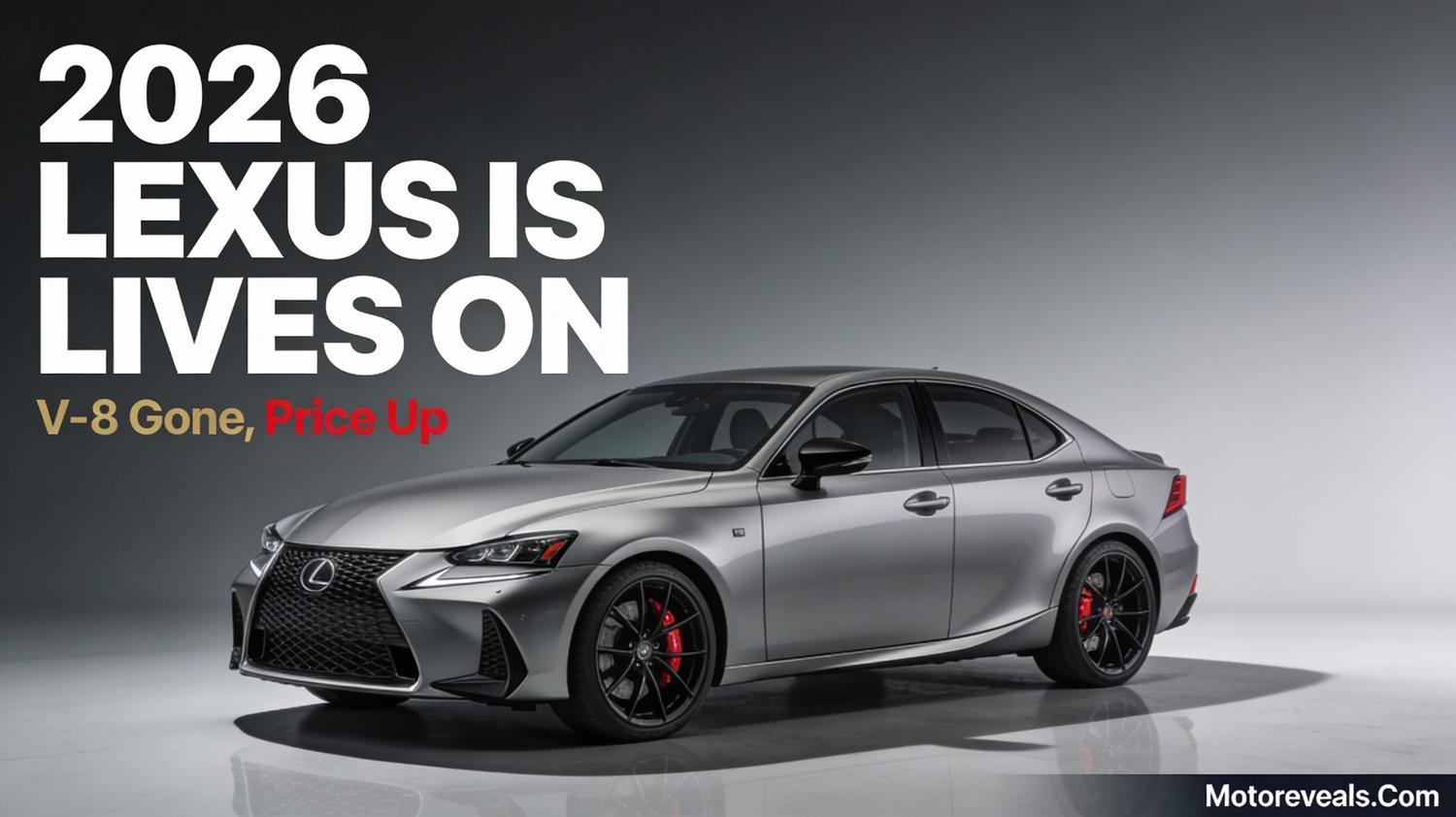
2026 Lexus IS: Still Breathing, Now Pricier, and Down a V-8
For a while, it looked like the Lexus IS was headed for the same quiet graveyard as so many other sport sedans. An 11-year-old platform, multiple facelifts, and a “Final Edition” style IS500 Ultimate all felt like the prelude to a goodbye. Instead, the IS has cheated death one more time. For 2026, Lexus is giving its compact sedan yet another refresh—and a noticeable price hike—while quietly trimming the lineup down to a single V‑6 model.
An Aging Warrior with Yet Another Update
The current generation IS has been around since 2014, which makes it ancient by modern luxury-car standards. Over that span it’s already endured two facelifts to keep pace with newer rivals, gaining sharper styling and updated tech along the way.
The 2026 model marks the third major refresh of this same basic car. Rather than an all‑new platform, Lexus is once again reworking the details: styling tweaks outside, a significant tech overhaul inside, and some under‑the‑skin changes aimed at improving steering and chassis response. The message is clear: Lexus isn’t ready to abandon the IS badge yet, even if it isn’t starting over from scratch.
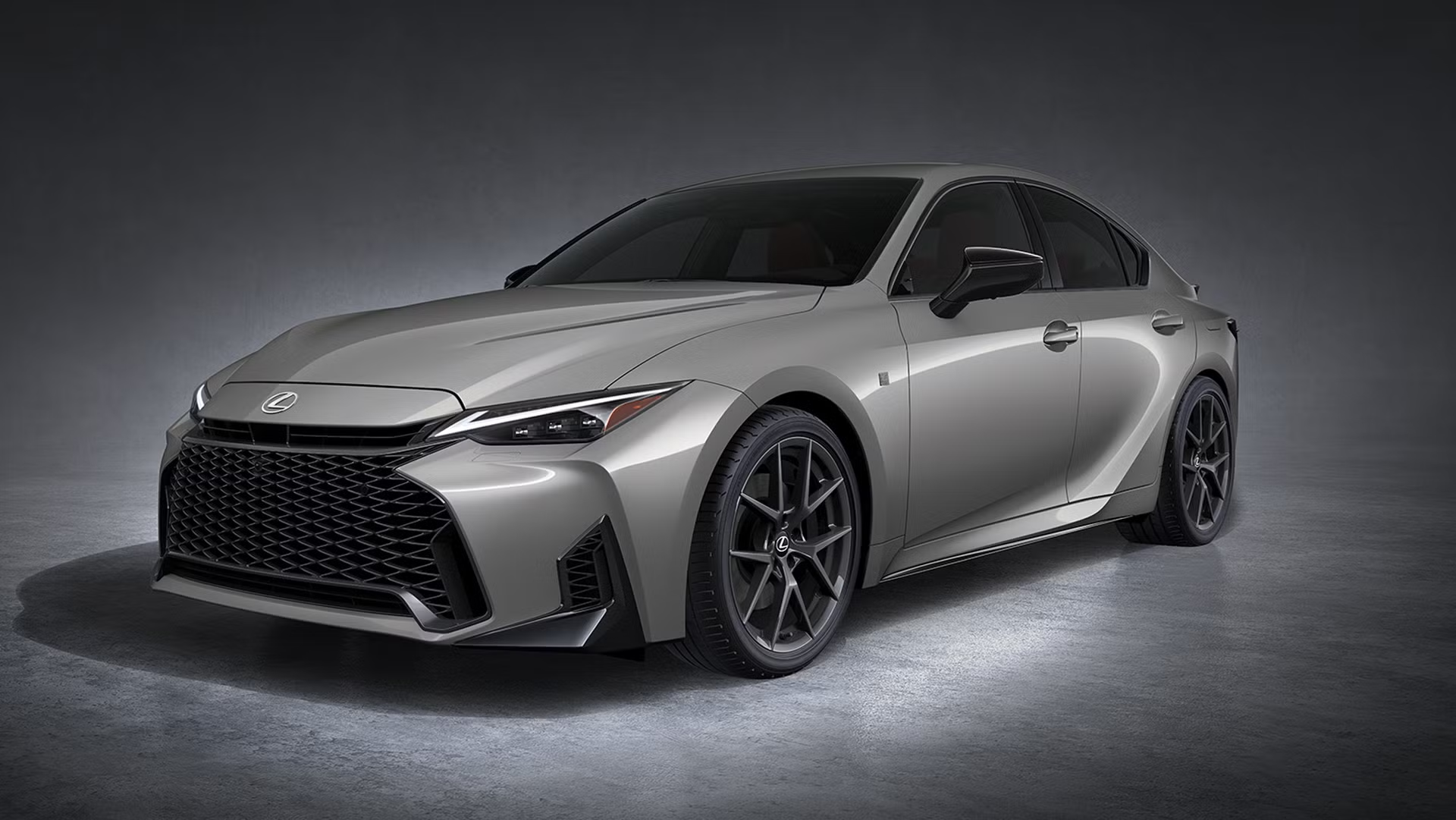
2026 Lexus IS350 F
Exterior: Same Silhouette, Meaner Face
From the side, the 2026 IS looks very familiar. The proportions, glasshouse, and basic body lines remain unchanged. The big news is up front.
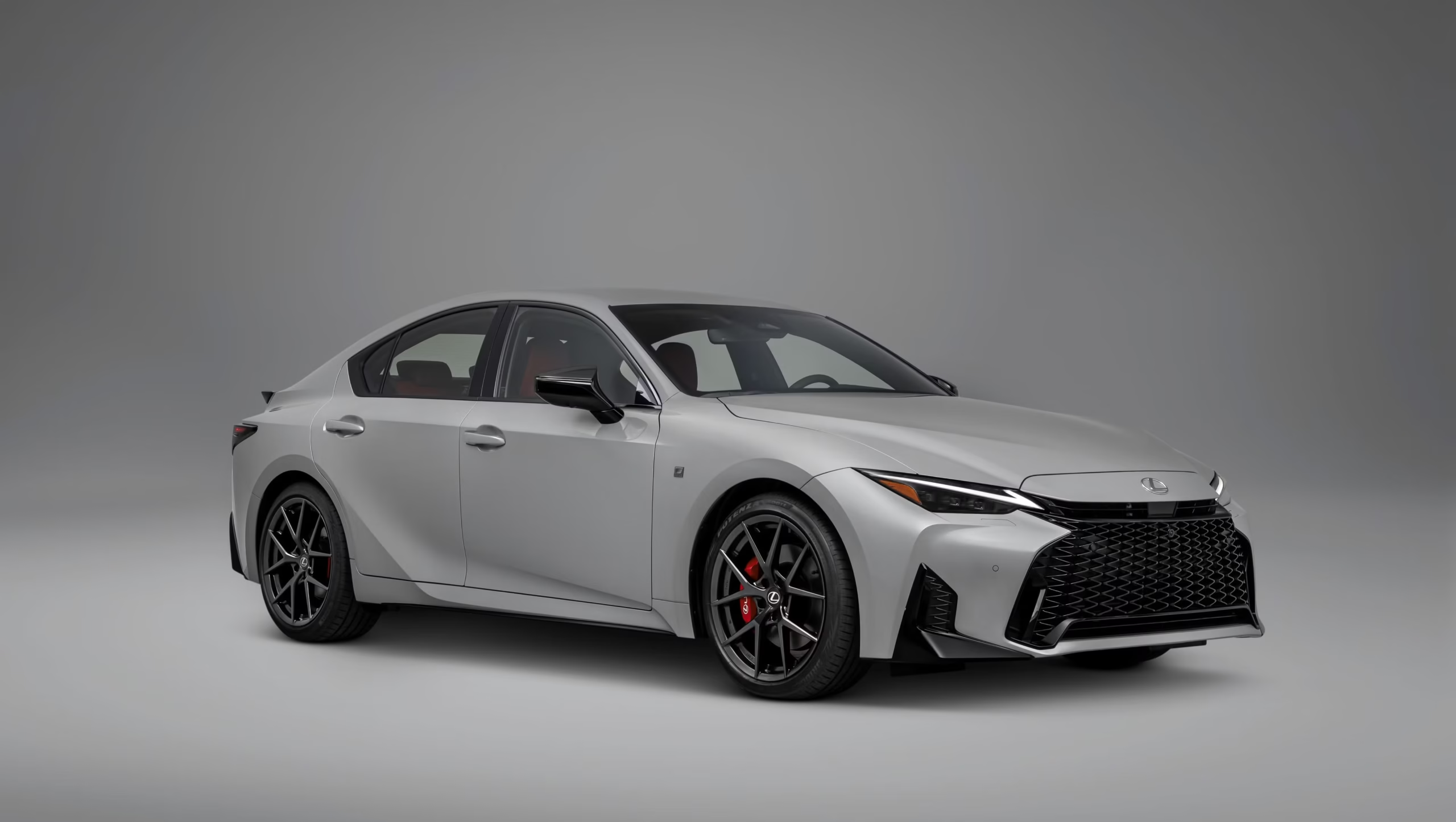
The sedan gets a new front fascia with a reshaped, full‑height grille that now extends all the way up to the leading edge of the hood, giving the car a more vertical, aggressive look. Trim levels dictate some of the finer details:
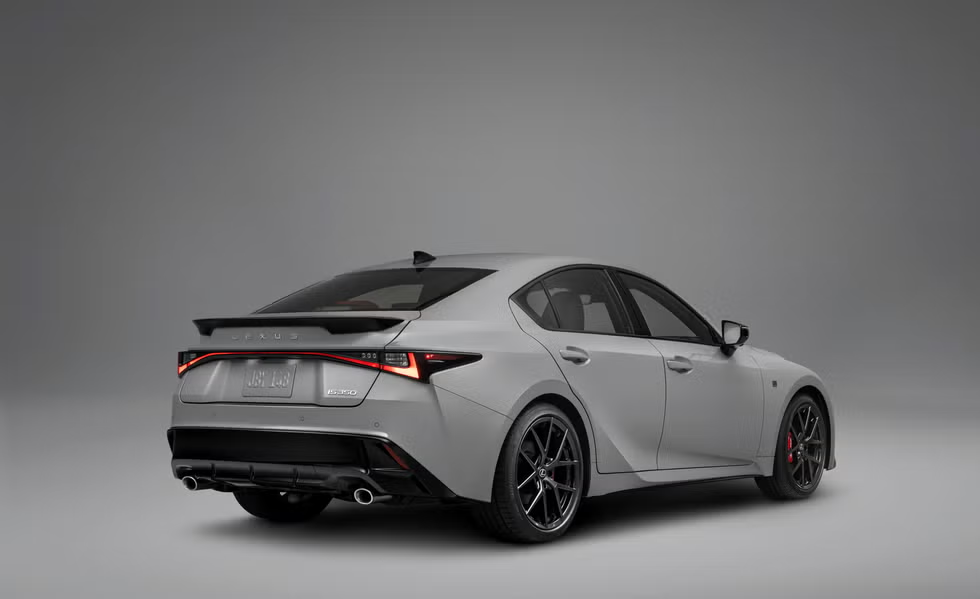
F Sport models add a new rear spoiler and red-painted brake calipers for a slightly more overt performance tone.
F Sport Design versions pick up fresh 19‑inch aluminum wheels that better fill the arches.
Lexus is also adding a new exterior color called Wind, a gray shade with metallic highlights that suits the car’s more mature, premium positioning.
It’s an evolution, not a reinvention, but it does enough to distinguish the 2026 IS from earlier versions without alienating current owners.
2026 Lexus IS350 F
Interior and Tech: Finally Up to Date
The bigger changes happen inside. The cabin of the outgoing IS was starting to feel heavily dated in both design and screen tech; the 2026 update tackles that directly.
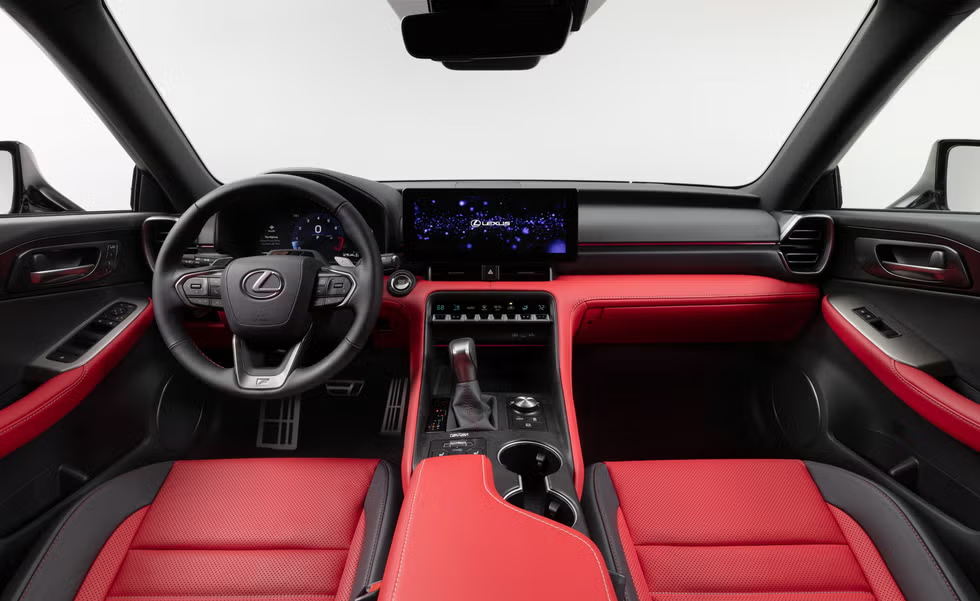
A 12.3‑inch digital gauge cluster now sits in front of the driver, replacing the older analog-heavy setup.
The standard infotainment screen grows from a modest 8.0 inches to a far more appropriate 12.3‑inch central display, bringing the IS in line with newer Lexus models.
The center stack has been reorganized, with climate controls arranged in a clean single row beneath the main screen, and the air vents reshaped into contemporary trapezoidal units. Materials also get attention: the center console and switchgear can now be trimmed with forged bamboo, adding a distinctive, upscale touch that stands out from conventional faux wood or aluminum.
F Sport models gain Radiant Red as an interior color option, giving buyers a more expressive choice than the usual black or gray. Tech and comfort updates include:
Front and rear USB‑C ports
A wireless charging pad
A choice between a standard 10‑speaker Lexus Premium audio system or an optional 17‑speaker Mark Levinson setup
Altogether, the cabin finally looks and feels like it belongs in the second half of the 2020s rather than the early 2010s.
2026 Lexus IS350 F
Powertrain: V‑8 Gone, V‑6 Soldiers On
Enthusiasts knew this part was coming, but it still stings. The IS500 and its 472‑hp 5.0‑liter V‑8 are gone for 2026. So is every other engine variant.
The entire lineup now consists of just one model: the IS350, powered by a 3.5‑liter V‑6. Output remains a healthy 311 horsepower, sent to the rear wheels through an eight‑speed automatic or to all four corners via a six‑speed automatic in all‑wheel‑drive versions.
On paper, 311 hp is still respectable for a compact luxury sport sedan, and Lexus is attempting to keep the driving experience relevant with electric power steering and suspension revisions aimed at improving steering feel and overall responsiveness. But for anyone who experienced the V‑8’s naturally aspirated crescendo, this transition feels like a step away from emotional performance and toward sensible competence.
The IS350 may still be engaging, but the car has lost its true halo engine, and that’s hard to ignore.
Pricing: Entry Point Climbs Sharply
Alongside the updated styling and tech, 2026 brings a notable jump in price.
With the IS300 and IS500 gone, the least expensive IS is now the IS350 F Sport Design:
2026 IS350 F Sport Design RWD: starts at $48,090
Adding all‑wheel drive: +$2,000
Above that sits the IS350 F Sport, which starts at $50,540 in rear‑drive form, again with a $2,000 upcharge for AWD.
For context, last year’s entry point was the four‑cylinder IS300, which began $6,260 lower than the 2026 IS350’s starting price. That’s a significant jump, and it moves the IS firmly out of the “relatively attainable luxury sedan” bracket and closer to established German rivals in pricing.
The car is better equipped than before, but budget-conscious enthusiasts who once saw the IS as an appealing gateway into rear‑drive performance will feel the squeeze.
What It Means for the IS—and Enthusiasts
The 2026 refresh keeps the Lexus IS alive at a time when many sporty sedans are disappearing. It modernizes the cabin, sharpens the design, and keeps a charismatic V‑6 on the options sheet while trying to deliver improved steering and chassis feel. For loyalists and buyers who simply want a more compact, rear‑drive Lexus sedan instead of an SUV, that’s good news.
At the same time, the loss of the V‑8 IS500 and the significant rise in the base price shift the car’s character. The IS is no longer a range with multiple personalities—from efficient four‑cylinder to wild V‑8. It’s now a single, more focused proposition: a well‑equipped, V‑6‑only sports sedan that leans more on refinement and familiarity than on headline‑grabbing performance variants.
In other words, the IS has survived—but in a trimmer, more expensive, and slightly more conservative form. For a segment under pressure, that might be enough to buy it a few more years. For enthusiasts, it’s a reminder that while the nameplate is still on the door, the window for truly unfiltered versions of cars like this is closing fast.