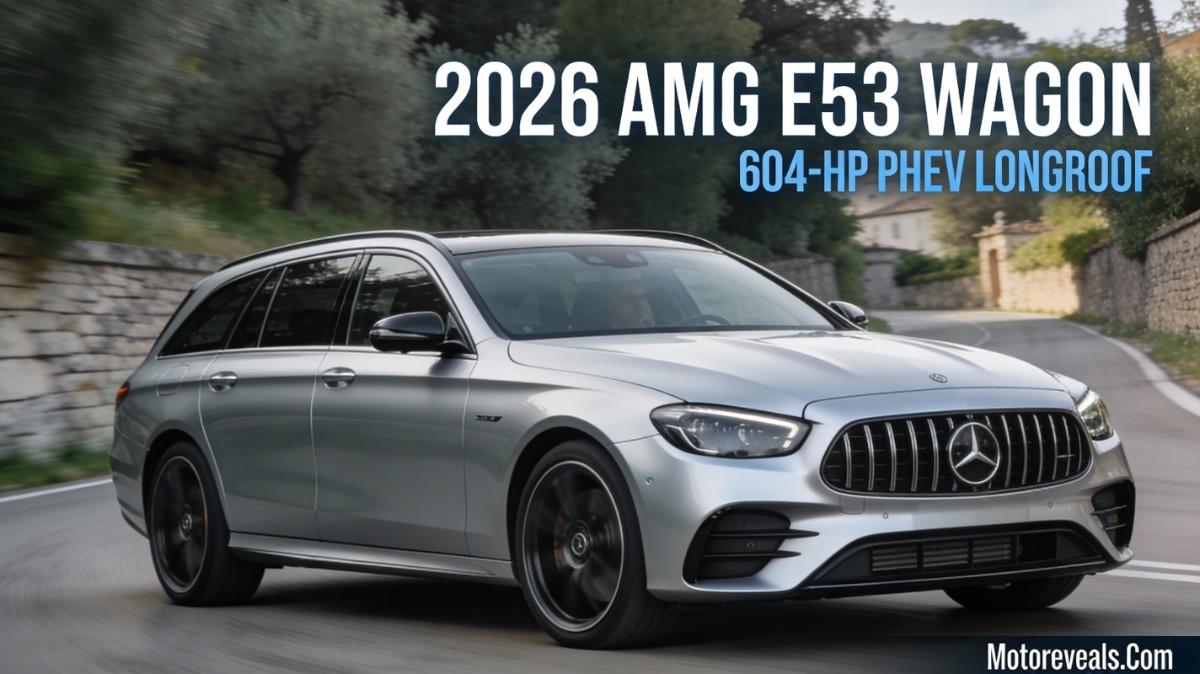
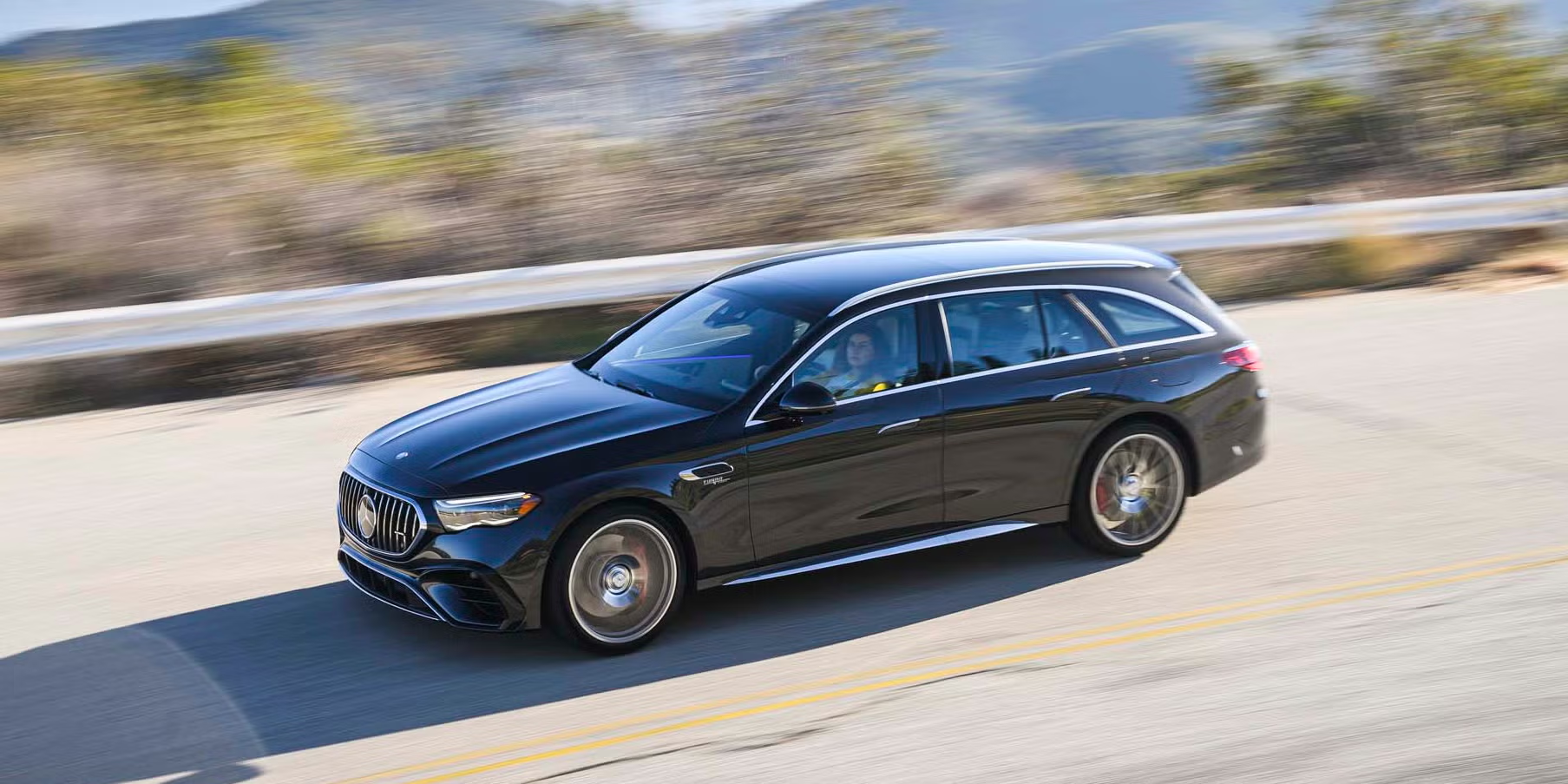
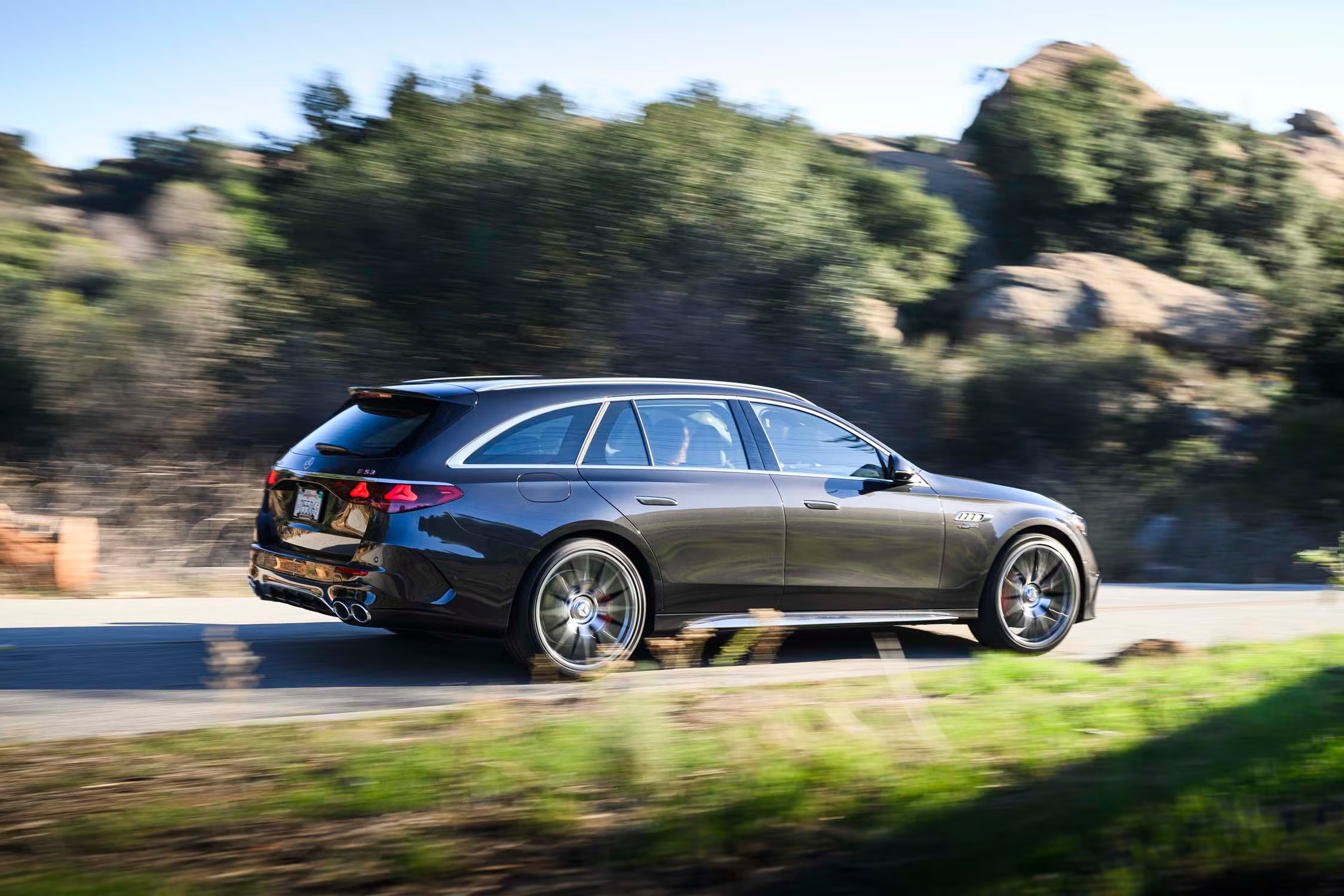
Mercedes-AMG’s E‑class wagon has always lived at the intersection of two worlds: the old one, where longroofs quietly hauled families and dogs, and the new one, where 600‑horsepower crossovers try to do everything at once. The 2026 Mercedes‑AMG E53 Wagon is the latest attempt to reconcile those realities. It wears a classic, almost conservative wagon silhouette, yet underneath lives a plug‑in‑hybrid powertrain, a screen-heavy cabin, and enough performance to run with the loudest badges from Audi and BMW.
On paper, it’s a successor to the old E63 wagon, but the badge says “53,” the engine’s lost two cylinders, and there’s a battery under the floor. The question isn’t just whether it’s fast—it is—but whether this blend of classicism and modernity still feels like an AMG with a longroof, or a tech experiment that happens to have a big trunk.
2026 Mercedes-AMG E53 Wagon (8)
2026 Mercedes-AMG E53 Wagon (7)
2026 Mercedes-AMG E53 Wagon (6)
2026 Mercedes-AMG E53 Wagon (5)
2026 Mercedes-AMG E53 Wagon (1)
2026 Mercedes-AMG E53 Wagon (2)
2026 Mercedes-AMG E53 Wagon (3)
2026 Mercedes-AMG E53 Wagon (4)
2026 Mercedes-AMG E53 Wagon (13)
2026 Mercedes-AMG E53 Wagon (12)
2026 Mercedes-AMG E53 Wagon (11)
2026 Mercedes-AMG E53 Wagon (10)
2026 Mercedes-AMG E53 Wagon (9)
Position in the Performance-Wagon World
High-performance wagons remain a niche within a niche, and Mercedes has long been the default choice for those who want super-sedan pace with cargo-space practicality. Today, the E53 shares its sandbox with the Audi RS6 Avant Performance and BMW M5 Touring, both of which lean harder into outright aggression and horsepower bragging rights.
The numbers put the E53 in interesting company. With the available AMG Dynamic Plus package, combined system output climbs to 604 horsepower and 553 lb‑ft of torque, technically edging out the previous V‑8 E63 by a single horse while undercutting the 621‑hp RS6 Avant Performance and 717‑hp M5 Touring. Yet the AMG’s base price of $94,600 keeps it closer to earth than those six‑figure missiles, framing it as a slightly more rational choice in an irrational segment.
This is not the most unhinged wagon Mercedes can imagine—that’s likely still in the wings—but it is the first plug‑in‑hybrid AMG wagon, and that alone defines its niche: performance with a thin veneer of efficiency and a heavy dose of tech.
2026 Mercedes-AMG E53 Wagon
Powertrain: Plug-In Tech with an AMG Edge
Under the hood sits a 3.0‑liter turbocharged inline‑six, good for 443 horsepower and 413 lb‑ft on its own, supplemented by an AC motor rated at 161 hp and 354 lb‑ft, all tied to a 21‑kWh battery pack and a 9‑speed automatic. Peak system output, when everything is working in concert, is the aforementioned 604 hp and 553 lb‑ft, sent to all four wheels.
Mercedes quotes an electric‑only range of about 41 miles, and in gentle commuting the E53 will glide away silently in Electric mode, the motor shouldering the bulk of low‑speed work. But at 5424 pounds, the wagon’s considerable mass blunts the motor’s standalone shove—on electrons alone it feels adequately brisk rather than urgent, more like a well‑sorted EV crossover than a full‑tilt AMG.
Push past the detent in the accelerator and the straight‑six lights with a smooth, unobtrusive bark as the car transitions into Comfort or Sport, depending on your settings. From that point, the hybrid system makes more sense: the electric motor fills in the low‑rpm torque valley, masking lag and giving the drivetrain a polished, elastic feel. There’s always some power in reserve, and the nine‑speed snaps off shifts with quiet authority rather than drama.
If you’re buying this car for its environmental credentials, you’ve probably misread the spec sheet. Driven as intended, the battery is less about maximizing engine‑off miles and more about smoothing responses and pushing the performance envelope a little further.
2026 Mercedes-AMG E53 Wagon
Performance: Numbers That Mean Business
With AMG Dynamic Plus engaged and launch control enabled, the E53 wagon is decisively quick. In testing, it hits 60 mph in 3.4 seconds and runs the quarter‑mile in 11.8 seconds at 118 mph. That puts it fractions behind the M5 Touring (3.1 to 60, 11.4 at 125) and RS6 Avant Performance (3.2, 11.5 at 121), but not in a way you’d notice outside of a drag‑strip timing slip.
Rolling acceleration is similarly stout. The wagon’s long‑gear thrust from 30–50 mph and 50–70 mph in top gear—both at 3.1 seconds—means passing maneuvers require little planning. Dip into the throttle and the hybrid system serves up a broad, seamless wave of torque that makes short work of traffic.
Braking performance is also serious. Equipped with carbon‑ceramic front rotors as part of the Dynamic Plus package, the E53 stops from 70 mph in 154 feet, matching the M5 Touring, though it can’t quite touch the RS6’s astonishing 140‑foot result. Pedal feel, however, tells more of the hybrid story: in everyday use, you feel the handoff between regenerative and friction braking, and the top of the pedal can be grabby during gentle stops. Lean on the brakes hard, and that annoyance disappears, replaced by reassuring, repeatable deceleration.
On the skidpad, the wagon posts 0.94 g of lateral grip on Michelin Pilot Sport 4S summer tires, edging the heavier M5 but trailing the lighter, non‑hybrid Audi. In isolation, though, the number undersells how composed and neutral the E53 feels when asked to change direction with conviction.
Ride, Handling, and Daily Usability
The E53 is at its best in Sport mode with the adaptive suspension backed off a notch. Mercedes lets you decouple drivetrain aggression from chassis stiffness, and it’s worth doing so. Set the engine and transmission to Sport or Sport+, then dial the dampers back to Comfort, and the wagon finds an impressive balance: enough body control to keep its considerable mass from sloshing around, yet enough compliance to make long drives genuinely pleasant.
Crank everything to maximum attack in Sport+ and the car tightens noticeably, but the ride crosses from firm into brittle, particularly on the optional 21‑inch wheels. On indifferent pavement, that setting feels as if the dampers have seized; the smaller standard 20‑inch wheels will likely be more forgiving.
Steering is accurate and appropriately weighted, if not dripping with feel. Rear‑axle steering comes standard, but it’s tuned more for high‑speed stability and lane‑change agility than for parking‑lot trickery. In fact, the turning circle is a surprisingly large 41.1 feet, actually wider than the E450 wagon that does without rear‑steer. The oddity is noticeable when maneuvering in tight spaces, less so on the move.
Day‑to‑day, the E53 behaves like a well‑mannered long‑range cruiser. Wind and road noise are controlled, forward visibility is good, and the wagon body makes cargo loading straightforward. There’s comfortable seating for five, although rear passengers may find foot room under the front seats tighter than expected. For many buyers, that will be a small price to pay for avoiding yet another SUV.
Interior, Technology, and User Experience
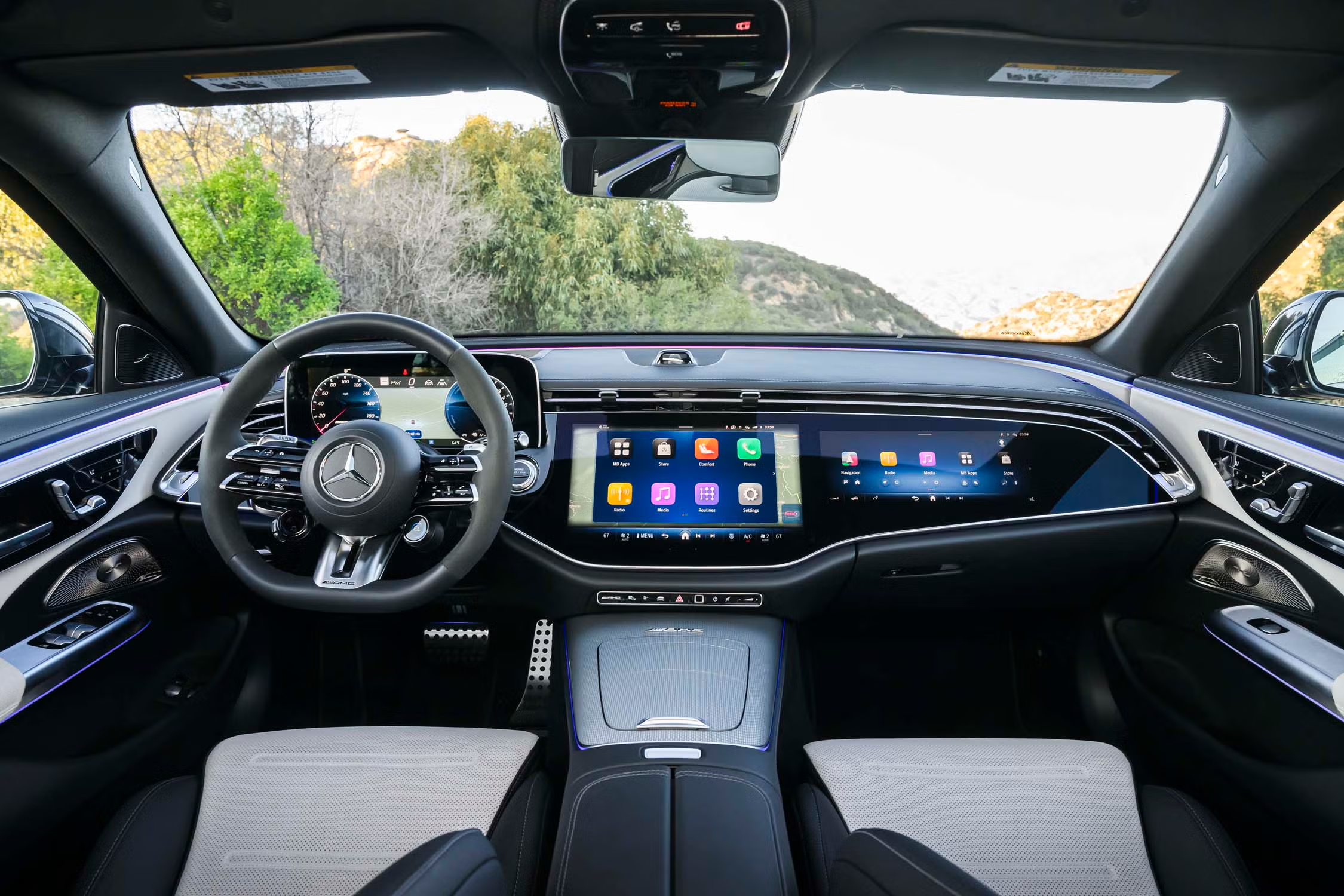
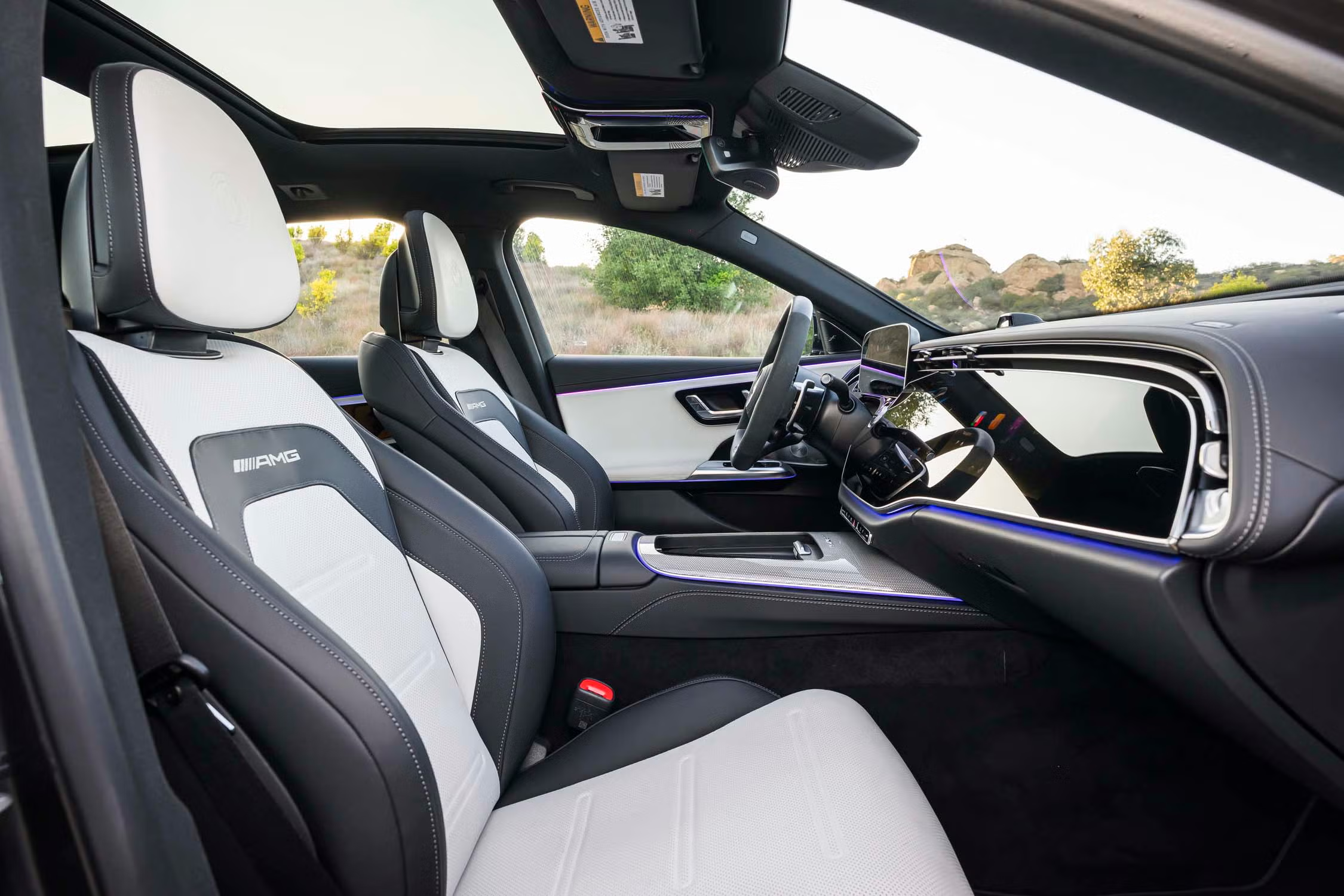
Open the door and you’re greeted by an interior that leans decisively toward modern Mercedes theater rather than understated wagon utility. The optional MBUX Superscreen spreads across the dash, comprising a 14.4‑inch central touchscreen and a 12.3‑inch front passenger display, while the driver faces a separate 12.3‑inch digital instrument cluster and an available head‑up display.
The passenger screen can handle navigation input, audio control, apps, and even video playback, all gated by a privacy filter that limits its view from the driver’s seat. There’s also an interior‑facing camera for video calls or selfies. It’s impressive in a spec‑sheet way, but not everyone will want their wagon to double as a mobile content studio.
Ambient lighting is where Mercedes goes full nightclub. With the right packages, you get multi‑zone, color‑configurable light strips that can pulse in time with the audio system. Add the “4‑D” audio option and the front seatbacks vibrate along with the beat, ranging from subtle to “someone left a phone on buzz in the seat pocket.” It’s clever, occasionally amusing, and very easy to switch off once the novelty fades.
Controls are where the modernity becomes more of a hindrance. The audio volume is adjusted via a touch slider either on the dash or on the steering wheel, both of which lack the precision of a simple rotary knob. Tuning and menu navigation rely on small touchpads in the steering‑wheel spokes or direct screen taps, actions that work perfectly in the showroom and less so on a bumpy road. Even cruise‑control set speeds are tweaked via a slider.
Behind all that sits a dense stack of vehicle settings, profiles, and personalization layers. The car encourages you to create a user profile tied to a fingerprint reader, app, voice, or facial recognition, so it knows who you are and how you like your seats, lights, and drive modes configured. It’s slick, but also a reminder that you’ll need to invest time in the menus before the E53 feels tailored rather than overwhelming.
The good news: once you’ve done the setup, the E53 can be a calm, comfortable, and genuinely luxurious place to cover ground. Materials are first‑rate, from the leather and metal accents to the optional noise‑insulated glass. There’s still a sense of traditional E‑class solidity under the digital gloss.
2026 Mercedes-AMG E53 Wagon
2026 Mercedes-AMG E53 Wagon
HIGHS and LOWS
HIGHS:
Sleek, timeless longroof silhouette; serious straight‑line performance and strong grip; plug‑in hybrid powertrain that adds smoothness and torque rather than gimmicks; real wagon practicality in a field dominated by SUVs.
LOWS:
Tech overload that sometimes gets in the way of simple tasks; brake feel that’s fussy at low speeds; rear‑steer with a surprisingly large turning circle; less emotionally stirring than an “E63” badge suggests.
Verdict: Timeless Shape, New-World Compromises
The 2026 Mercedes‑AMG E53 Wagon is a car defined by contrasts. From the outside, it’s classic E‑class wagon: long roof, clean surfacing, just enough visual muscle to suggest it’s not a rental‑spec estate. From the driver’s seat, it’s an unapologetically modern Mercedes: screens everywhere, ambient light shows, and a layer of digital mediation between you and nearly every function.
On the move, the plug‑in‑hybrid AMG finds a compelling middle ground. It’s almost as quick as its more expensive, more powerful rivals from Audi and BMW, it corners with real authority, and it cruises with the kind of composure buyers expect at this level. The battery and e‑motor do add weight, but they also add torque fill and a measure of EV capability that makes short, quiet trips possible when you’re not in the mood for six‑cylinder theatrics.
If you came for the raw, slightly unhinged charm of the old V‑8 E63, this car won’t scratch that itch completely. The E53 is more measured, more complex, and more overtly tech‑driven. But it also keeps the idea of the fast wagon alive at a time when that very idea is under threat.
In that sense, the E53 Wagon is exactly what its subtitle suggests: classicism meeting modernity. The shape and mission are familiar; the tools are very much of the current era. For enthusiasts who still want a longroof with real pace, usable space, and a three‑pointed star on the hood, that’s a compromise worth considering.