Audi Channels “Vorsprung Durch Technik” Into Formula 1’s Future
The German manufacturer’s R26 Concept previews a bold visual identity and technological vision for an audacious 2026 debut—a statement of renewal for both the brand and motorsport itself.
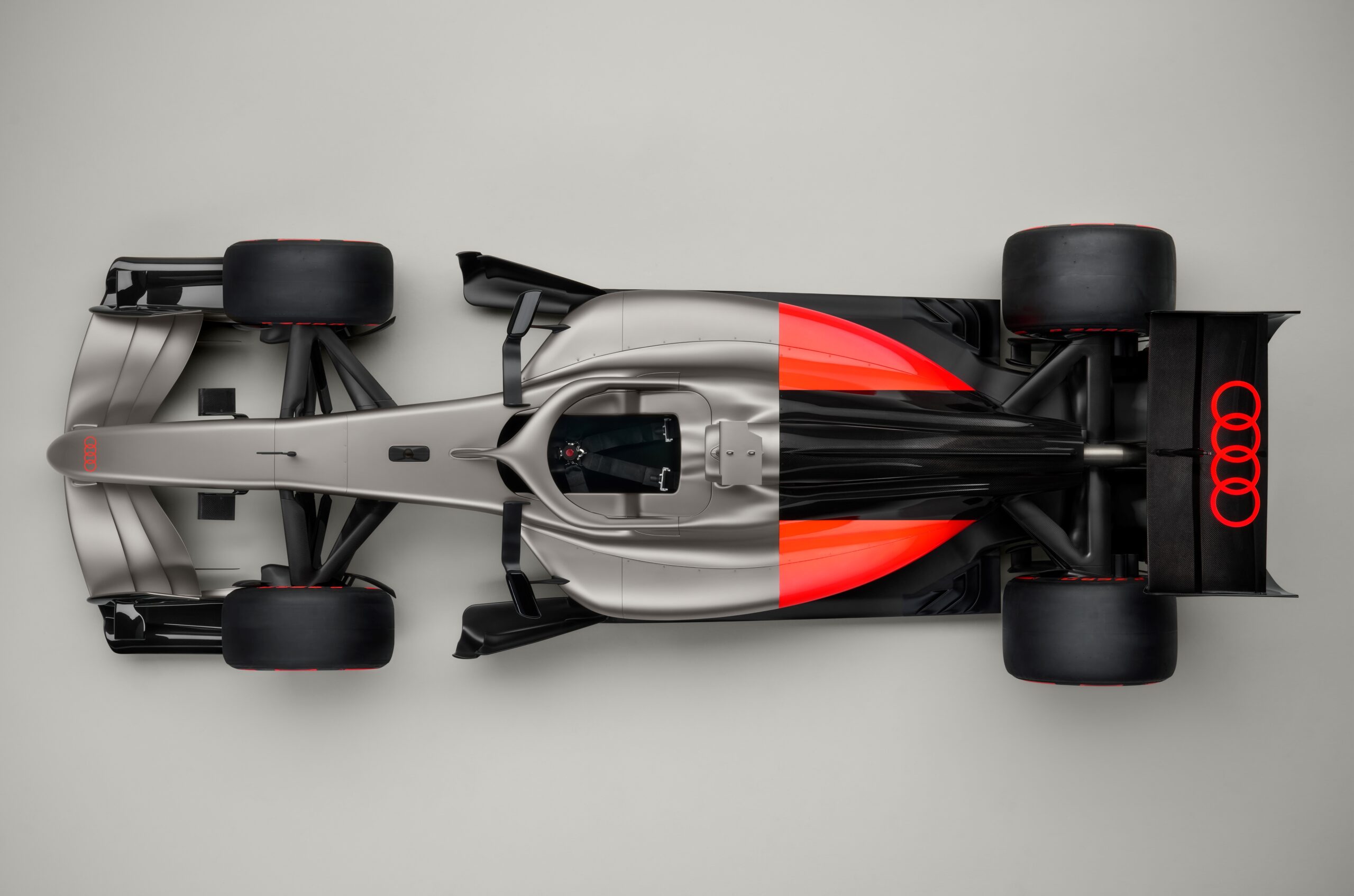
At the Audi Brand Experience Center in Munich, on a cool November afternoon exactly 115 days before its first Formula 1 race, Audi pulled back the curtain on something greater than a new racing machine. The R26 Concept—a sleek, purposeful vision wrapped in titanium and carbon black with hints of Audi’s newly introduced racing red—represents the company’s entire philosophy toward motorsport’s pinnacle: uncompromising clarity, relentless ambition, and a determination to win.
“Entering Formula 1 is the next chapter in the company’s renewal,” Audi CEO Gernot Döllner said, his words carrying the weight of a commitment that extends far beyond the paddock. “It is a catalyst for the change towards a leaner, faster and more innovative Audi.”
That ambition isn’t casual bravado. By 2030, Audi wants to fight for the World Championship. But first, the brand must navigate the reality of being a newcomer in a sport where victory often belongs to those who’ve been winning for years.
Audi R26 Concept
Audi R26 Concept
Audi R26 Concept
Audi R26 Concept
Audi R26 Concept
Audi R26 Concept
Audi R26 Concept
Audi R26 Concept
Audi R26 Concept
Audi R26 Concept
Audi R26 Concept
Audi R26 Concept
The Design: Clarity Made Physical
The R26 Concept isn’t a race car—at least not yet. It’s a statement of intent, a preview of the actual machine that will arrive in January 2026. What’s striking about its appearance is the precision. Every line suggests purpose. Every surface tells a story of engineering clarity.
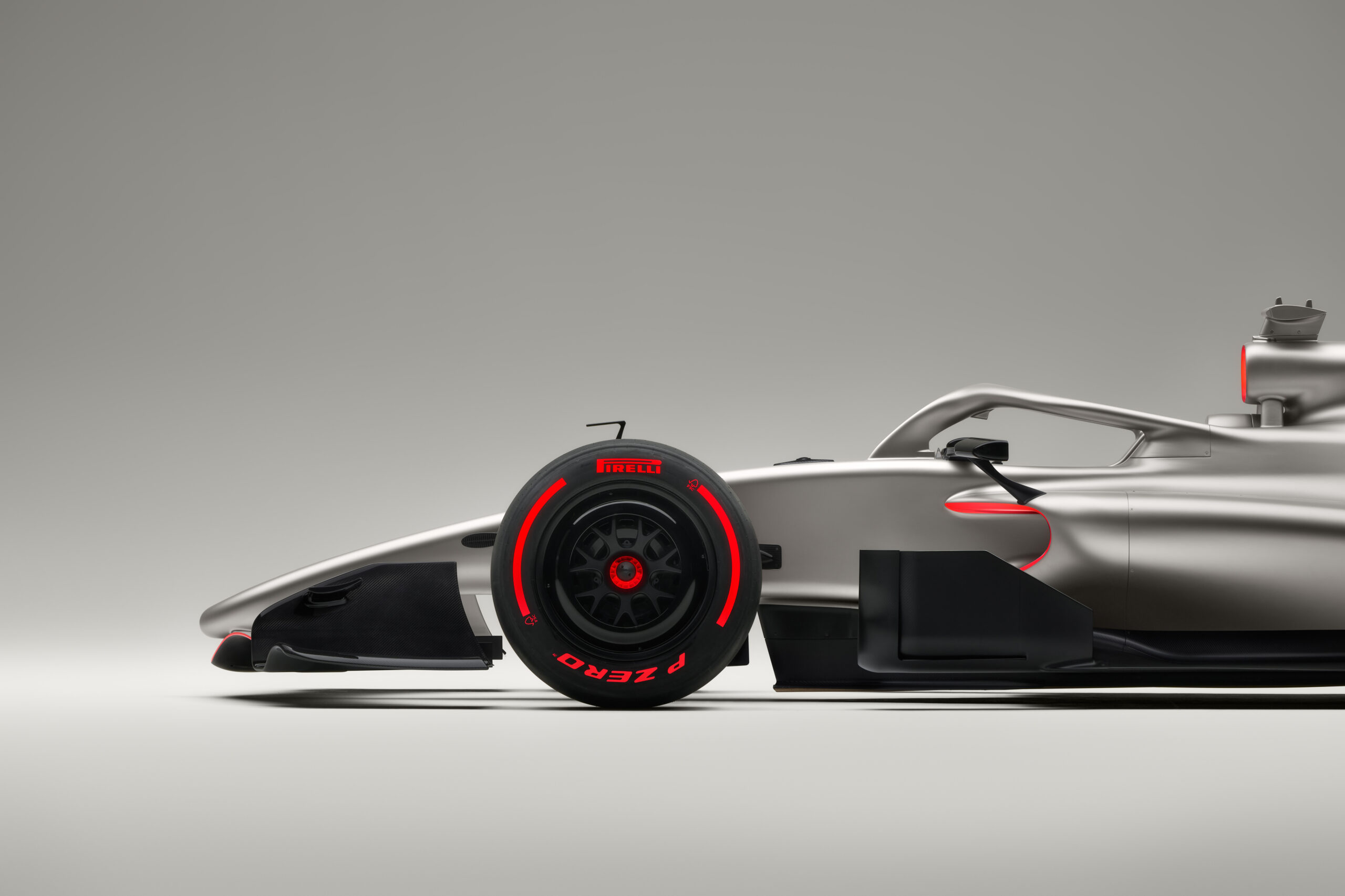
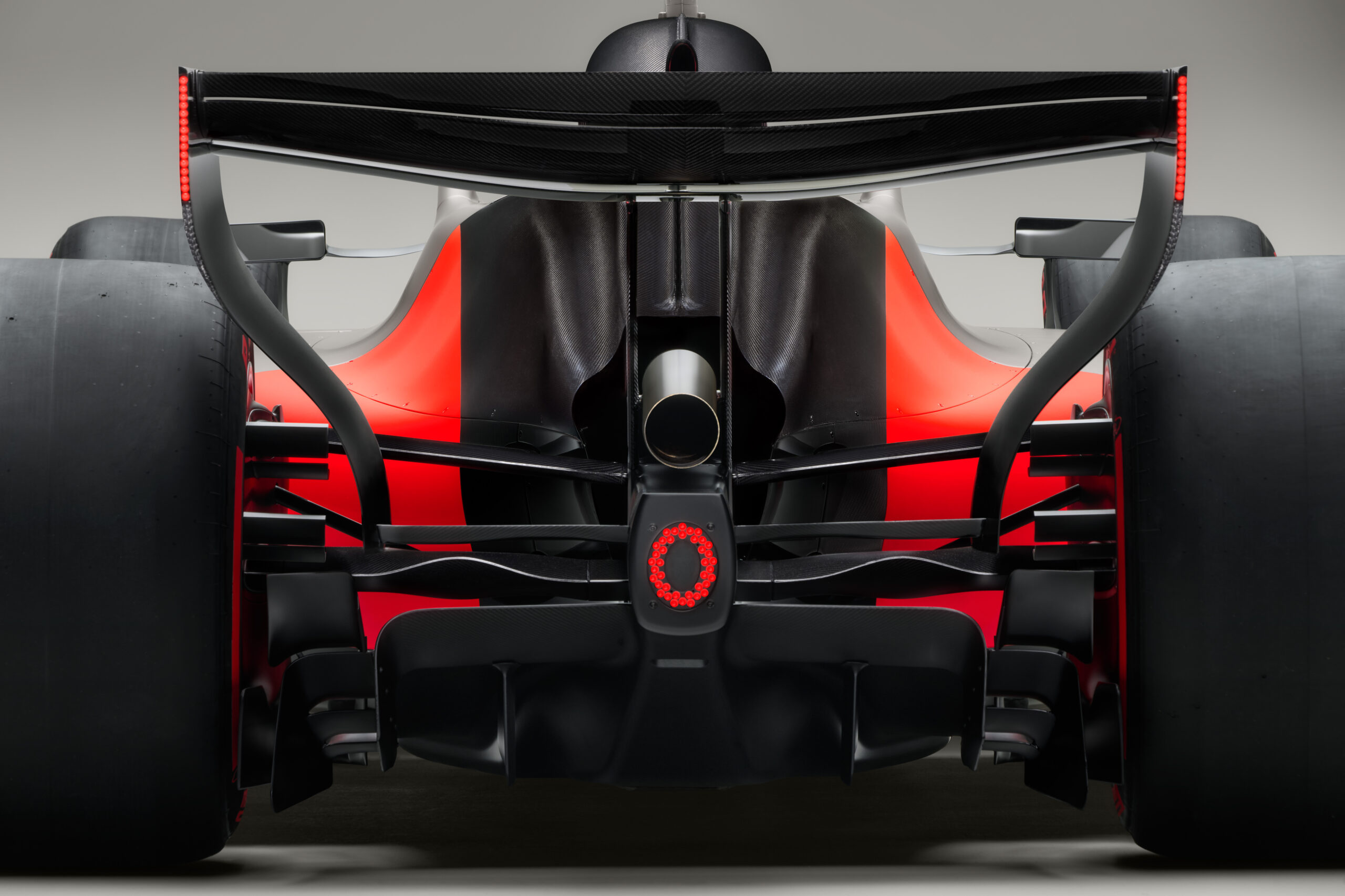
Minimalist graphic surfaces, defined by precise geometric cuts, integrate seamlessly with what will become the F1 machine’s actual geometry. Titanium serves as the base note, carbon black provides contrast, and the newly introduced Audi red—applied selectively on the rings and accents—marks the brand’s F1 identity. It’s restrained without being timid, modern without abandoning heritage.
“We are implementing a unifying design language that draws together every aspect of our organization,” explains Audi Chief Creative Officer Massimo Frascella. “This makes the Formula 1 project a pioneer for the new brand identity, which will be rolled out in the future both for the F1 team and Audi as a whole.”
That’s significant. This isn’t just a racing program. It’s a corporate laboratory—a place where Audi’s design philosophy gets tested at 220 miles per hour, where decisions made on the chassis directly inform vehicles in showrooms five years from now.
Indoor studio shot, exterior, birds-eye view
Power Made in Germany: The Powertrain Story
In Neuburg an der Donau—a quiet town along the Danube, and the only operational location of a Formula 1 team in Germany—Audi has been developing its power unit since spring 2022. It’s a technical marvel that reflects the sport’s shifting priorities.
The heart is a 1.6-liter V6 engine with turbocharging, married to an energy recovery system and a revolutionary electric motor generator unit (MGU-K). But here’s what makes it significant: The electric component has been tripled in output from current regulations, bringing the electric motor to near-parity with the combustion engine by 2026. It’s a glimpse of automotive futures—hybrid technology at the highest level of competition.
Working exclusively with bp since 2022, Audi has also committed to sustainable e-fuels beginning in 2026. It’s part of the new technical regulations, a calculated shift toward road-car relevance. The development cycle was accelerated dramatically—the complete powertrain ran dynamically as a unified system just two years after initial concept work began, tested on simulation benches rather than track, because regulations prohibited racetrack testing until early 2026.
The powertrain will be assembled and shipped from Neuburg starting in December, destined for the F1 Factory in Hinwil, Switzerland, where the racing chassis is being developed and where race operations will be coordinated.
Three Locations, One Vision
Hinwil remains the nerve center—race car development, planning, operations. But Audi has also established a technology office in Bicester, England, placing the team squarely in the heart of Motorsport Valley. It’s a deliberate decision. The accessibility to top F1 talent, to suppliers, to the institutional knowledge embedded in that region, matters enormously for a newcomer.
The three-location strategy—Germany for the power unit, Switzerland for the chassis and operations, England for technical expertise and partnerships—represents an intelligent approach to F1’s complexity. It’s not centralized, which can be sluggish. It’s collaborative, which favors rapid iteration and decision-making.
Indoor studio shot, exterior, side view, detail
The Driver Pairing: Experience Meets Potential
Nico Hülkenberg brings seasoned racing maturity. At 37, the German driver has accumulated immense Formula 1 experience—a steady hand, a reliable evaluator of machinery, someone who’s navigated the politics and pressures of the sport for nearly two decades. Gabriel Bortoleto, conversely, represents youthful energy and hunger. The 22-year-old Brazilian is precisely the kind of prospect Formula 1 discovers once a generation—quick, adaptable, hungry to prove himself.
It’s a pairing that balances immediately. Hülkenberg stabilizes expectations and provides technical feedback that engineers can immediately translate into setup adjustments and development priorities. Bortoleto brings the raw pace necessary to push boundaries, to identify performance margins that experience sometimes overlooks.
“Formula 1 is more than just motorsport,” explains Jürgen Rittersberger, CFO of Audi AG. “It’s entertainment, emotion, technology—and also a challenge. But it is precisely this combination that takes us where we want to go: inspiring new customer groups for Audi.”
Leadership: Ferrari Experience Meets Red Bull Precision
At the helm are two seasoned F1 managers: Mattia Binotto, former Ferrari Team Principal, brings constructors’ championship experience and an intimate understanding of how elite teams are structured. Jonathan Wheatley, formerly with Red Bull, carries the institutional DNA of one of modern F1’s most successful organizations. Both report directly to CEO Döllner, a reporting structure that signals seriousness and direct accountability.
It’s not a team of newcomers fumbling through their first season. It’s a team assembled from the sport’s upper echelon, which immediately raises questions about Audi’s true competitive timeline. When a manufacturer brings in Ferrari’s former principal and Red Bull’s operational genius, the message is clear: This is not a “learning year” entry.
Indoor studio shot, exterior, rear detail
The Economic Reality: Why Now, Why This Way
Formula 1 reaches 820 million fans globally. In 2024, approximately 1.6 billion people watched the races—an unparalleled global platform. The financial valuations of F1 teams exist in the billions. For a brand attempting renewal and seeking to inspire younger demographics where Formula 1 is experiencing rapid growth, the ROI math is compelling.
Equally important: The cost cap. F1’s relatively new financial structure ensures budgetary predictability, a far cry from the unlimited spending of decades past. For Audi, this represents economic sustainability—not a money-pit hobby, but a calculated investment with defined parameters.
The partnership ecosystem reflects this. Adidas brings sporting credibility. bp provides the sustainable fuel expertise. Revolut, as title partner, suggests a fintech-forward positioning. Qatar’s sovereign wealth fund serves as investor. These aren’t random partnerships. They’re strategic alignments indicating serious capitalization and cross-industry coordination.
Heritage and the Path Forward
Audi’s motorsport history is formidable. Quattro all-wheel drive revolutionized rallying. Le Mans titles, multiple championships across Formula E, Dakar Rally dominance—the brand’s racing DNA runs deep. But Formula 1 remains unconquered territory, a test no Audi has truly faced in the modern era.
The 2026 technical regulations represent what Audi itself characterizes as an “ideal opportunity” for a newcomer. New engine specifications, hybrid evolution, sustainable fuel requirements—all competitors simultaneously facing new territory. It levels the playing field, at least in theory. Established teams can’t rely entirely on accumulated chassis knowledge. Everyone must relearn.
Audi’s first race is scheduled for Melbourne, March 6-8, 2026. Before that, closed-door testing in Barcelona (late January) and public testing in Bahrain (mid-February) will provide crucial data. By then, the R26 Concept’s promise must translate into competitive reality.
The Larger Statement
What Audi is doing extends beyond motorsport spectacle. It’s declaring that the brand believes in technological competition as a crucible for innovation. It’s stating that the future of automobiles—hybrid electric power, sustainable fuels, aerodynamic efficiency—can be tested and proven in the most demanding laboratory on Earth.
The design clarity seen in the R26 Concept will permeate production vehicles. The powertrain development conducted in Neuburg will inform street cars. The organizational agility demanded by F1’s short decision cycles will reshape how Audi operates globally. In 115 days, that first race in Melbourne will signal whether this audacious gamble—this reinvention through motorsport’s highest stage—can deliver on its promise.
For now, Audi has drawn its line in the sand. Formula 1, meet the new definition of “Vorsprung durch Technik.” The sport is about to find out what that truly means.