Chinese Manufacturer’s Revolutionary Hybrid Boxer Engine Delivers Mid-Displacement Power from Quarter-Liter Platform
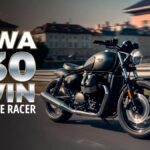
Benda Motorcycles has unveiled the P51 concept, a groundbreaking hybrid motorcycle that challenges every assumption about 250cc performance limitations. By combining a liquid-cooled twin boxer engine with an integrated electric motor, the P51 delivers 62 horsepower and approximately 74 pound-feet of combined torque—numbers that place it firmly in mid-displacement performance territory despite its quarter-liter combustion engine.
The P51 represents more than incremental improvement. This is fundamental reconsideration of what small-displacement motorcycles can achieve when hybrid technology prioritizes performance rather than merely addressing emissions compliance or fuel economy regulations.
Benda P51 Hybrid
Performance Revolution: Hybrid Power Architecture
The P51’s powertrain architecture positions the electric motor directly below the 250cc boxer engine, creating a low center of gravity while enabling instant torque delivery across the entire RPM range. The combustion engine provides characteristic boxer sound and high-RPM power, while the electric motor eliminates the traditional torque deficit that plagues smaller-displacement machines at lower engine speeds.
The performance figures speak directly to the effectiveness of this integration. Zero to 60 mph acceleration occurs in 3.7 seconds—a time that surpasses many 600cc sport bikes and approaches literbike territory. Combined power output reaches 62 horsepower. Combined torque approximates 74 pound-feet. These aren’t 250cc-class numbers. These are genuine performance motorcycle specifications.
Wet weight sits at 178 kilograms (approximately 392 pounds), maintaining manageable mass despite the addition of battery systems and electric motor components. The power-to-weight ratio becomes genuinely competitive with significantly larger-displacement machines.
The hybrid system operates seamlessly, with the electric motor providing instant torque response during initial acceleration before the combustion engine’s power curve takes over at higher RPM. This eliminates the traditional compromise between low-end responsiveness and high-end power that defines conventional small-displacement motorcycles.
The P51’s visual identity draws inspiration from the legendary P-51 Mustang fighter aircraft, translating aviation design language into motorcycle form. The front headlight assembly mimics aircraft design elements, while the overall proportions suggest aggressive forward momentum even when stationary.
The design team incorporated what they describe as “vintage muscle bike” aesthetic elements—chunky proportions, exposed mechanical components, purposeful stance—alongside cyberpunk-inspired futuristic details. The result feels simultaneously nostalgic and forward-looking, familiar yet entirely unprecedented.
Telescopic forks feature “girder-style” protectors that reference early motorcycle suspension design while providing contemporary functional protection. This kind of deliberate historical reference appears throughout the design, creating visual tension between heritage and innovation.
The frame architecture employs intelligent material distribution: aluminum construction where lightness matters, steel reinforcement where structural rigidity takes priority. The rear suspension utilizes monoshock architecture paired with a single-sided swingarm—a solution typically reserved for premium performance machines where aesthetics and serviceability justify the additional engineering complexity.
The double seat incorporates retractable passenger footpegs that disappear entirely when riding solo, maintaining clean visual lines without compromising two-up capability. These kinds of details suggest design thinking that extends beyond initial visual impact toward comprehensive user experience consideration.
Benda P51 Hybrid
Engineering Details and Component Specification
The liquid-cooled twin boxer engine represents Benda’s commitment to distinctive mechanical architecture in a market increasingly dominated by parallel-twin and single-cylinder configurations. The boxer layout provides inherent balance advantages and distinctive acoustic character while maintaining compact overall dimensions.
Battery positioning toward the rear enhances traction characteristics during acceleration while maintaining neutral weight distribution during steady-state riding. The placement also simplifies battery thermal management and provides protection from potential impact damage.
The hybrid system reportedly includes automatic transmission options, addressing urban mobility demands where manual clutch operation becomes fatiguing during extended stop-and-go traffic sequences. This versatility expands potential market reach beyond performance-focused riders toward practical everyday transportation users who also appreciate spirited capability.
Frame geometry has been specifically calibrated for stability during aggressive riding while maintaining agility during tight-radius maneuvering. The low center of gravity—enhanced by electric motor and battery placement—provides cornering confidence that defies the machine’s light overall mass.
Technology Integration and Rider Interface
While specific instrument cluster details remain undisclosed for this concept presentation, contemporary hybrid motorcycle platforms typically incorporate comprehensive TFT displays providing real-time hybrid system monitoring, power source visualization, battery state information, and regenerative braking feedback.
Riders would reasonably expect multiple power delivery modes allowing selection between full hybrid performance, electric-only operation for zero-emission urban riding, and combustion-engine-only operation for maximum range during extended touring scenarios.
Traction control systems become particularly important for hybrid motorcycles where instant electric motor torque can overwhelm available tire grip during aggressive low-speed acceleration. The P51’s performance capabilities would logically demand sophisticated electronic intervention to manage power delivery across diverse surface conditions.
Benda P51 Hybrid
Market Positioning and Strategic Implications
The P51 concept represents Benda’s ambition to establish technological leadership within the rapidly evolving Chinese motorcycle manufacturing sector. As domestic Chinese brands increasingly compete on innovation rather than merely price competitiveness, concepts like the P51 signal strategic commitment to advanced engineering development.
For global markets—particularly regions with restrictive licensing regulations that limit new riders to small-displacement machines—the P51’s performance capabilities could fundamentally transform the entry-level riding experience. New riders wouldn’t face years riding underpowered machines before graduating to “real” motorcycles. They could access genuine performance immediately while remaining within regulatory displacement limitations.
The automatic transmission option further expands accessibility, addressing markets where manual transmission operation represents a barrier to motorcycle adoption among potential riders intimidated by clutch and shifter coordination requirements.
Concept Status and Production Potential
The P51 currently exists as a concept vehicle rather than confirmed production model. Benda has not announced production timelines, pricing structures, or market availability details. The concept serves primarily to demonstrate technological capability and gauge market response toward hybrid performance motorcycle development.
However, the engineering sophistication evident in the P51’s presentation suggests this isn’t merely speculative design exercise. The specific performance figures, detailed component specifications, and comprehensive engineering descriptions indicate substantial development investment beyond typical concept vehicle presentation standards.
If Benda proceeds toward production, the P51 would enter a market segment with virtually no direct competitors. Current hybrid motorcycles emphasize efficiency and emissions reduction rather than outright performance. Performance-oriented 250cc machines exist in abundance, but none approach the P51’s claimed power output or acceleration capabilities.
Production pricing would critically determine market viability. If Benda can deliver these performance characteristics at pricing competitive with conventional 250cc sport bikes (typically ranging $4,000-$7,000 USD), market response could prove substantial. Premium pricing approaching mid-displacement machine costs ($8,000-$12,000 USD) would position the P51 as technological showcase rather than volume product.
Technical Specifications Summary
Engine & Hybrid System:
250cc liquid-cooled twin boxer engine
Integrated electric motor (specific output undisclosed)
Combined power: 62 horsepower
Combined torque: approximately 74 pound-feet
Automatic transmission option available
Performance:
0-60 mph: 3.7 seconds
Wet weight: 178 kg (392 pounds)
Chassis:
Aluminum and steel hybrid frame construction
Telescopic forks with girder-style protectors
Monoshock rear suspension
Single-sided swingarm
Design:
P-51 Mustang aviation-inspired styling
Retractable passenger footpegs
Single-sided swingarm rear end
Vintage muscle bike aesthetic with cyberpunk elements
Future Implications for Motorcycle Industry
The P51 concept demonstrates how hybrid technology can prioritize performance enhancement rather than merely addressing regulatory compliance. While automotive hybrid systems primarily target fuel economy improvement, motorcycle hybrid development could follow alternative trajectories emphasizing power augmentation, instant torque delivery, and performance accessibility.
For manufacturers competing in displacement-restricted markets—particularly throughout Asia and Europe where licensing regulations create substantial market segments confined to small-displacement machines—hybrid technology offers pathway toward genuine performance without exceeding regulatory displacement limits.
The P51 also signals Chinese manufacturers’ increasing willingness to invest in advanced engineering development rather than focusing exclusively on cost-competitive production of conventional designs. As domestic Chinese brands like Benda, CFMoto, and QJMotor demonstrate technological sophistication through concepts and production models, global perception of Chinese motorcycle manufacturing continues evolving beyond budget-alternative positioning toward genuine innovation leadership.
Benda P51 Hybrid
Conclusion
Whether the Benda P51 reaches production remains uncertain. What’s already certain is that the concept successfully demonstrates hybrid technology’s potential to fundamentally transform small-displacement motorcycle performance. By delivering mid-displacement acceleration from a 250cc platform, the P51 challenges assumptions about what entry-level and displacement-restricted riders must accept as performance compromises.
For the broader motorcycle industry, the P51 represents a provocation: hybrid technology doesn’t have to mean boring efficiency focus. It can mean accessible performance, instant torque, and genuine excitement from machines that previously offered utility without much enthusiasm.