Bugatti F.K.P. Hommage: A Reverent W-16 Farewell to the Veyron Era
Bugatti’s first golden age—1920s grand prix dominance through Type 35s, Royale excess, and 24 Hours of Le Mans triumphs—faded into history after World War II. Volkswagen’s early 2000s revival crowned the Veyron as hypercar kingmaker, its 8.0-liter quad-turbo W-16 redefining engineering limits while reestablishing Ettore Bugatti’s legacy. Two decades later, as that engine bows out to Cosworth’s V-16 hybrid in the Tourbillon, Bugatti honors the catalyst with the F.K.P. Hommage—a Chiron-based one-off named for Ferdinand Karl Piëch, the VW patriarch whose vision birthed modern Bugatti.
The Visionary’s Tribute
F.K.P. honors Piëch, whose insistence on a 1001-hp production car transformed Bugatti from museum relic to automotive deity. This isn’t nostalgic retrofitting; it’s a structural Chiron Super Sport wearing Veyron silhouette—a bridge between eras, mechanical swan song for the W-16 that powered every Bugatti since 2005.
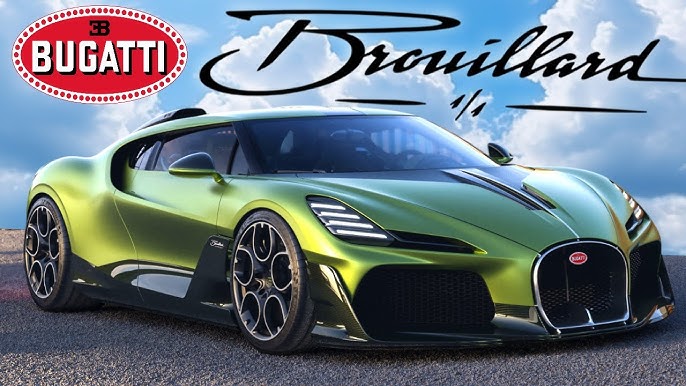
The Solitaire division’s second creation (following last fall’s Brouillard) emerges from Bugatti’s Molsheim ateliers, limited to two bespoke masterpieces annually. Where the Tourbillon signals electrification’s future, F.K.P. Hommage celebrates analog opulence—the last guardian of Volkswagen-era Bugatti DNA.
Bugatti F.K.P. Hommage
Mechanical Foundation: W-16’s Final Roar
Beneath Veyron curves beats the Chiron Super Sport’s 8.0-liter quad-turbocharged W-16: 1578 horsepower, 1180 lb-ft torque, 0-60 in 2.4 seconds, 300+ mph capability. This isn’t detuned theater; it’s the same powertrain that claimed production hypercar speed records, now contextualized by 2005 design language.
The W-16 represents combustion’s apex—a 64-valve, quad-turbo complexity never to return, soon replaced by Tourbillon’s 1800-hp V-16 hybrid. Bugatti weds this mill to Chiron’s carbon tub, all-wheel drive, and seven-speed dual-clutch, preserving 4400-pound curb weight balance beneath period styling. Michelin Pilot Sport Cup 2 tires (20-inch front, 21-inch rear) maintain modern grip standards.
Exterior: Faithful Reinterpretation
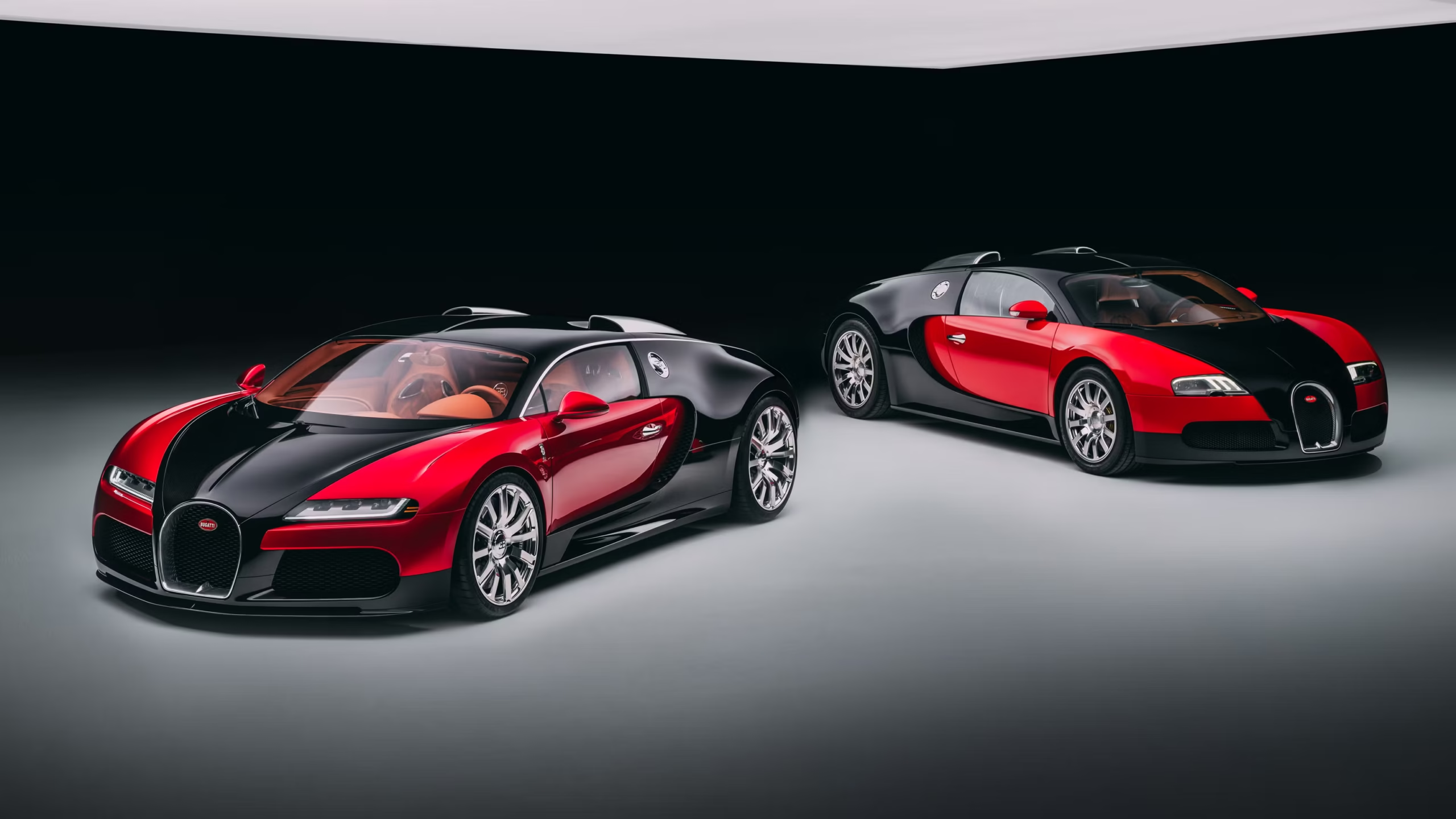
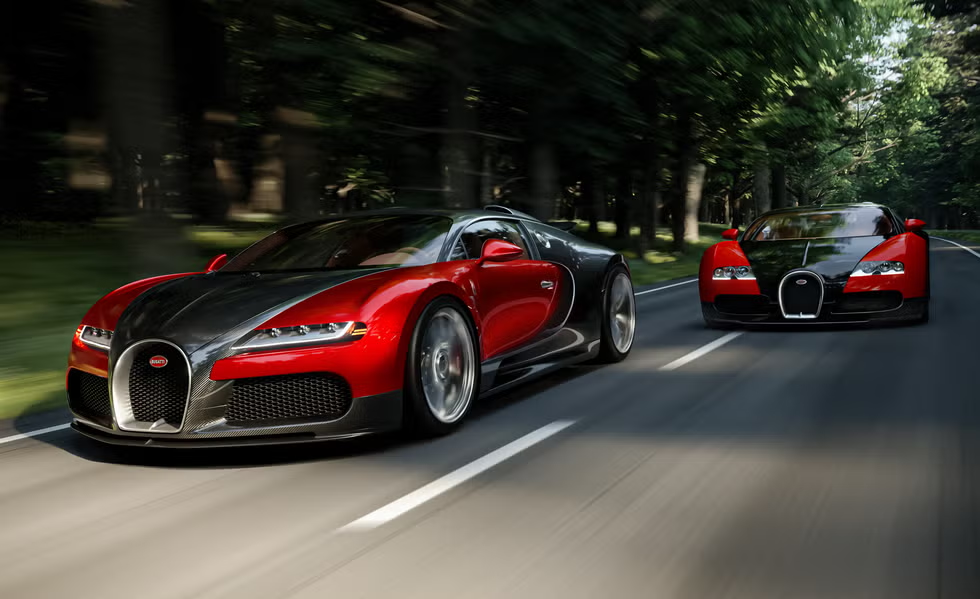
The F.K.P. Hommage doesn’t mimic—it resurrects. Two-tone black carbon rear deck flows into deep red flanks, echoing Veyron’s signature drama. The horseshoe grille, machined from solid aluminum billet, gains three-dimensional depth absent in the original casting. Narrow LED headlights flank ovoid intakes; twin silver NACA roof ducts channel air precisely as 2005 intended.
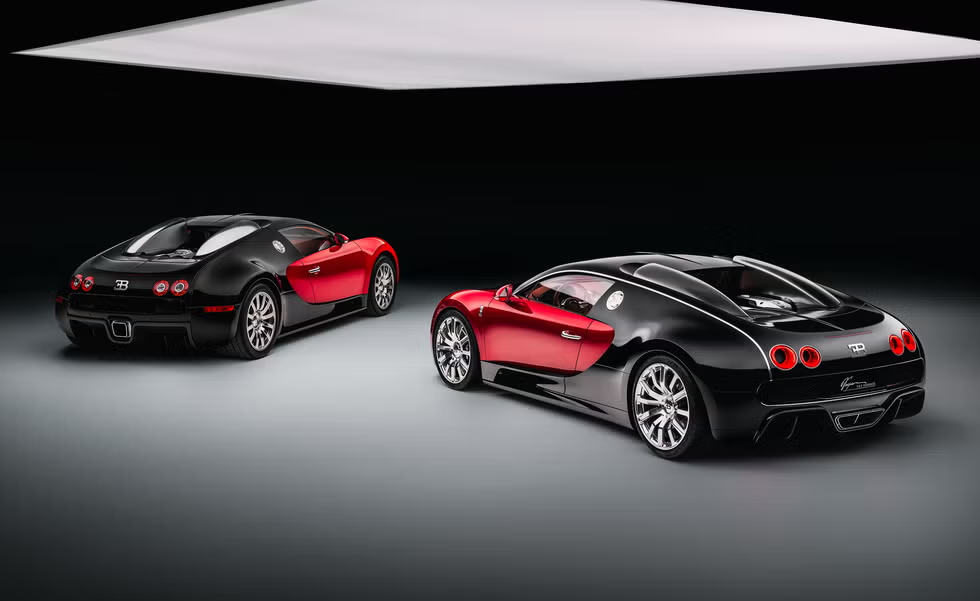
Chrome wheels replicate Veyron’s blocky aesthetic while clearing massive carbon-ceramic brakes. Taillights resolve as twin circular elements outlining the original’s lens pattern. Every surfacing decision balances homage with Chiron aerodynamics—functional cooling vents, subtle ground effects, restrained diffuser. It’s Veyron visual poetry through 2026 lens.
Bugatti F.K.P. Hommage
Bugatti F.K.P. Hommage
Interior: Bespoke Mechanical Symphony
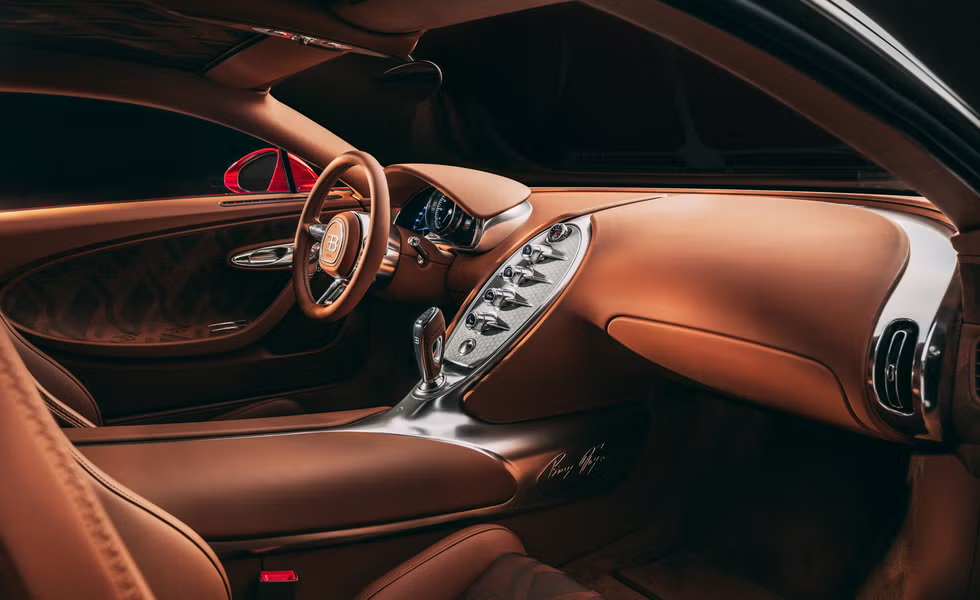
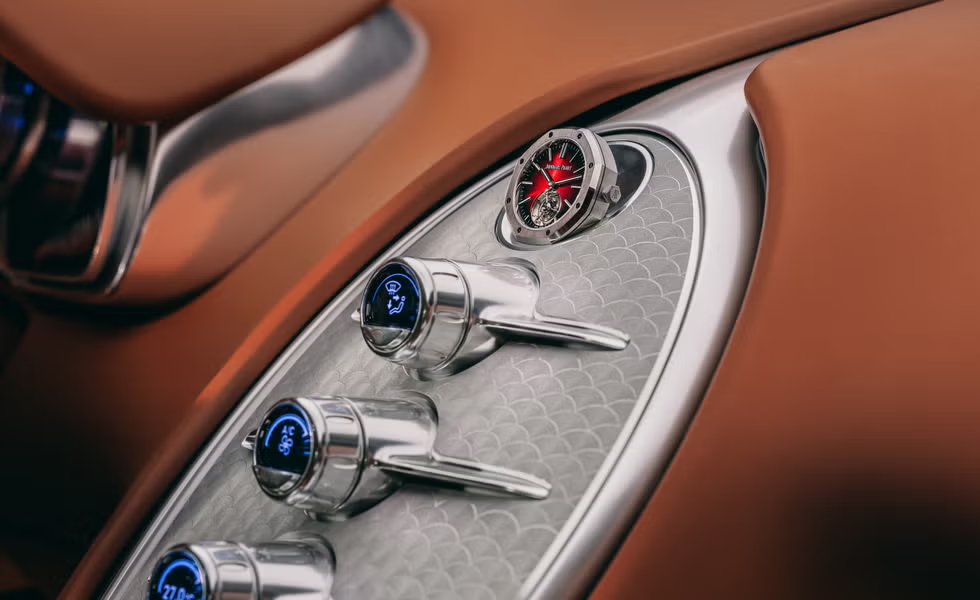
The cabin rejects Chiron’s digital austerity for analog splendor. Supple brown leather cloaks every surface, interrupted by solid-machined aluminum switchgear and a silver fish-scale console housing physical controls. A circular steering wheel replaces Chiron’s flat-bottom unit; the Audemars Piguet Royal Oak Tourbillon—octagonal haute horlogerie—anchors the dash as functional art.
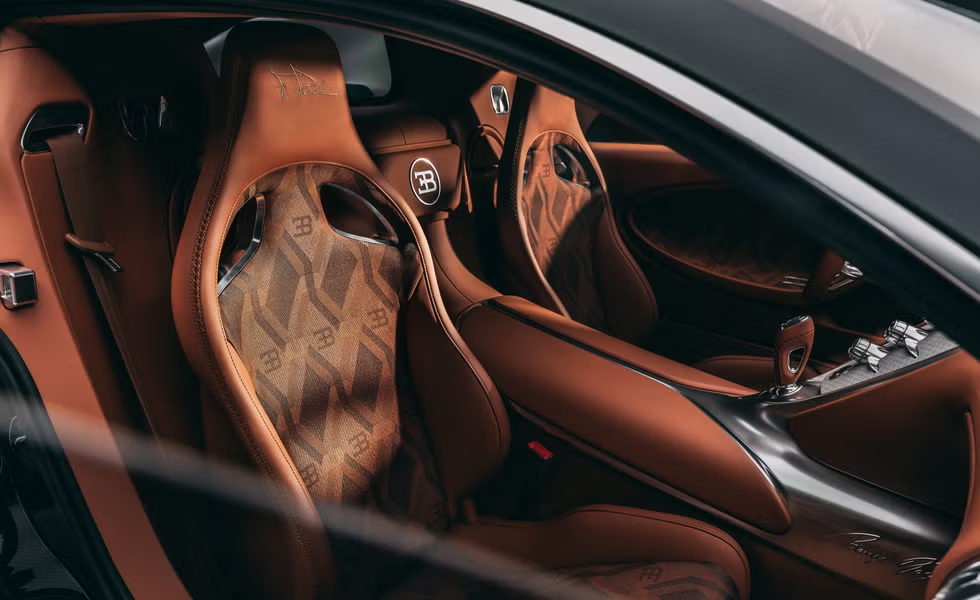
Seats and door panels bear custom rhombus-and-jagged-line fabric, blending heritage texture with modernity. Digital gauges provide the lone 21st-century concession. Every tactile surface—from perforated leather to knurled aluminum—telegraphs Molsheim’s 1000+ man-hour commitment. This isn’t interior design; it’s mechanical sculpture.
Bugatti F.K.P. Hommage
Exclusivity and Philosophy
Solitaire codifies Bugatti’s one-off philosophy: unlimited budgets, zero compromises, two masterpieces yearly. The F.K.P. Hommage follows Brouillard’s fog-gray minimalism with Veyron maximalism—client anonymity preserved, pricing undisclosed but assuredly Chiron’s $3.5M+ territory. Production rejects replication; each Solitaire vehicle exists as singular client vision realized through industrial artistry.
Bugatti F.K.P. Hommage
Bugatti F.K.P. Hommage
Cultural Artifact
The F.K.P. Hommage transcends horsepower metrics. It bookmarks Volkswagen-era Bugatti: Piëch’s audacity, W-16 wizardry, Veyron’s paradigm shift from supercar to hypercar. As Tourbillon’s V-16 hybrid signals electrification, this one-off enshrines combustion’s zenith—1578 horses channeling 1920s grand prix DNA through 21st-century carbon.
When museums chronicle 21st-century automotive royalty, F.K.P. Hommage claims its gallery space—not as fastest or most powerful, but as elegant farewell to an era when sixteen cylinders formed engineering’s unconquerable summit. Bugatti doesn’t build cars; it forges history. This time, history wears red and black.