The ELO is a rolling design lab that mixes central driving position, modular seating,and a two-person sleeping setup in one very French package.
Citroën has never been afraid to get weird, and the new Citroën ELO concept proves the brand still treats “normal” as more of a suggestion than a rule. Officially billed as a “laboratory of ideas,” this compact van isn’t a production teaser so much as a rolling thought experiment: what if a city-sized EV could commute during the week, play camper on the weekend, and double as a mobile lounge in between?
A concept, not a secret next model
Citroën is clear that the ELO is a concept car, not a disguised preview of next year’s people-mover. It’s a design study intended to test packaging, layout, and use-case ideas rather than forecast a specific future model line. Engineers and designers are treating it as a sandbox to explore how a small footprint vehicle might cover “rest, play, and work” without simply turning into another boxy van.
In internal discussions described by the company, the ELO is framed less as a show-car fantasy and more as a modular platform for experiments—from seating configurations to power management and onboard living features. Any production influence would be indirect: individual solutions may filter into future vans or crossovers, but the ELO itself is not headed for a showroom.
Citroën ELO concept
Design philosophy: mini-van, maxi-character
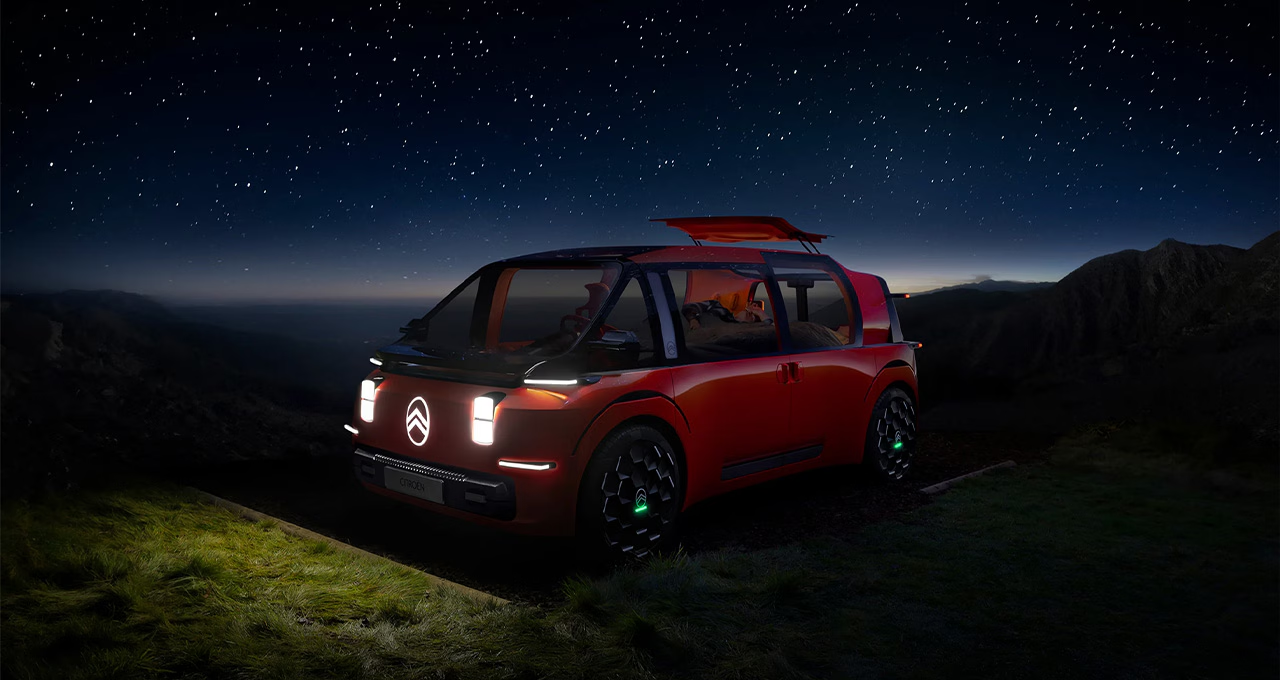
Visually, the ELO lands somewhere between a city car, a micro-camper, and a sci‑fi sketch. The proportions are compact and upright, with very short overhangs and a tall glasshouse that emphasizes interior space over sleek aerodynamics. The most striking element is the roof, which appears to rise, curve, and scallop in different sections, creating a layered effect that hints at separate “zones” inside rather than one uniform volume.
The front end is clean and almost toy-like, with simple lighting signatures and minimal grille work in line with EV-inspired design language. Side surfacing is kept relatively smooth, but the window shapes and roof contouring break up the mass so the van doesn’t look like a plain white cube. It’s clearly meant to look friendly and approachable rather than aggressive—more urban companion than rugged expedition rig.
Citroën ELO concept
Interior layout: central seat and rolling living room
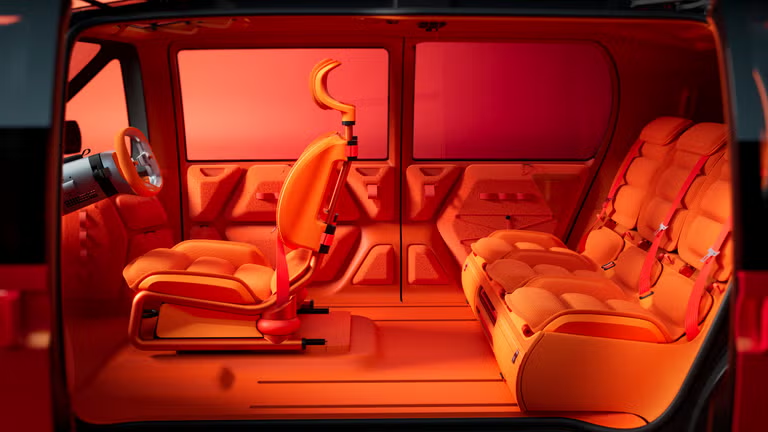
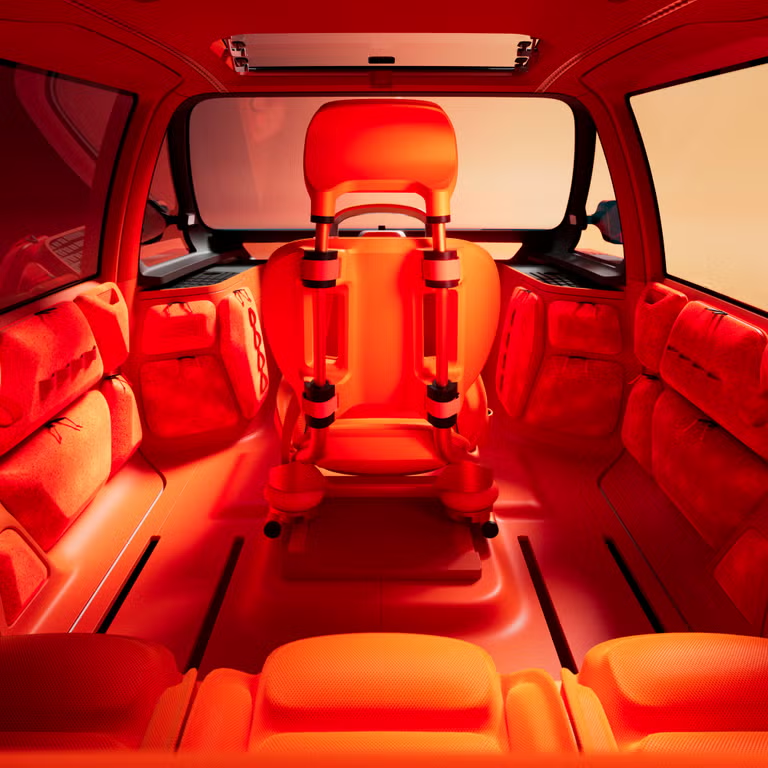
Step inside—at least in theory—and the ELO’s most unconventional idea appears right away: a central driving position. Like a McLaren F1 filtered through a family van brief, the driver sits in the middle of the cabin instead of to one side. The seat can swivel around to face the rear compartment when parked, turning the cockpit into part of a communal lounge.
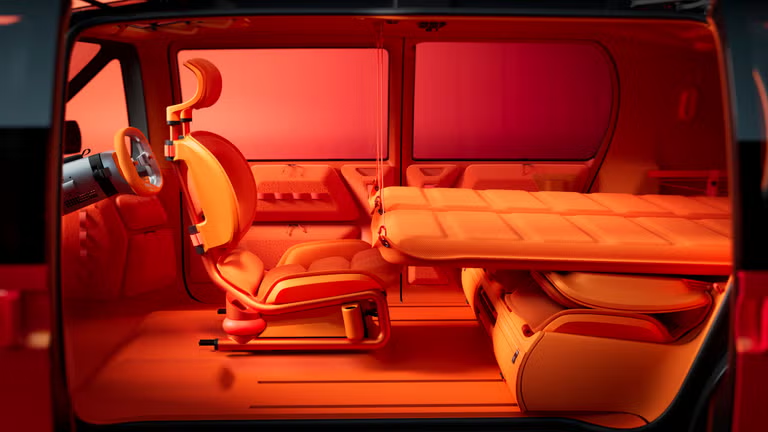
Citroën has packaged the cabin to seat between four and six occupants in an asymmetric layout, with chairs that can be rearranged, folded, or stowed depending on the task at hand. At night, the furniture reconfigures to create a flat sleeping area for two adults, effectively converting the ELO into a micro-camper. The brand also envisions the van doubling as a “home cinema,” with occupants reclined and facing a screen or projection surface, and using the vehicle’s battery as a power source for devices and entertainment.
Usability appears to be built around ease of movement rather than fixed rows. A largely flat floor, generous headroom, and large openings would make it easy to step through the cabin, pivot seats, or shift between “drive,” “lounge,” and “sleep” modes without contortion. In that sense, the ELO has more in common with classic multi-purpose vans and modern camper pods than with a typical MPV.
Citroën ELO concept
Citroën ELO concept
Familiar ideas, remixed
Conceptually, the ELO borrows from several familiar automotive ideas and tilts them into a new context. The central driving position is a clear nod to iconic performance cars, but here it’s used to create symmetry and better sightlines in a compact urban van rather than to optimize track driving. Modular seating and bed conversions are staples of camper vans and mini motorhomes, yet Citroën shrinks the concept down to something closer in footprint to a small city car.
Compared with conventional minivans, the ELO trades sliding doors and three-row family layouts for flexibility and lifestyle focus. It also echoes the brand’s own Ami quadricycle in spirit—compact, simple, and aimed at short-distance, multi-role use—while adding genuine sleeping and social space. It’s less a rival to a full-fat RV and more a rethink of what a “daily driver plus weekend escape pod” could look like if designed from the inside out.
Citroën ELO concept
Citroën ELO Concept
What it suggests about Citroën’s future
On its own, the ELO concept won’t be appearing in dealer price lists, and Citroën is open about that. The van exists to test packaging solutions, interior concepts, and use-case scenarios in a world where small vehicles are increasingly asked to do more than just commute. Central swivel seating, highly modular interiors, and integrated “tiny home” features are all technologies that could migrate into more mainstream products over time.
If anything, the ELO signals that Citroën still wants to occupy a slightly different corner of the market—one where comfort, clever space usage, and a sense of playfulness matter just as much as conventional styling or spec-sheet one‑upmanship. Future production vans or crossovers from the brand may never look as quirky as this concept, but it would not be surprising to see echoes of its layout and flexibility show up in the next generation of compact people-movers.