Introduction: Where Legendary Engineering Meets Modern Performance
The Nissan Patrol Y60 holds a unique position within global automotive culture. Never officially distributed across United States markets, this fourth-generation architecture achieved cult status among off-road enthusiasts and overseas adventure seekers who recognized its straightforward durability, mechanical simplicity, and genuine capability. Desert racers, overlanding pioneers, and international expedition teams embraced the Y60 Patrol as reliable transportation infrastructure when reliability mattered most.
Chris Forsberg, president of Forsberg Racing and three-time Formula Drift champion, selected this iconic platform for SEMA 2025 showcase, departing from his celebrated history of high-performance Z sports car modifications. This decision speaks volumes about contemporary automotive enthusiasm—legendary platforms deserve resurrection through modern performance engineering. The resulting collaboration represents more than visual nostalgia or superficial restoration; it demonstrates how thoughtful engineering can bridge historical significance with contemporary power delivery expectations.
Beneath its classic boxy proportions and period-correct racing livery sits automotive engineering that challenges conventional understanding about engine potential, forced induction limits, and performance platform versatility. This isn’t a subtle modification or cosmetic exercise; it’s a methodical power progression that transforms a 1980s-proportioned platform into something genuinely extraordinary.
Forsberg Racing Nissan Patrol Y60 (13)
Forsberg Racing Nissan Patrol Y60 (12)
Forsberg Racing Nissan Patrol Y60 (11)
Forsberg Racing Nissan Patrol Y60 (9)
Forsberg Racing Nissan Patrol Y60 (10)
Forsberg Racing Nissan Patrol Y60 (8)
Forsberg Racing Nissan Patrol Y60 (7)
Forsberg Racing Nissan Patrol Y60 (6)
Forsberg Racing Nissan Patrol Y60 (5)
Forsberg Racing Nissan Patrol Y60 (4)
Forsberg Racing Nissan Patrol Y60 (3)
Forsberg Racing Nissan Patrol Y60 (2)
The Engine Architecture: Reimagining TB48 Potential
The Forsberg Racing Patrol’s foundation rests upon a Nissan TB48 inline-six cylinder engine—a 4.8-liter displacement power plant originally engineered for durability and reliability across demanding international markets. Understanding this engine’s transformation requires examining both its stock characteristics and the modifications enabling its dramatic performance elevation.
TB48 Original Specification Foundation
In naturally aspirated configuration, the TB48 produces approximately 245–280 horsepower at 4,800 RPM, generating 394–400 Newton-meters of torque at lower engine speeds. This engine design prioritizes torque delivery characteristics essential for off-road driving, heavy load capacity, and sustained operation across extended temperature ranges. The inline-six configuration provides inherent smoothness and balanced firing sequences that contribute to the engine’s legendary reliability reputation.
The TB48’s original engineering reflects straightforward mechanical philosophy—single overhead camshaft design, robust pushrod architecture, and conservative compression ratios. These characteristics made the engine virtually bulletproof for operators prioritizing dependability above maximum output. However, this conservative baseline simultaneously created enormous potential for performance modification through forced induction and electronic tuning enhancement.
Achieving 1000 horsepower from the TB48 architecture required systematic engineering progression involving multiple component integration. The Forsberg Racing build centers upon a Garrett G42-1200 turbocharger—professional-grade forced induction equipment capable of supporting boost pressures historically reserved for motorsport applications.
The Garrett G42-1200 features maximum turbine speed of 118,000 RPM and engineering specifications supporting up to 1,200 horsepower capacity. This substantial turbocharger transforms atmospheric pressure induction into aggressive forced induction delivery, fundamentally altering engine breathing characteristics and combustion efficiency. Paired with a Garrett GVW-60 wastegate, boost pressure management prevents uncontrolled over-pressurization that would compromise component longevity.
Forsberg Racing Nissan Patrol Y60
Forsberg Racing Nissan Patrol Y60
Complementary Systems Supporting Aggressive Boost
Turbocharger integration represents only one element within comprehensive performance architecture. A PWR three-inch intercooler addresses charge air temperature elevation resulting from compression—elevated intake temperatures reduce air density and compromise combustion efficiency. By reducing charge air temperatures, the intercooler maintains optimal volumetric efficiency across the boost curve, sustaining maximum power delivery across full RPM range.
Hypertune billet intake manifold provides custom air routing optimized for turbocharger output compatibility. Rather than relying upon factory manifold geometry designed for naturally aspirated operation, the custom billet design accommodates aggressive boost pressure distribution and maintains flow characteristics compatible with 1000-horsepower levels.
Engine Management Revolution: Link Fury ECU
Modern forced induction requires sophisticated electronic engine management impossible to achieve through mechanical tuning alone. The Link Fury ECU represents professional-grade engine control architecture integrating fuel delivery, spark timing, boost pressure management, temperature monitoring, and safety protocols into unified system operating at millisecond responsiveness.
NGK racing spark plugs complete the ignition system, designed for consistent firing reliability across extreme boost conditions where standard spark plug electrodes would experience thermal degradation. Professional-grade ignition components ensure dependable firing across the entire performance envelope.
Transmission System Adaptation
Translating 1000 horsepower through traditional automatic transmission hardware creates numerous engineering complications. The Forsberg Racing Patrol incorporates manual transmission architecture supported by ACT dual-plate clutch systems—heavy-duty friction materials capable of transferring extreme torque loads without slippage or thermal degradation. This manual arrangement provides direct mechanical control essential for managing turbocharger power delivery characteristics and permitting driver-controlled boost progression.
Forsberg Racing Nissan Patrol Y60
Forsberg Racing Nissan Patrol Y60
Suspension and Chassis Evolution: Off-Road Inspiration Translated to Performance
Beyond engine architecture, comprehensive suspension redesign ensures the TB48’s unleashed potential translates effectively to controlled vehicle dynamics rather than overwhelming the platform’s structural integrity.
NISMO Suspension Framework
The Forsberg Racing Patrol incorporates suspension architecture sourced from NISMO’s comprehensive performance catalog. While Nissan deliberately obscures specific component details, describing the setup simply as “off-road inspired,” the selected components clearly prioritize trail-rated durability while maintaining responsive handling characteristics.
Remote reservoir dampers represent the suspension system’s cornerstone—this sophisticated design isolates pressurized nitrogen and hydraulic fluid from conventional shock components, expanding heat dissipation capacity and enabling progressive damping rates. Remote reservoirs permit extended suspension travel without cavitation, essential for both trail impacts and aggressive acceleration/deceleration cycles that compress and extend suspension geometry repeatedly.
Wheel and Tire Integration
Seventeen-by-nine-inch custom NISMO beadlock wheels establish the Patrol’s physical stance. Beadlock wheel technology mechanically secures tire sidewalls to wheel interfaces through mechanical pressure rings, maintaining tire bead seating across extreme articulation and low-pressure operation typically causing conventional wheels to lose tire seating. Thirty-five-inch Yokohama Geolandar all-terrain tires provide gripping surface across variable terrain while supporting 1000-horsepower acceleration demands without sidewall breakaway.
This wheel-tire combination creates visually imposing presence while simultaneously providing legitimate performance benefits—wider contact patches support acceleration forces, enhanced sidewall support improves cornering response, and aggressive tread patterns deliver traction across trail surfaces.
Forsberg Racing Nissan Patrol Y60
Forsberg Racing Nissan Patrol Y60
Exterior Design Philosophy: Retro Aesthetics Meeting Modern Performance Identity
The Forsberg Racing Patrol’s exterior treatment deliberately embraces historical design language while integrating modern performance cues that communicate mechanical sophistication to discerning automotive enthusiasts.
Classic Racing Livery Integration
The build wears competitive-inspired graphics combining NISMO, Mobil 1, and Forsberg Racing branding—a livery arrangement echoing historical motorsport vehicles where manufacturer and sponsor partnerships were communicated through paintwork rather than digital graphics. This aesthetic choice connects the Patrol to authentic competition history while differentiating it from typical custom vehicle styling approaches.
The color scheme itself reflects period-correct racing philosophy—classic Patrol proportions complement traditional rally aesthetic better than contemporary aerodynamic design language. Four-decade-old boxy proportions surprisingly align with rally vehicle visual conventions, where functionality and mechanical visibility superseded aerodynamic optimization.
Lighting Integration: Heritage Meets Visibility
Four six-inch round flood and driving lights mounted ahead of the grille establish unmistakable rally-inspired personality while serving practical visibility enhancement. Holley RetroBright LED headlamp technology maintains aesthetic period-correctness through traditional round lens geometry while incorporating modern LED efficiency and illumination characteristics.
This layered approach to lighting design—combining retro styling with contemporary technology—encapsulates the Forsberg Racing philosophy. Historical design authenticity doesn’t require mechanical obsolescence; it accommodates thoughtful technical progression.
Interior Architecture: Function Transcending Cosmetics
The cabin treatment reflects professional motorsport priorities rather than luxury customization trends. Recaro Sportster bucket seats provide lateral support necessary for aggressive cornering while maintaining ergonomic positioning across extended driving sessions. Forsberg Racing-engineered seat mounting brackets secure the seats within the vintage cabin architecture without requiring structural modifications compromising vehicle integrity.
Quick-release OMP steering wheel technology appears across professional motorsport applications—this functionality proves impractical for daily driving yet communicates genuine racing intention to discerning observers. The inclusion of competition-grade steering interfaces acknowledges this build transcends typical custom vehicle territory; it represents competition-informed engineering applied to heritage platform.
Forsberg Racing Nissan Patrol Y60
Historical Context: The Y60 Patrol Legacy
Understanding the Forsberg Racing Patrol requires appreciating the Y60 generation’s significance within global automotive culture. Produced from 1989 through early 2000s, the fourth-generation Patrol established fortress reputation across regions where reliability surpassed luxury amenities.
Middle Eastern operators, Australian outback explorers, and international expedition organizations standardized upon Y60 platforms specifically because mechanical simplicity reduced dependence upon dealer infrastructure and specialized technicians. Engine failures were rare; transmission problems virtually nonexistent. This durability foundation persists—many Y60 Patrols remain operational across three decades later, testament to engineering fundamentals that prioritized longevity.
The Y60’s near-perfect proportions create visual timelessness inconsistent with its 1989 introduction date. Contemporary design trends haven’t rendered its boxy geometry obsolete; if anything, contemporary retro enthusiasm validates the original engineering aesthetic. This enduring visual appeal explains its cultish following among enthusiasts who recognize automotive design transcending decade-specific trends.
Forsberg Racing’s Design Philosophy: Specificity Without Gimmickry
Chris Forsberg’s automotive background emphasizes performance engineering grounded in motorsport fundamentals rather than novelty aesthetics. His Formula Drift championship achievements validated his driver talents; his racing team’s reputation reflects engineering competency rather than marketing spectacle. The Patrol project extends this philosophy—substantial engineering achievements rather than cosmetic showcasing.
The decision to select an aging Patrol platform, rather than contemporary high-performance vehicles dominating SEMA exhibition halls, demonstrates philosophical conviction about platform potential. Forsberg recognized that TB48 engine architecture combined with chassis that survived four decades of abuse could accommodate modern forced induction technology more effectively than newer platforms designed around naturally aspirated assumptions.
Technical Specification Summary
Engine Architecture:
TB48 inline-six cylinder, 4.8-liter displacement
Garrett G42-1200 turbocharger with 118,000 RPM maximum turbine speed
The Forsberg Racing Patrol challenges conventional assumptions about performance platform viability. Modern enthusiasts often assume contemporary architecture inherently surpasses older designs; this build demonstrates that engineering potential transcends manufacturing date. The TB48’s original durability foundation provides more reliable platform for 1000-horsepower ambitions than rushed contemporary engine designs.
This project indicates that heritage vehicle modification community possesses sophisticated technical capabilities often overlooked by mainstream automotive media. Forsberg’s team engineered fuel delivery, combustion management, thermal regulation, and structural integrity at levels matching contemporary motorsport standards. The Patrol represents competition-ready engineering applied to vintage platform.
Nissan’s participation in this project through parts provision and technical collaboration reflects manufacturer strategy toward enthusiast community engagement. Rather than attempting internal concept development, Nissan partnered with proven specialists—Garrett for turbocharger systems, Link for engine management, NISMO for suspension components, Holley for lighting technology. This collaborative approach leverages established expertise while distributing engineering burden.
The Patrol build demonstrates manufacturer understanding that aftermarket specialists frequently surpass internal development teams in niche performance applications. By partnering strategically, Nissan associates brand with cutting-edge engineering while supporting supplier ecosystem relationships.
The Forsberg Racing Patrol suggests expansion of vintage vehicle modification market. As contemporary emissions regulations increasingly complicate stock engine operation across aging platforms, enthusiasts explore alternative architectures—engine swaps, alternative fuels, electric powertrains. This build represents high-performance internal combustion adaptation applicable to numerous heritage platforms.
Furthermore, this project validates market interest in heritage vehicle performance upgrading. Vintage vehicle values have appreciated substantially as millennial enthusiasts recognize automotive history differently than previous generations. SEMA’s expansion of heritage vehicle modification categories reflects this demographic shift.
Cultural Significance: Automotive Heritage Preservation Through Performance
Beyond mechanical engineering, the Forsberg Racing Patrol communicates cultural message about automotive heritage. Rather than museum preservation or static restoration, Forsberg’s approach treats aging platforms as viable performance canvases. This philosophy conflicts with traditional collector mindsets emphasizing originality and stock configuration preservation.
Contemporary automotive culture increasingly questions whether historical vehicles should remain frozen in time or evolve through thoughtful technical progression. The Patrol build represents philosophical stance—heritage recognition doesn’t require mechanical obsolescence. Modern engineering enhances rather than diminishes historical significance.
Driving Experience Speculation: Performance Characteristics Beyond Raw Power
While actual driving impressions remain unavailable, engineering configuration suggests compelling performance dynamics. Aggressive turbocharger boost delivers power delivery unlike naturally aspirated characteristics—lag reduction through sophisticated engine management creates immediate response, while 1000-horsepower availability enables rapid acceleration despite the Patrol’s relatively heavy platform.
Manual transmission interface provides direct driver control over boost progression—skilled operators manage throttle inputs for controlled power delivery rather than experiencing boost delivery as sudden surge. This represents motorsport-informed philosophy where driver skill and mechanical finesse enable performance optimization.
Suspension architecture and tire selection suggest trail capability exceeding typical 1000-horsepower performance vehicles. Unlike contemporary performance cars designed exclusively for asphalt, the Patrol potentially delivers high-power capability across variable terrain—desert driving dynamics quite different from road course performance metrics.
The SEMA Show Context: Competitive Positioning
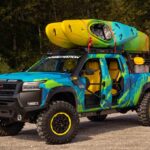
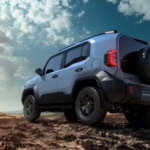
Within SEMA 2025’s broader context, Nissan revealed four distinct concept vehicles—Dune Patrol (Armada), Frontier Rapid Runner (pickup truck), this Forsberg Racing Patrol, and a Z NISMO race-inspired build. Collectively, these concepts communicate comprehensive automotive philosophy spanning utility vehicles, performance sports cars, and heritage platform performance.
The Patrol’s inclusion among contemporary vehicles validates recognition that automotive enthusiasm encompasses diverse platform preferences. Contemporary performance culture frequently emphasizes newest technology and most advanced materials; the Patrol build demonstrates that engineering passion transcends manufacturing era.
Conclusion: Performance Philosophy Redefined
The Forsberg Racing Nissan Patrol Y60 transcends typical concept vehicle classification through genuine engineering innovation, historic platform respect, and performance ambition grounded in mechanical fundamentals. This isn’t museum restoration or nostalgic recreation; it represents competition-informed engineering applied to beloved heritage platform.
For automotive enthusiasts, the project communicates that engineering passion doesn’t require contemporary platforms. Performance potential exists across numerous heritage architectures awaiting discovery by motivated engineers willing to invest technical sophistication and manufacturing expertise.
For Nissan, the collaboration demonstrates manufacturer confidence in heritage platform capabilities and recognition that aftermarket specialist expertise frequently surpasses internal development resources for specialized applications.
The resulting vehicle—1000 horsepower turbocharged inline-six, rally-inspired suspension, period-correct aesthetics, professional-grade electronics—represents automotive culture’s evolution beyond simple distinction between old and new. Engineering excellence transcends manufacturing date. Performance capability reflects technical sophistication rather than design novelty.
The Forsberg Racing Patrol awaits on SEMA show floors, mechanical testament to enduring platform potential and engineering possibilities when contemporary technical sophistication meets legendary mechanical heritage.