Electric or Gasoline, Genesis Magma Is Engineering Emotion into Its Future
Genesis’ performance subbrand says the path to goosebumps runs through motorsports—whether the vehicle hums electrons or spins to 9000 rpm.
For all their shocking acceleration figures and tire-vaporizing torque, high-performance EVs still struggle with a particular kind of silence. Not the literal kind—synthetic soundtracks can be piped into any cabin—but the sensory quiet that comes from a powertrain with no vibration, no rising cadence, no mechanical heartbeat to lean against as the horizon bends. Genesis thinks it has an answer. And the newly launched Magma subbrand is the company’s boldest attempt yet to build not just fast EVs, but emotionally loud ones.
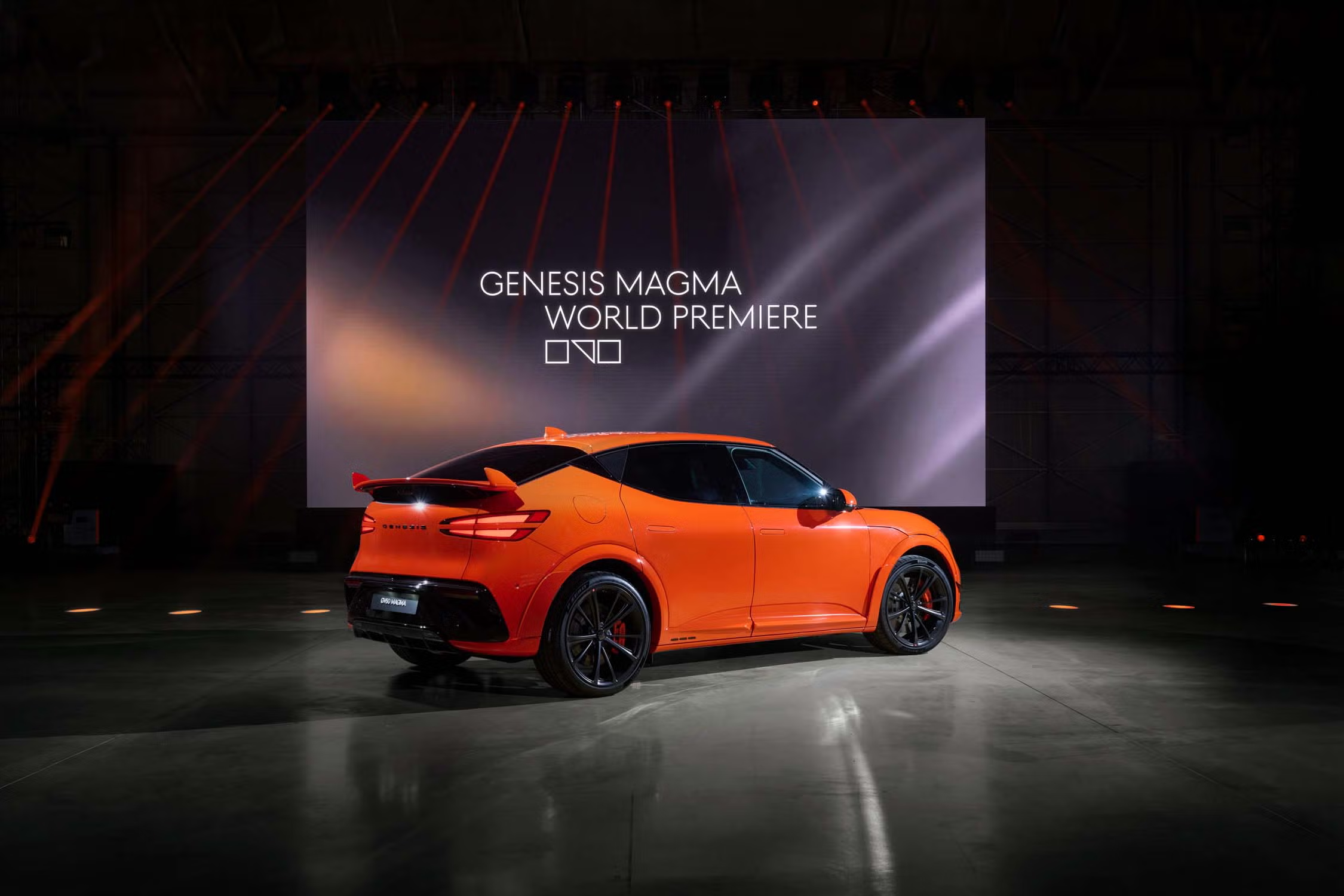
At the LA auto show, Genesis lifted the curtain on the 2027 GV60 Magma, the first production vehicle in a family of performance models tuned with the help of genuine racing drivers—and backed by a motorsports program that returns to Le Mans next year. The goal? To turn electrons (and, soon, gasoline) into visceral, three-dimensional driving sensations.
Genesis Magma (8)
Genesis Magma (7)
Genesis Magma (6)
Genesis Magma (5)
Genesis Magma
Genesis Magma
Genesis Magma
Genesis Magma
Giving It a Voice
Genesis didn’t want Magma to rely on digital theatrics or gimmicks. So rather than borrow from sci-fi movies, the team built a sound and driving experience rooted in their actual racing hardware.
“We’re going back to Le Mans next year; we have the hypercar, which has its own unique sound,” explained Ash Corson, director of Genesis North American product planning. According to Corson, the GV60 Magma’s synthesized voice is inspired by the brand’s mid-engine prototype—and wrapped around the character of a naturally aspirated V-6 revving to 9000 rpm, complete with the cadence of an eight-speed dual-clutch gearbox.
But the GV60 Magma goes further than audio. The motors and control software actively mimic the feel of a high-strung combustion engine: power peaks, upshift jolts, even the slight weight transfer that accompanies a perfectly timed downshift. “It tricks me in the best possible way,” he added. And unlike many EV sound modes that simply grow louder as speed rises, the Magma overlays real, seat-of-the-pants cues tied to motor torque, gear simulation, and deceleration.
Genesis didn’t build this experience in a sound booth. Development involved long sessions of benchmarking, R&D runs, and continuous feedback loops with WEC drivers André Lotterer and Pipo Derani. Legendary racing icon Jacky Ickx also provided feedback, as did Genesis chief creative officer Luc Donckerwolke, who has long advocated for a deeper emotional character in EVs.
The system is optional, of course. “You can still turn all of this off,” Corson said. “The duality is the point. Serenity when you want it, motorsport theater when you don’t.”
Genesis GV60 Magma
Inside the Engineering
Beyond the simulated engine note, the GV60 Magma benefits from substantial mechanical upgrades. Compared with the GV60 Performance, the Magma variant gains retuned dampers, revised bushings, and new logic for its adaptive suspension. The goal was sharper control, not stiffer punishment.
“There’s a big ride-and-handling difference,” Corson emphasized. Engineers focused on maintaining the GV60’s premium glide in Normal mode while unlocking real body discipline when the car is pushed. The system manages to absorb potholes with notable calm before switching into a taut, track-ready posture at the touch of a mode button.
Genesis also paid attention to cabin refinement. Active noise cancellation, strategic insulation, and meticulously tuned seat ergonomics—now with 10-way adjustable front seats—are designed to support long-distance comfort even as the performance envelope expands.
The result, according to early development impressions, is an EV that finally feels like it wears a motorsports badge—not just visually, but dynamically.
A Supercar Waiting in the Wings
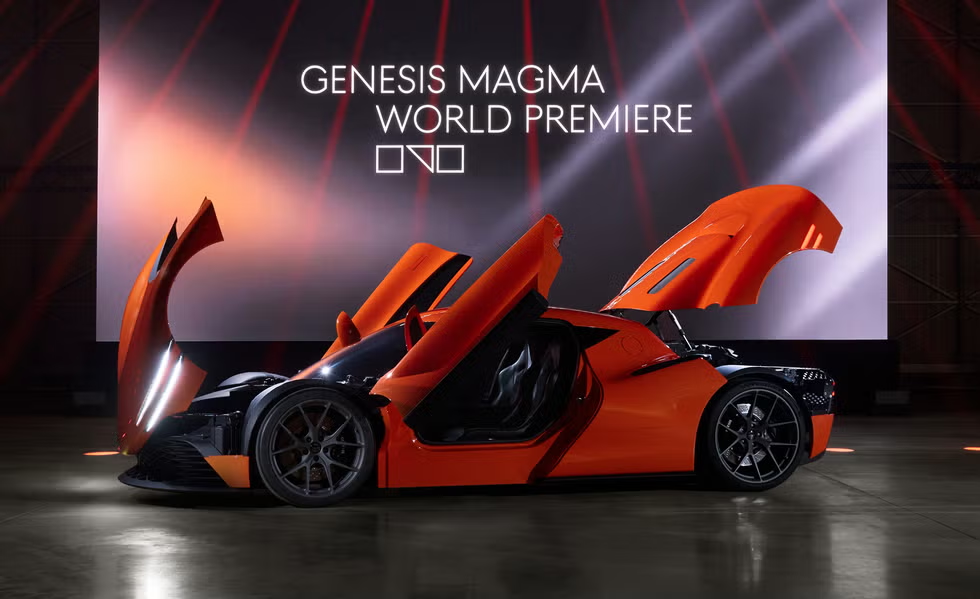
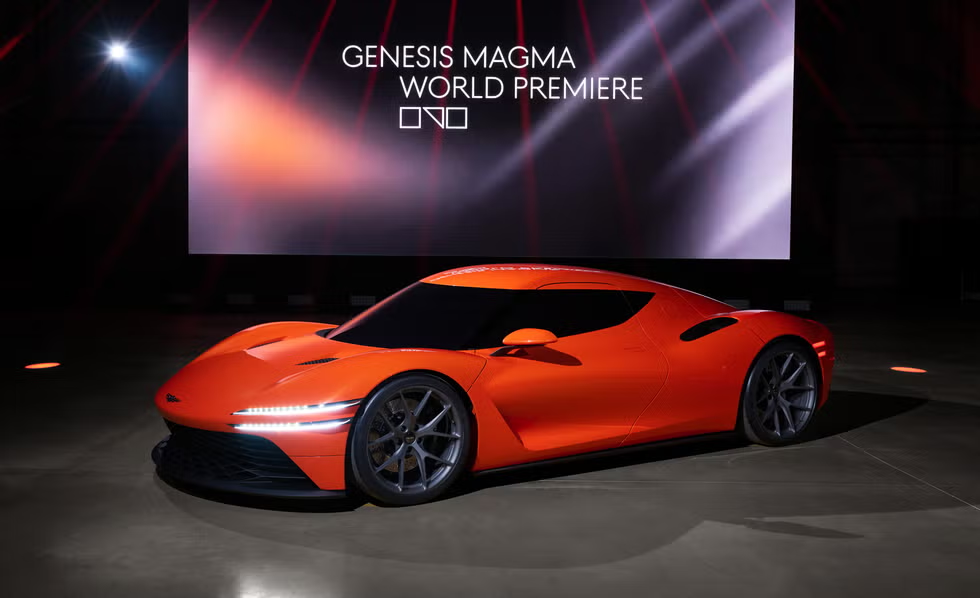
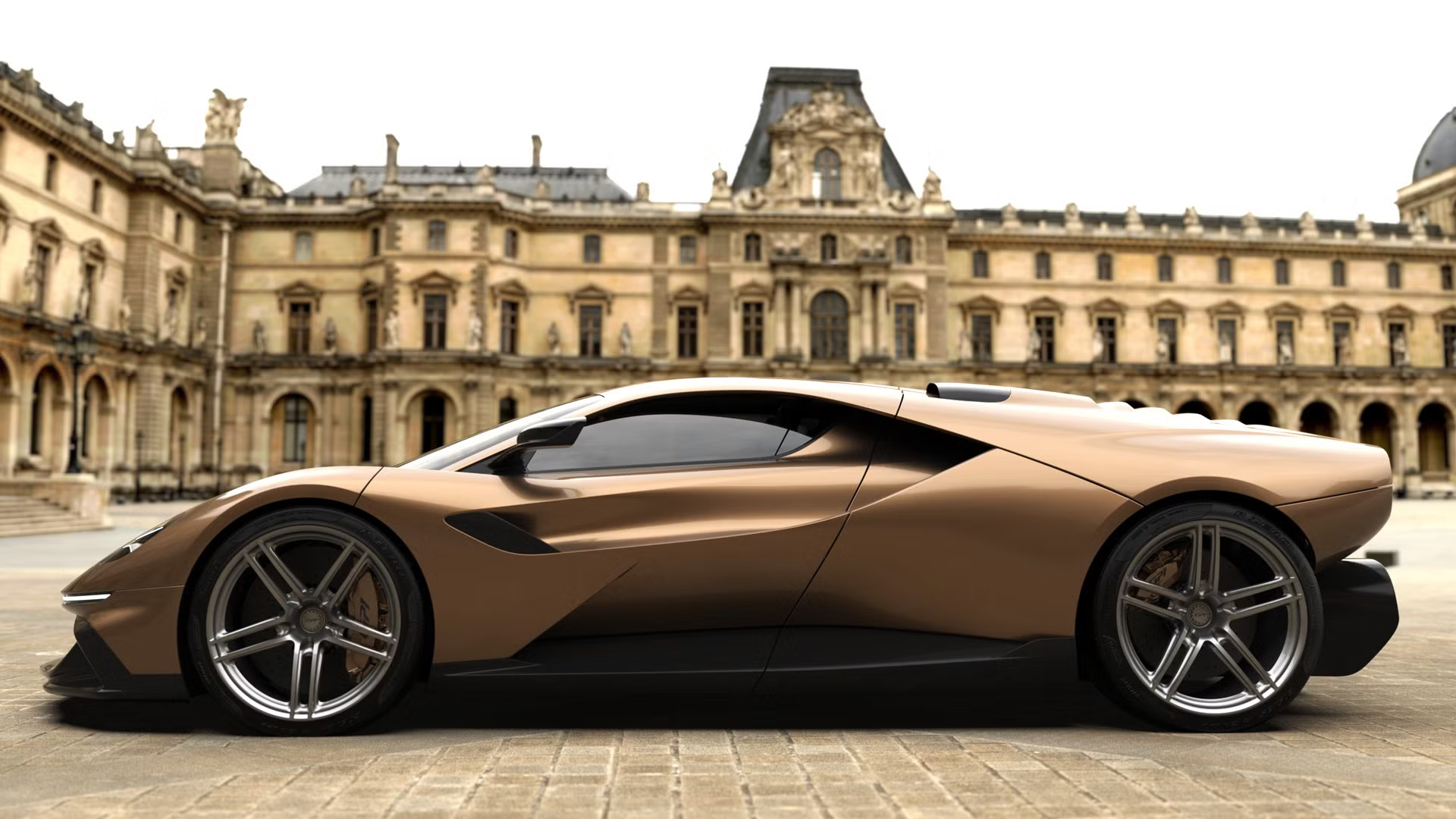
The GV60 is only the beginning. Genesis confirmed that a mid-engine Magma GT supercar is headed for production, drawing heavily from the engineering philosophy of the brand’s Le Mans hypercar.
Corson declined to confirm engine specifics, though he did acknowledge the company has previewed a twin-turbo V-8 in the GMR-001 prototype. The production version will carry over the mid-engine layout, and the powertrain will emphasize power-to-weight efficiency rather than hybrid complexity.
“This isn’t a plug-in hybrid,” Corson said. “The authenticity aspect of Magma is important for us—the street-to-circuit linkage.”
Genesis is also developing hybrids and EREVs (extended-range EVs), though Corson underscored that EREVs, while capable of impressive straight-line punch, do not presently deliver the sustained performance and cooling robustness required for track work. Performance hybrids, he stressed, still represent the pinnacle of motorsport technology.
When asked which electrified direction Magma sees as the performance sweet spot, Corson hinted that the most difficult challenge may already be behind them. “We’ve made a really engaging, fun-to-drive EV,” he said. “Other powertrains are a little bit easier, in some ways.”
Genesis Magma
Genesis Magma
Why It Matters
The Magma subbrand marks a turning point for Genesis. While the core lineup remains focused on luxury, Magma is charting a parallel path toward enthusiast credibility—one rooted in racing, engineering authenticity, and emotion rather than marketing gloss.
If the GV60 Magma is any indication, Genesis isn’t content for its EVs to be quick. They must also be alive, capable of stirring the senses in ways electrons normally cannot. And with a V-8 supercar on the way, Magma’s future looks anything but quiet.
In an industry searching for ways to make EVs feel soulful, Genesis may have found the spark.