Honda 0 Alpha Prototype: New SUV Brings “Thin, Light, and Wise” Philosophy to 2027
Honda revealed another member of their Honda 0 Series electric lineup at the Japan Mobility Show 2025: the 0 Alpha (α), an SUV positioned as the “gateway model” into Honda’s next-generation EV family. It joins the 0 Saloon and 0 SUV concepts shown at CES 2025 earlier this year, with production targeted for 2027 primarily in Japan and India.
The 0 Alpha represents Honda’s attempt to create an electric SUV that works equally well in cities and natural environments—a balance that’s harder to achieve than it sounds, since urban and outdoor priorities often conflict.
The “Thin, Light, and Wise” Development Philosophy
Honda’s building the entire 0 Series around three principles they’ve labeled “Thin, Light, and Wise.” These aren’t just marketing slogans—they represent specific engineering approaches.
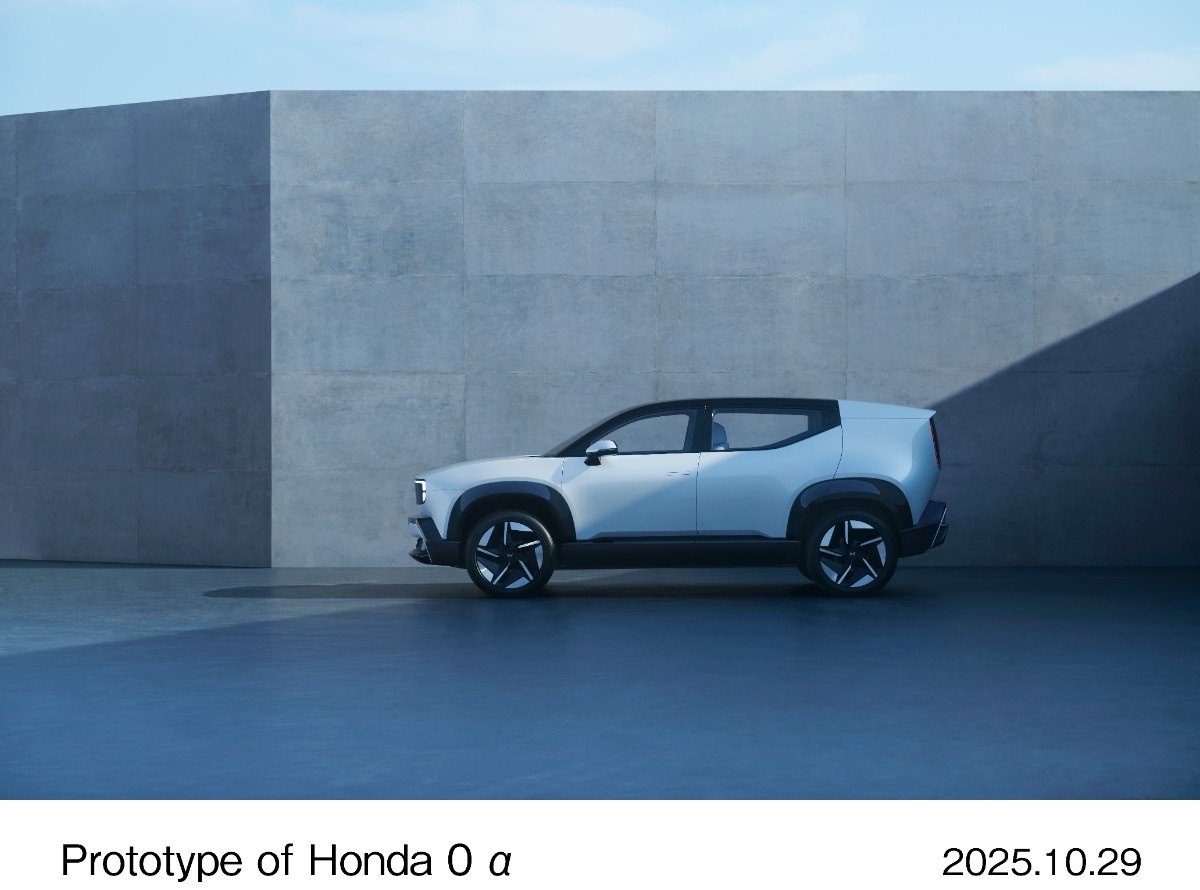
Thin refers to packaging efficiency. The 0 Alpha achieves a low overall vehicle height while maintaining ground clearance and interior space. This contradicts typical SUV design where height increases proportionally with interior volume and ride height. Honda’s accomplishing this through battery placement, cabin architecture, and structural design that minimizes wasted vertical space.
The result should be an SUV that looks sleeker than competitors while offering similar ground clearance for light off-road use and comparable interior roominess. Whether this actually works in production remains to be seen—concepts often promise efficiency that real-world packaging constraints compromise.
Light presumably addresses vehicle mass, though Honda’s announcement doesn’t elaborate. Electric vehicles struggle with weight due to battery packs. Reducing mass improves efficiency, range, handling, and tire wear. Expect extensive use of aluminum, high-strength steel, and possibly carbon fiber in select areas.
Wise likely refers to software, connectivity, and intelligent systems. Modern EVs increasingly differentiate through software capabilities rather than pure hardware specifications. Autonomous driving assistance, over-the-air updates, predictive maintenance, and user interface design all fall under this category.
Honda 0 Alpha Prototype
Design: Integrated Screens and Minimalist Approach
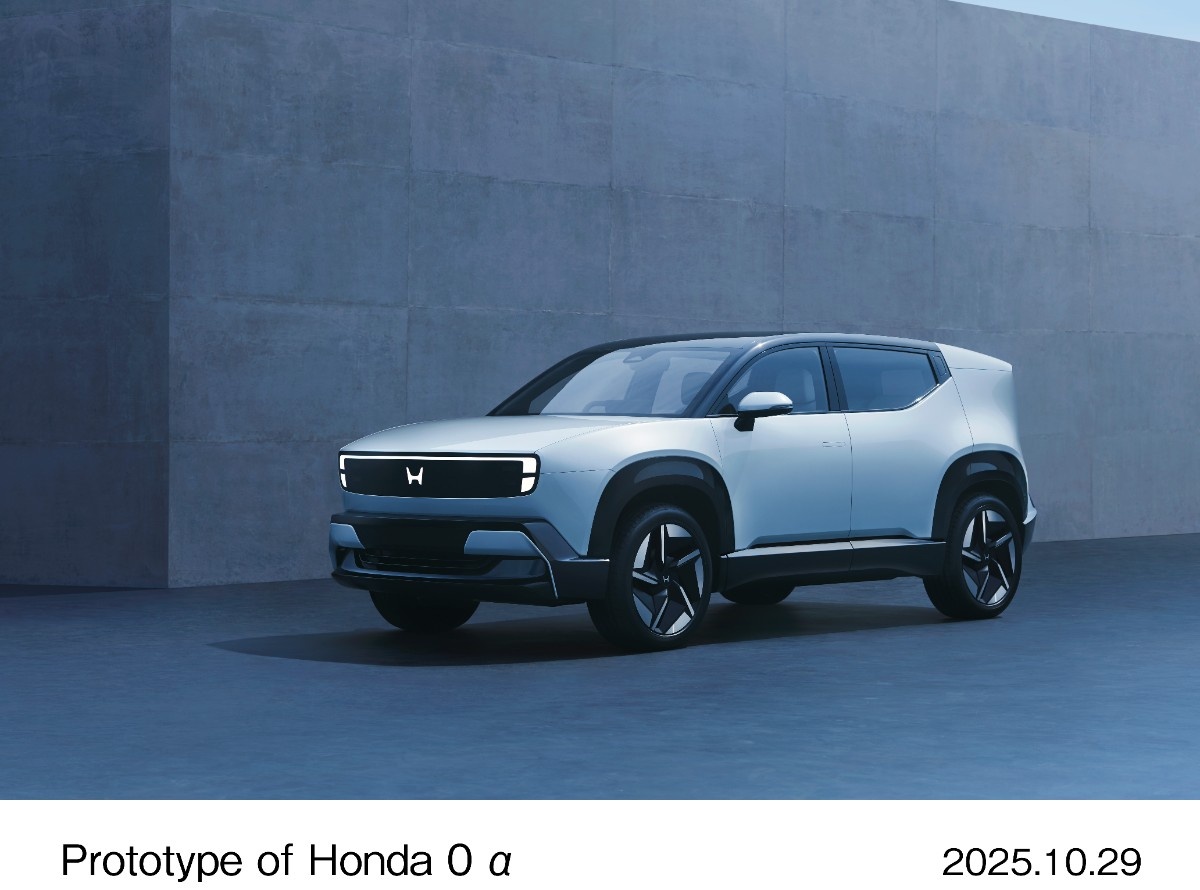
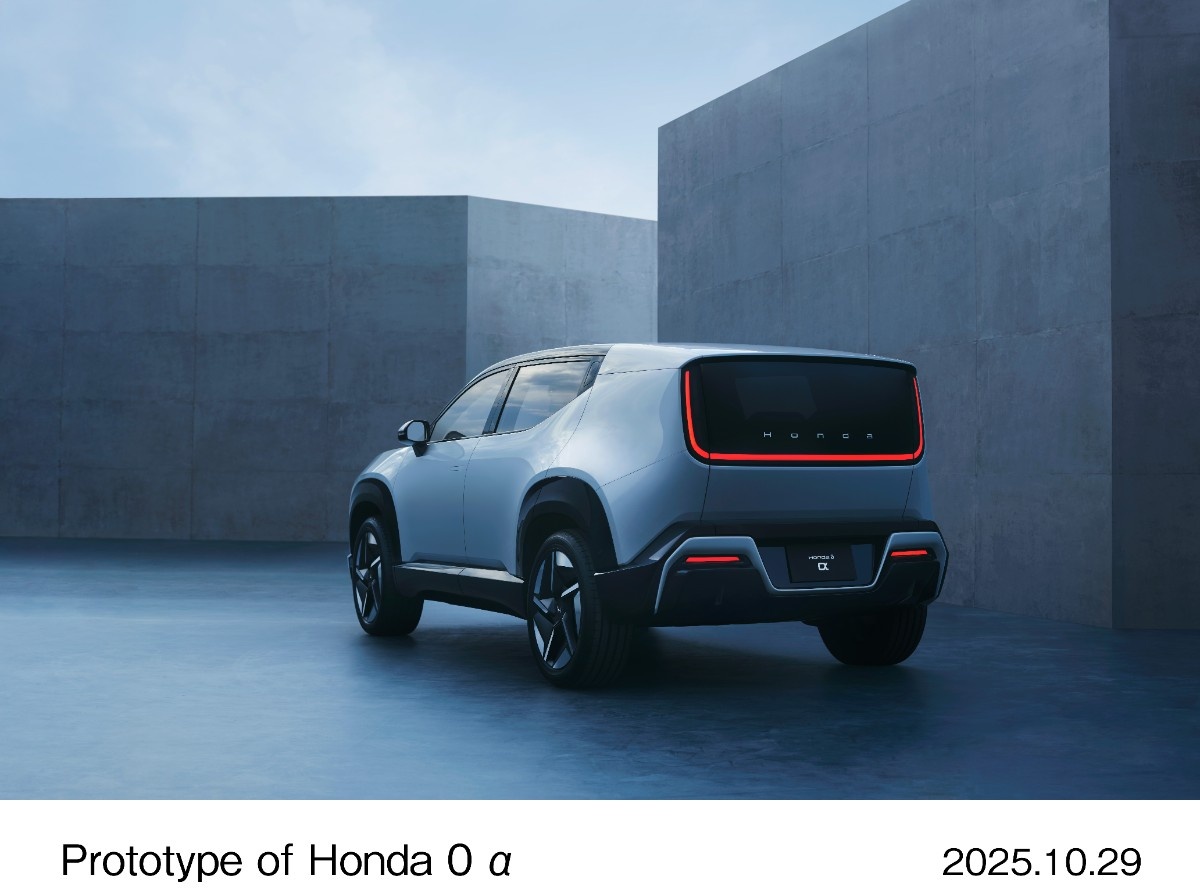
The 0 Alpha’s exterior features “screen areas” at both front and rear—essentially large panels integrating multiple functions into unified surfaces. Up front, headlights, the charging port, and an illuminated Honda emblem merge into one screen panel. At the rear, a U-shaped lighting element combines taillights, backup lights, and turn signals into the rear screen area.
This integration serves both aesthetic and functional purposes. Visually, it creates cleaner surfaces with fewer seams and panel gaps. Functionally, it simplifies manufacturing and potentially improves weather sealing. It also enables dynamic lighting patterns and animations that separate EVs visually from combustion vehicles.
The wide stance emphasizes stability and SUV character despite the low overall height. Honda wants buyers to perceive this as a proper SUV rather than a lifted hatchback, so proportions need to communicate capability even if most examples will never leave pavement.
The overall design language appears more refined and sophisticated than Honda’s current EV offerings, which include the quirky Honda e city car that struggled commercially. The 0 Series seems to pursue broader appeal through cleaner, more conventional execution.
Honda 0 Alpha Prototype
Interior: Spacious Cabin Despite Thin Profile
Honda emphasizes the 0 Alpha offers “outstanding occupant comfort” within a “spacious cabin” despite the thin overall profile. The announcement doesn’t provide interior photos or specific dimensional data, but the claim suggests rear seat legroom and headroom will exceed expectations based on exterior size.
This matters because compact SUVs often compromise rear passenger space to maintain exterior proportions. If Honda genuinely delivers generous rear accommodations in a sleek package, it addresses a common complaint about this vehicle segment.
Cargo capacity will be crucial too. SUV buyers prioritize versatility, and if the thin design sacrifices cargo volume significantly, practical buyers will choose competitors regardless of aesthetic appeal.
The Gateway Model Strategy
Honda positions the 0 Alpha as the “gateway model” for the 0 Series, suggesting it will be the most accessible option in terms of pricing and market positioning. The 0 Saloon and 0 SUV shown at CES appeared more premium, targeting buyers who might cross-shop luxury brands.
The 0 Alpha seems aimed at mainstream compact SUV buyers considering electric—people currently driving CR-Vs, RAV4s, or Tiguans who want EV benefits without extreme pricing or unfamiliar brand territory. This is potentially Honda’s highest-volume 0 Series model if priced appropriately.
“Gateway” also implies Honda sees this converting traditional combustion SUV buyers to electric. It needs to feel familiar enough to not intimidate while offering clear EV advantages that justify switching.
Production Timeline and Markets
The 2027 production target gives Honda roughly 18 months from now to finalize engineering, validate systems, and prepare manufacturing. That’s aggressive but achievable for a company with Honda’s resources and experience.
Initial markets focus on Japan and India, which is interesting. Japan makes sense as Honda’s home market and a country with strong EV infrastructure and incentives. India is more surprising—it’s a cost-sensitive market where affordable transportation dominates. Honda must believe they can produce the 0 Alpha at price points that work in India, or they’re targeting a small premium segment there.
Notably absent from initial launch plans: North America and Europe. Honda hasn’t explicitly ruled out these markets later, but starting elsewhere suggests either production constraints, regulatory considerations, or market prioritization based on EV adoption rates.
Battery specifications: Capacity, chemistry, range, and charging speed all matter enormously but weren’t disclosed.
Performance figures: Horsepower, torque, acceleration, and top speed remain mysteries.
Pricing: “Gateway model” suggests affordability, but actual cost will determine success.
Interior details: We’ve seen exterior design but not cabin layout, materials, or technology integration.
Production location: Where will Honda build these? Existing plants or new facilities?
Autonomous capabilities: What level of driver assistance will be standard or optional?
These details will emerge as production approaches, but their absence now prevents meaningful competitive analysis.
Honda 0 Alpha Prototype
Competition Context
The compact electric SUV segment is becoming crowded. Tesla’s Model Y dominates sales. Hyundai Ioniq 5 and Kia EV6 offer strong alternatives. Volkswagen’s ID.4 represents traditional manufacturers. Chinese brands like BYD are expanding globally with competitive products at aggressive prices.
Honda’s 0 Alpha needs compelling advantages to stand out: superior efficiency, better packaging, lower pricing, more standard features, or brand loyalty from existing Honda customers. Simply being “another electric SUV” won’t cut it in 2027’s market.
The “Thin, Light, and Wise” philosophy could provide differentiation if executed well. Buyers tired of heavy, bloated EVs might appreciate Honda’s efficiency focus. But promises must become reality—concepts always look great until production compromises emerge.