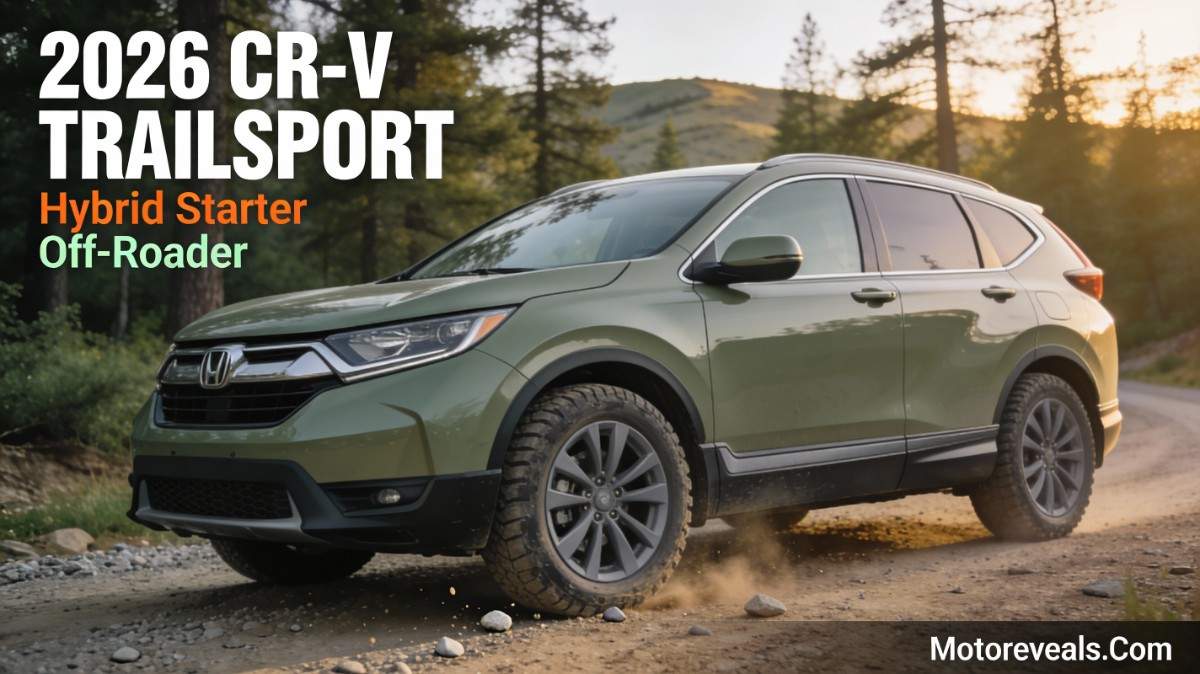
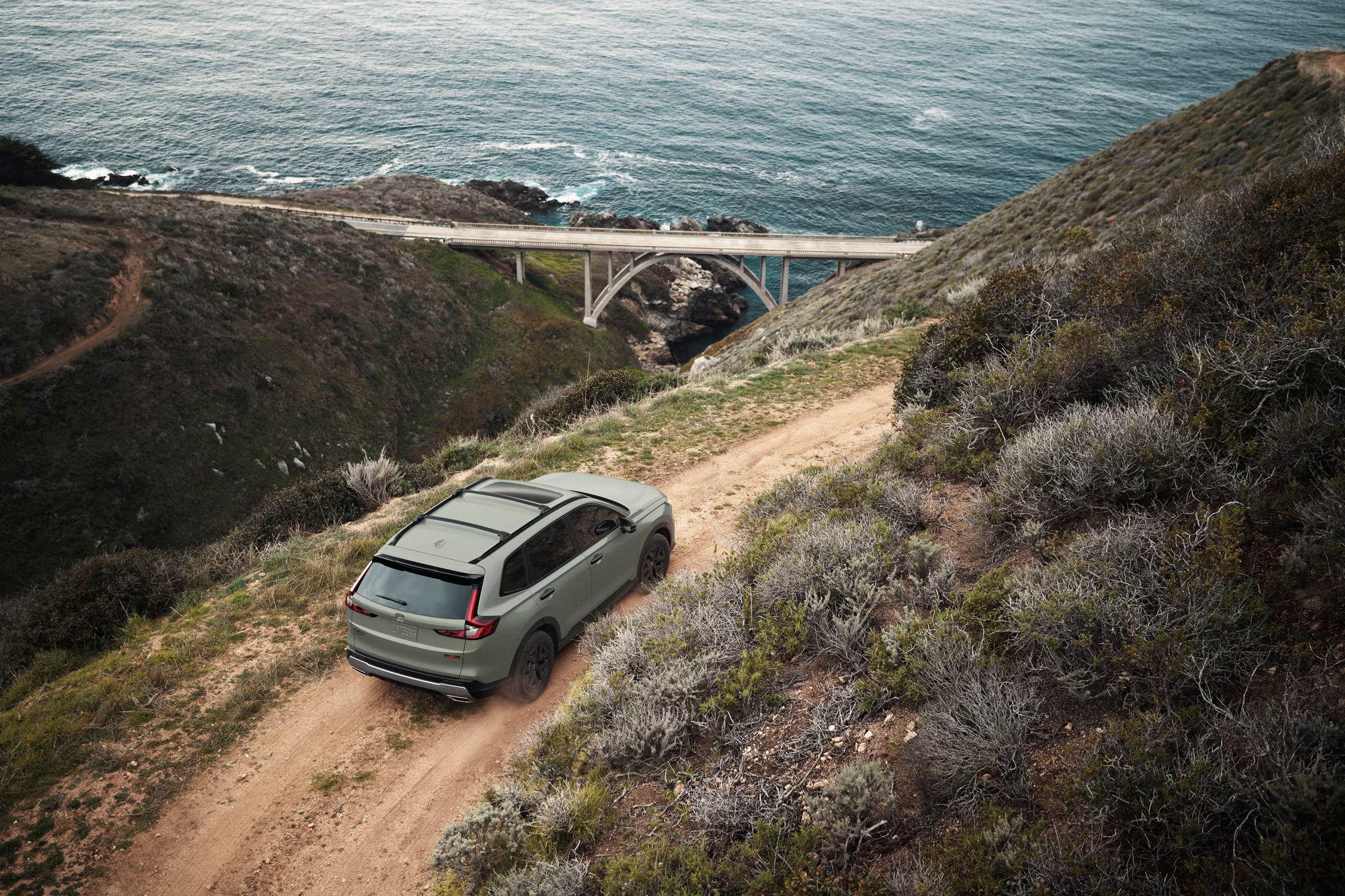
Some family SUVs show up to the trailhead in brand-new hiking boots and a designer backpack, only to stop at the first overlook. The 2026 Honda CR‑V TrailSport is more like that: game to leave the pavement, but not about to tackle anything that requires ropes or a waiver. It takes one of America’s most sensible crossovers and gives it enough extra traction and attitude to make gravel roads and muddy parking lots feel less like a gamble, without changing what made the CR‑V a hit in the first place.
Honda CR‑V TrailSport
Honda CR‑V TrailSport 01
Honda CR‑V TrailSport 02
Honda CR‑V TrailSport 03
Honda CR‑V TrailSport 05
Honda CR‑V TrailSport 0
Honda CR‑V TrailSport 00
Honda CR‑V TrailSport 000
Honda CR‑V TrailSport 06
Where the TrailSport Fits
TrailSport is Honda’s “light adventure” badge, already familiar from the Ridgeline, Passport, and Pilot. In the CR‑V lineup, the new TrailSport trim slots between the all‑wheel‑drive Sport and Sport‑L, with a starting price of $40,250. That puts it squarely in the heart of the compact crossover segment, where the CR‑V faces rivals such as the Toyota RAV4, Hyundai Tucson, and Subaru Forester.
The mission here isn’t to turn the CR‑V into a rock‑crawler. Instead, Honda is targeting buyers who spend most of their time on pavement but want something a bit more confident on dirt roads, snowy commutes, and rutted campground tracks. Think “starter off‑roader” rather than “mini Bronco.”
What’s New for TrailSport
Mechanically, every 2026 CR‑V TrailSport is a hybrid with all‑wheel drive, using the same powertrain as other hybrid CR‑V trims but adding a few key tweaks aimed at light off‑road use.
The main hardware differences are:
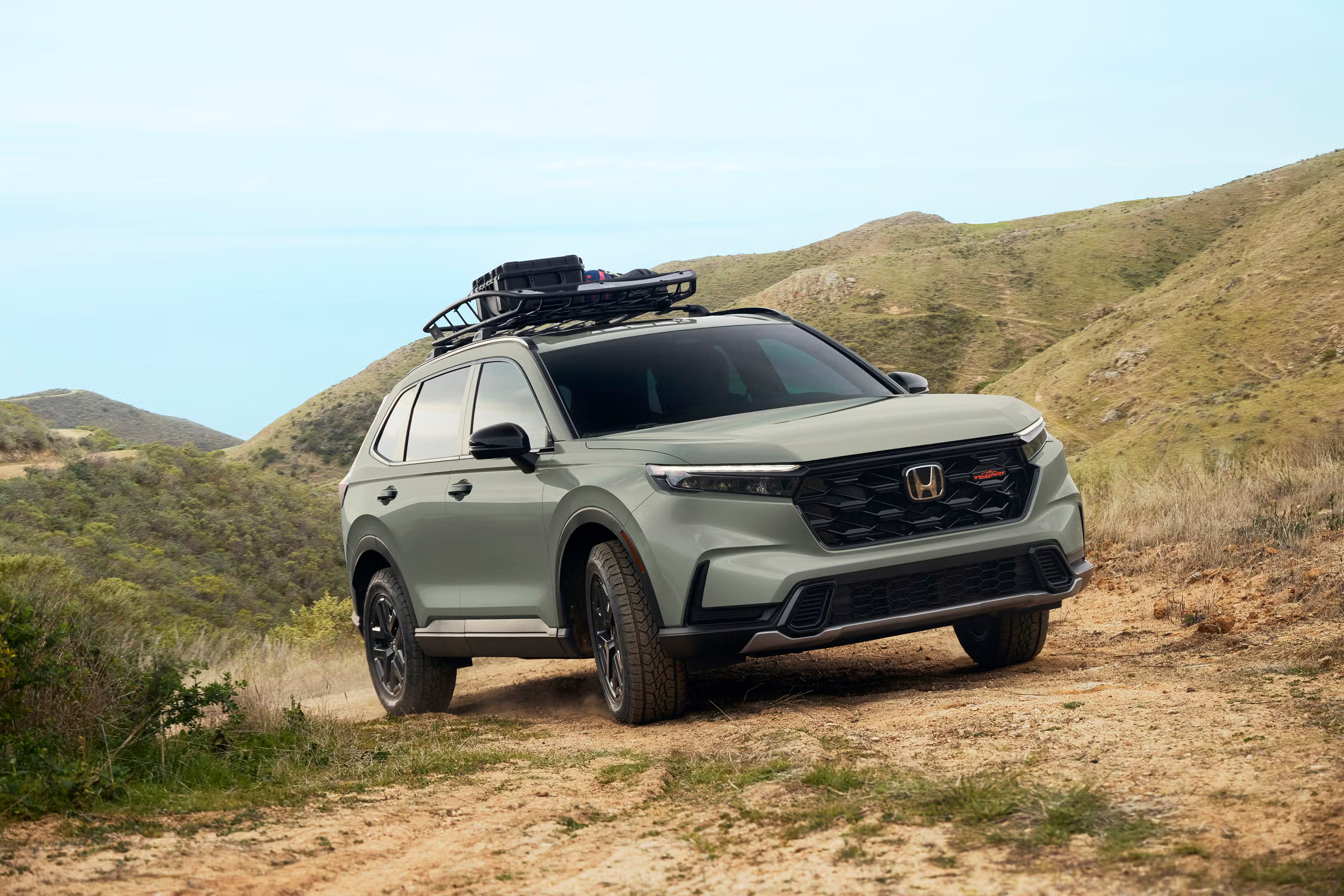
Wheel and tire package: unique 18‑inch Shark Gray wheels wearing Continental CrossContact ATR all‑terrain tires in 235/60R‑18 size.
Revised all‑wheel‑drive logic: the system can now send up to 50 percent of torque to the rear axle (versus 40 percent before) and uses brake‑based torque vectoring to shuffle power away from spinning wheels and toward those with grip.
There’s no increase in ground clearance, no skid plates, and no low‑range gearing, which keeps expectations in check. Cosmetic changes include a model‑specific Ash Green Metallic paint option, orange TrailSport badges outside and on the seats, orange interior accents, and a “skid garnish” in the lower front fascia. It looks tougher than a standard CR‑V, but Honda is honest: this is about capability at the margin, not a full makeover.
Honda CR-V TrailSport Exterior
Powertrain and Real‑World Performance
Under the hood, the TrailSport uses the familiar 2.0‑liter Atkinson‑cycle inline‑four paired with a two‑motor hybrid system for a combined 204 horsepower and 247 lb‑ft of torque. Power goes through a direct‑drive setup rather than a stepped automatic.
On paper, 204 hp for 3887 pounds of SUV doesn’t sound like a surplus. In practice, the TrailSport feels adequately peppy around town and on the highway, but never quick. The hybrid system delivers its torque early, so initial response from a stop is smooth and confident, and the electric assistance helps mask the four‑cylinder’s need to rev.
Instrumented testing backs up the seat‑of‑the‑pants impression:
0–60 mph:7.3 seconds
Quarter‑mile:15.9 seconds at 86 mph
Top‑gear 50–70 mph:5.9 seconds
Those numbers essentially match the Hybrid Sport Touring trim, which hit 60 mph in 7.1 seconds and ran the quarter in 15.8 seconds, so you don’t give up much by choosing the TrailSport. Passing power is adequate but not abundant; longer highway merges and two‑lane passes require a bit of planning, especially with a full load.
The hybrid system’s transitions between electric and engine power are generally seamless. Under heavy throttle, the engine drones more than it sings, but that’s typical of this class and layout. The reward is efficiency: the TrailSport’s EPA combined rating of 35 mpg is just 2 mpg lower than other AWD hybrid CR‑Vs, and observed fuel economy around 32 mpg keeps operating costs friendly.
Ride, Handling, and Noise
One of the CR‑V’s longstanding strengths is that it drives more like a well‑sorted compact car than a top‑heavy SUV, and the TrailSport doesn’t mess that up. The suspension is firm but compliant, with enough control to keep body motions in check without punishing passengers over broken pavement. It will hustle down a twisty back road with more composure than the off‑road styling suggests.
The all‑terrain tires do nibble at the on‑road handling edge. On the skidpad, the TrailSport managed 0.79 g, versus 0.81 g for the Sport Touring hybrid on its more road‑biased rubber. The difference is minor in everyday driving; you’ll notice slightly more squirm and earlier squeal when you push hard, but the chassis balance remains predictable and safe.
Braking performance holds steady despite the chunkier tires. From 70 mph, the TrailSport stopped in 183 feet, essentially identical to the Sport Touring’s 182‑foot result. Pedal feel is progressive and easy to modulate, with no quirky hybrid transitions that might unsettle new drivers.
Noise levels are where the TrailSport feels a bit less polished. The cabin registers 72 dBA at full throttle and a 70‑mph cruising sound level of 69 dBA / 25 sones, roughly 10 percent louder than the Sport Touring hybrid. Most of the extra noise comes from tire hum and the engine working harder under load. There’s also a chorus of electronic warning chimes for lane departures and forward‑collision alerts that add to the sonic clutter. It’s never unbearable, but long highway hauls highlight that this is a mainstream family crossover, not a luxury SUV.
Honda CR-V TrailSport Exterior
Light Off-Roading: Truth in Labeling
Honda is careful not to oversell the TrailSport as a hardcore trail rig, and the driving experience confirms that honesty. With no additional ground clearance and no underbody armor, rock gardens and deep ruts remain off the menu.
Where the TrailSport does deliver is in low‑grip situations: dirt roads, wet grass, rutted driveways, and moderate slopes. The combination of all‑terrain tires and the revised AWD logic gives it a tangible edge over previous CR‑Vs. In a demonstration using metal rollers to simulate wheels hanging in the air, a 2026 TrailSport was able to claw its way free from situations that left a 2025 CR‑V spinning in place. That doesn’t make it a Jeep competitor, but it does mean fewer moments of wondering if you should have parked closer to the pavement.
A brief stint on a motocross‑style course showed respectable traction and effective hill‑descent control, which modulates braking on steep downhills so the driver doesn’t have to ride the pedal. Approach and departure angles remain the limiting factor; you still have to pick lines and speed carefully, just as in any soft‑roader.
For most owners—those who see more snow, muddy fields, and washboard access roads than rock ledges—that’s exactly the kind of assurance they’re looking for.
Interior Space, Comfort, and Tech
Inside, the TrailSport is very much a CR‑V: roomy, practical, and sensibly laid out. Front seats offer comfortable support for long drives, and rear passengers enjoy generous head‑ and legroom. The reclining and folding rear bench makes it easy to swap between kid duty and cargo hauling, and the cargo volume—up to 72 cubic feet with the rear seats folded—remains one of the class benchmarks.
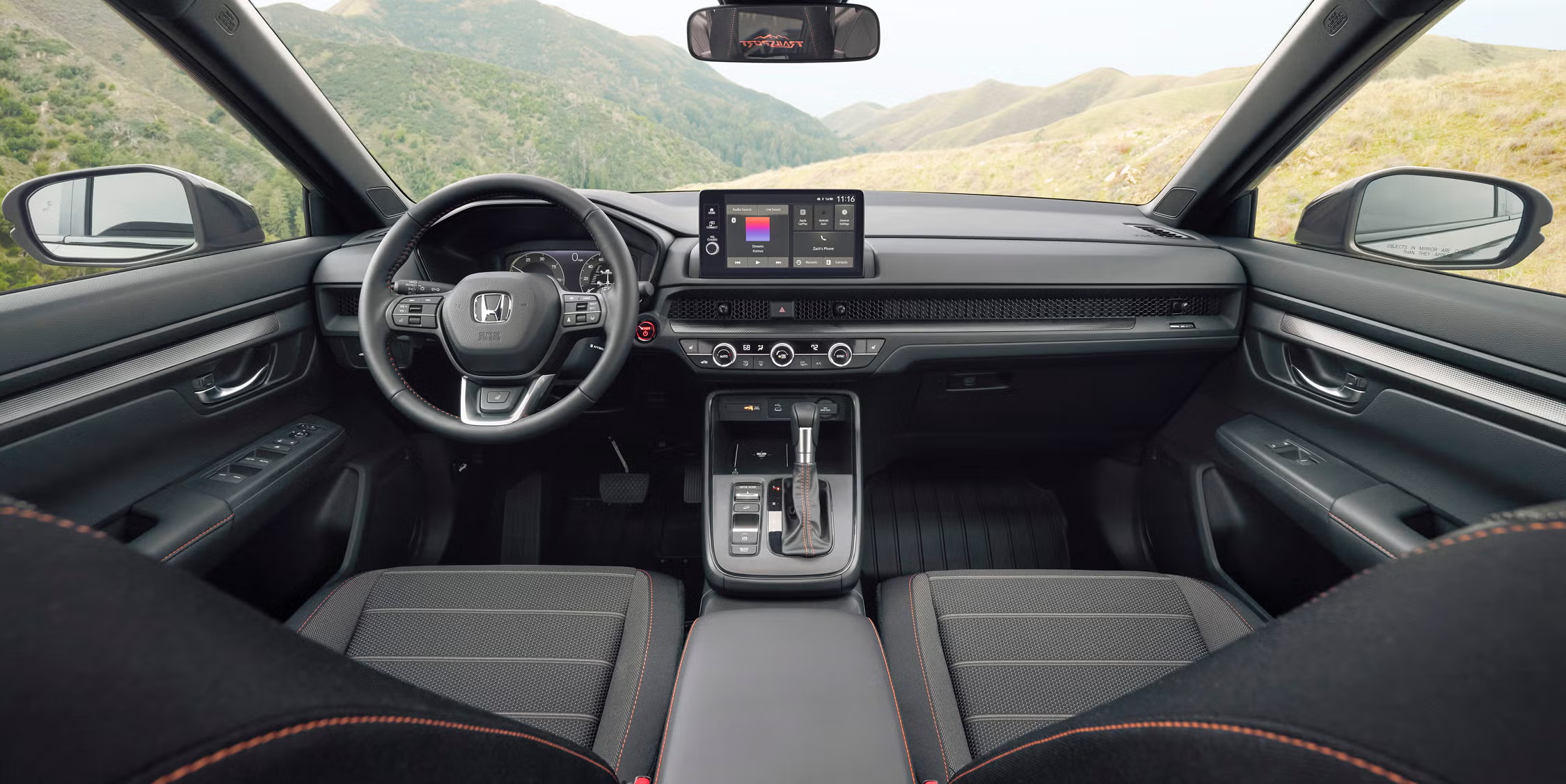
For 2026, the broader CR‑V lineup sees modest tech and trim updates, and the TrailSport benefits from them. Hybrid models now get black window trim, larger screens, and more standard features, including wireless Apple CarPlay and Android Auto. Materials are solid for the segment, with robust plastics and fabrics chosen more for durability than plushness.
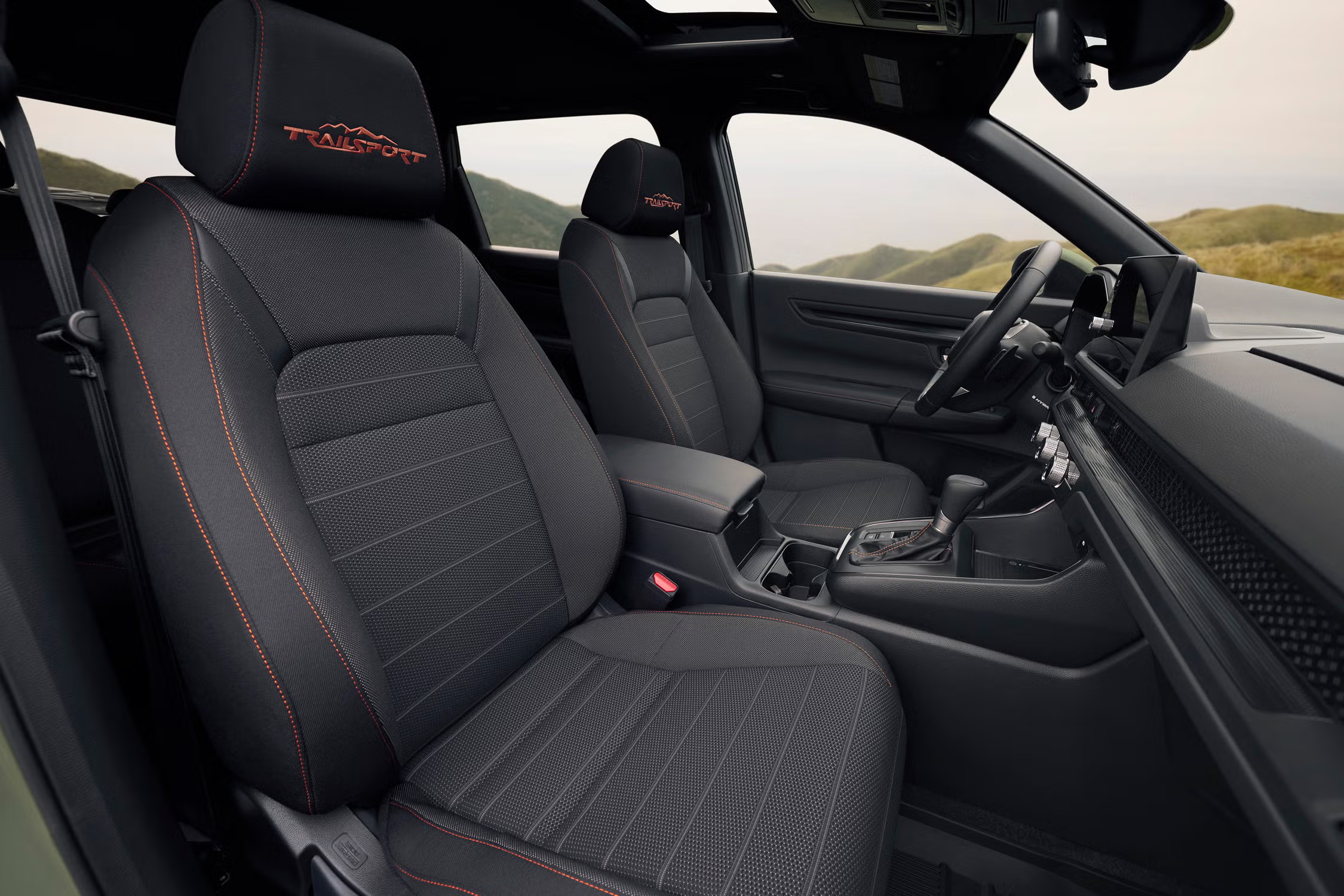
TrailSport‑specific touches are mostly visual:
Ash Green Metallic paint, a muted sage tone with outdoorsy vibes.
Orange TrailSport mountain badges outside and embroidered logos on the headrests.
Sunset orange stitching and accent lighting, plus rubber floor mats suited to muddy boots.
Substance-wise, there’s no change to seat structure or cabin layout versus other CR‑Vs. That’s not a criticism—this is still one of the more livable compact SUVs—but it’s worth noting if you’re expecting a dramatic interior transformation.
The driver-assistance suite remains comprehensive, with lane‑keeping assist, adaptive cruise control, and forward collision warning standard. The downside is that the lane‑keeping and proximity alerts contribute to the constant background noise; owners may find themselves tweaking settings to strike a balance between helpful and nagging.
Honda CR-V TrailSport Interior
Honda CR-V TrailSport Interior
HIGHS and LOWS
HIGHS:
A bit of extra dirt traction without sacrificing comfort; strong fuel economy for an AWD compact SUV; spacious, family‑friendly interior; pleasant, car‑like driving manners; distinctive Ash Green paint and subtle adventure styling.
LOWS:
No extra ground clearance or real underbody protection; only modest straight‑line performance; slightly noisier than other CR‑V hybrids at highway speeds; off‑road capability still firmly in the “light duty” category.
Verdict: Not a Mountain Goat, but a Better Trailhead Companion
The 2026 Honda CR‑V TrailSport doesn’t try to be something it’s not. It isn’t a rock crawler, a mud bogger, or a baby Bronco. What it is, essentially, is a smarter‑shod CR‑V Hybrid with a more capable all‑wheel‑drive brain and a bit of outdoorsy flair. For the way most people actually use compact SUVs—commuting, school runs, weekend cabin trips, and the occasional muddy detour—that’s a realistic and useful upgrade.
If your life involves serious off‑road miles, you’ll want more ground clearance, armor, and dedicated hardware than this TrailSport offers. But if your idea of adventure is a snow‑covered driveway, a rutted trail to a campsite, or a washed‑out access road to the lake, this CR‑V makes those trips less stressful without giving up the comfort, efficiency, and practicality that made it popular in the first place.
Think of it as the CR‑V that finally agreed to get its shoes dirty—just not its knees.