Lexus’ New LFA Concept Trades V-10 Thunder for Silent, All-Electric Speed
The LFA nameplate has returned, but the familiar V-10 wail has been replaced by the hum of a next-generation battery-electric powertrain. Unveiled in Japan alongside Toyota Gazoo Racing’s GR GT hybrid supercar and GR GT3 customer racer, the Lexus LFA Concept is positioned as a flagship EV sports car that carries forward Lexus’ halo-car legacy into the electric era.
A Flagship EV With Racing Roots
Lexus frames the LFA Concept as the spiritual successor to both the original LFA and the classic Toyota 2000GT, recast for a world where electrification is now the top tier of performance, not a side project. Developed in parallel with the GR GT and GR GT3 on a shared aluminum structure, it embodies Toyota Motor Corporation Chairman Akio Toyoda’s mission to preserve core vehicle-development skills—ride, handling, and driver engagement—while pivoting to a fully electric future.
The car is conceived not just as a design exercise but as a statement that BEV sports cars can deliver the same emotional connection as their combustion predecessors. From its proportions to its packaging and control layout, the LFA Concept is built around Lexus’ “Discover Immersion” theme, aiming to make the driving experience feel instinctive, intimate, and absorbing.
Lexus LFA Concept Returns (1)
Lexus LFA Concept Returns (12)
Lexus LFA Concept Returns (11)
Lexus LFA Concept Returns (10)
Lexus LFA Concept Returns (8)
Lexus LFA Concept Returns (9)
Lexus LFA Concept Returns (7)
Lexus LFA Concept Returns (6)
Lexus LFA Concept Returns (5)
Lexus LFA Concept Returns (4)
Lexus LFA Concept Returns (3)
Lexus LFA Concept Returns (2)
Powertrain and Electric Architecture
Lexus confirms the LFA Concept is a pure battery-electric vehicle, abandoning any notion of a V-8 or V-10 and distancing itself technically from the hybrid twin-turbo V-8 in the GR GT. Exact power, torque, battery capacity, and motor configuration are still under wraps, but brand messaging makes clear that outright performance targets must align with its role as a flagship—this is intended to sit at the very top of Lexus’ EV portfolio.
Rumors and prior reports around Toyota’s solid-state battery development naturally gravitate toward the LFA Concept as a likely showcase, even if Lexus is not yet ready to confirm chemistry or charging specs. What has been communicated is that packaging and mass distribution are being engineered with the same rigor applied to the GR GT and GR GT3, promising low-mounted energy storage and a carefully tuned drive unit layout to minimize inertia and maximize steering fidelity.
Lexus LFA Concept Returns
Chassis, Aerodynamics, and Proportions
Structurally, the LFA Concept sits on an all-aluminum body frame that it shares with the GR GT and GR GT3, giving it a high-rigidity, low-weight foundation compared with traditional steel-intensive EVs. The emphasis is on a low center of gravity and high torsional stiffness, with Lexus citing the same three core development pillars as its racing relatives: low CG, low mass with high rigidity, and advanced aerodynamics.
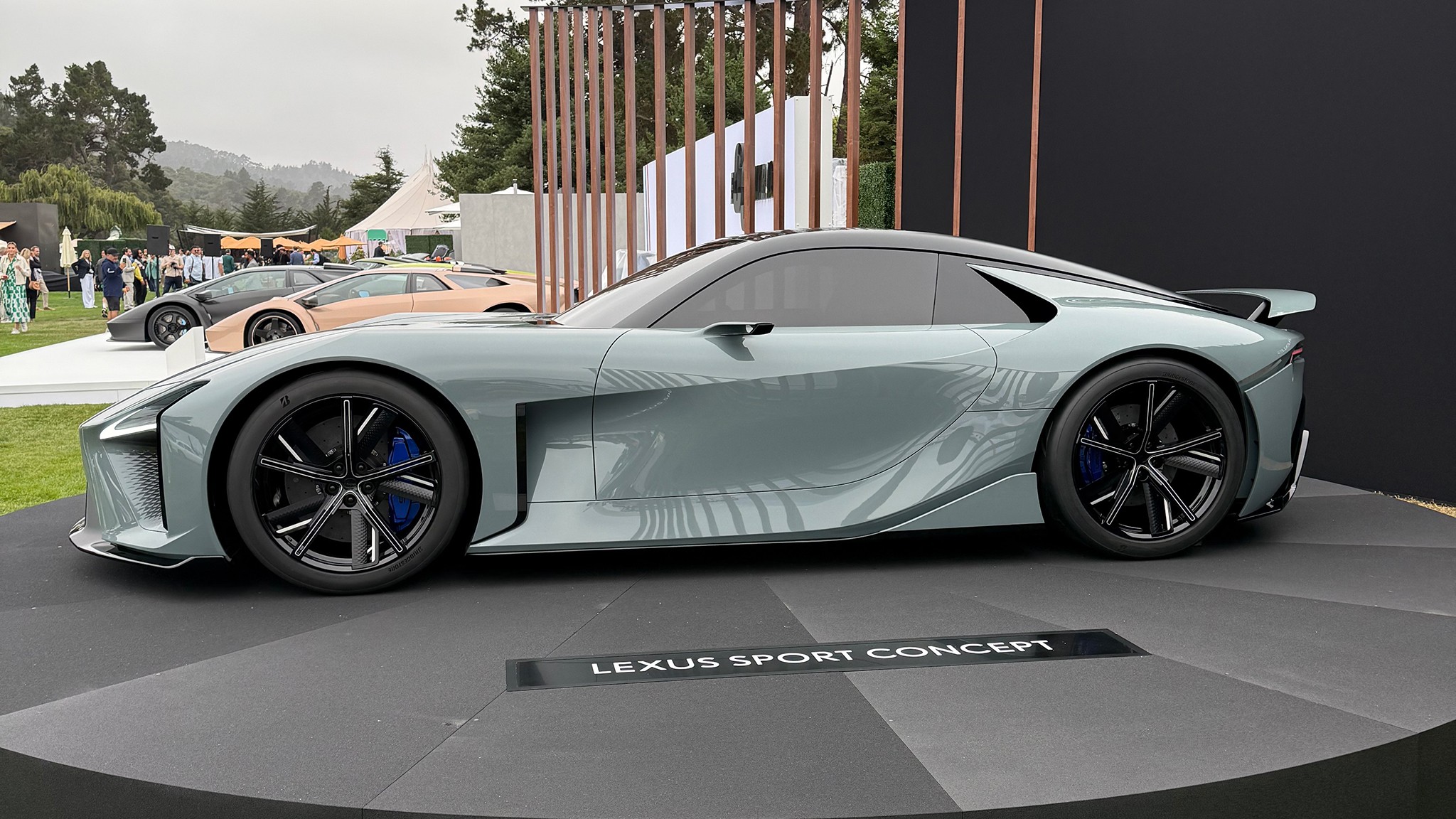
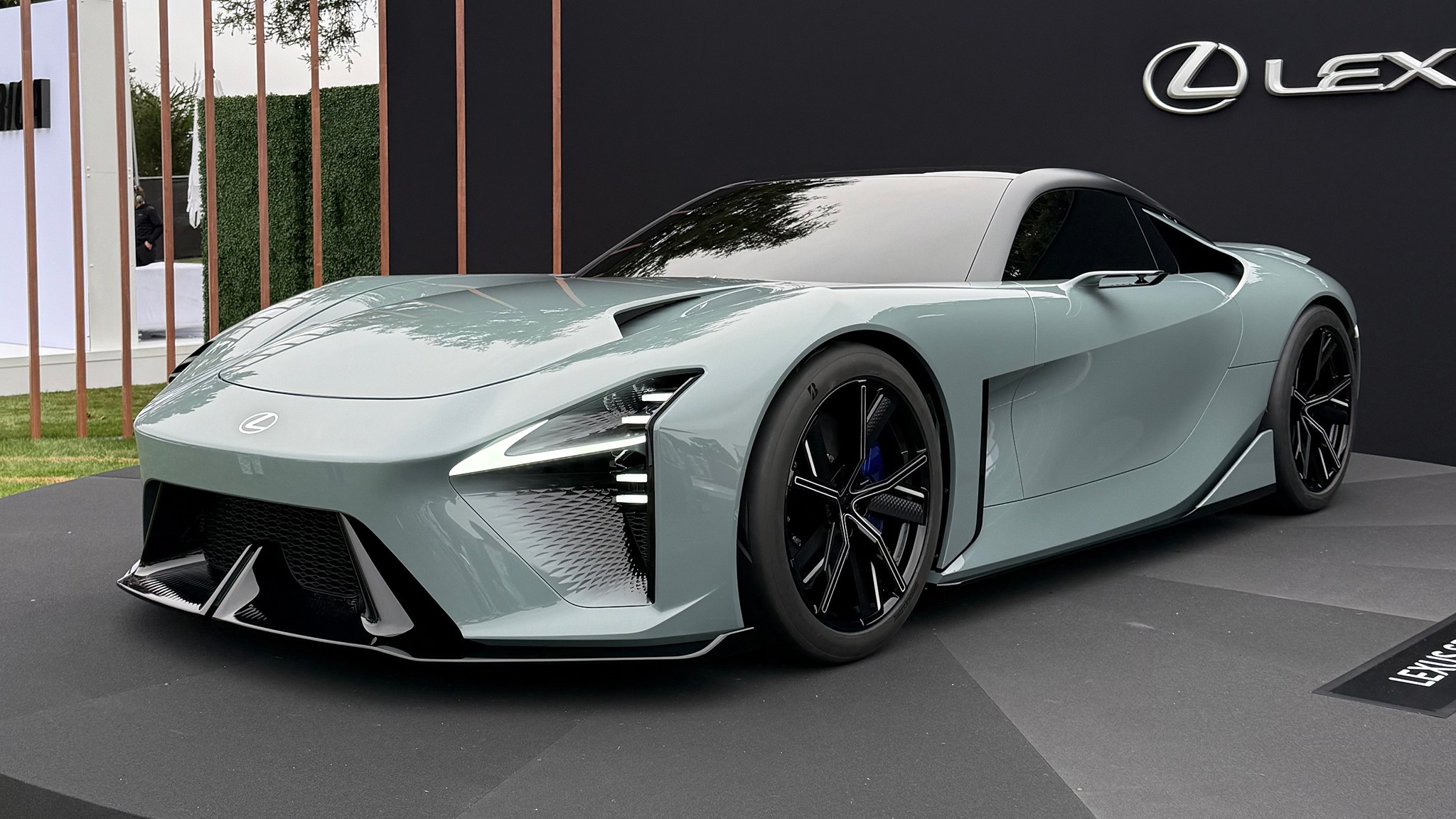
Dimensionally, the LFA Concept measures 184.6 inches in length, 80.3 inches in width, and 47.0 inches in height, riding on a 107.3-inch wheelbase in a strict two-seat layout. That makes it longer, wider, and comparably low-slung versus the original LFA, putting it in the same physical territory as modern mid- and front-engined supercars while allowing more EV-optimized packaging. The exterior adopts a long-hood, short-deck silhouette with smooth, flowing surfacing rather than the harder, more aggressive creases seen on the GR GT and GR GT3, creating a shape Lexus describes as a “universal” sports-car form designed to transcend markets and eras.
Aero development, while not exhaustively detailed, aims to merge functional downforce with sculptural beauty—diving planes, underbody management, and rear volume are all integrated without resorting to overt race-car theatrics. The result is a coupe that appears visually lighter and more sensual than its Toyota stablemates, yet still grounded in the airflow priorities inherited from the GR program.
Interior and Driver-Centric Cockpit
The cabin of the LFA Concept is an extension of the “Discover Immersion” idea, configured to make the driver feel as though the car and body are operating as one. Functional elements, including screens, controls, and structural shapes, are concentrated around the driver’s seat in a wraparound layout that visually tightens the cockpit and focuses attention forward.
One of the most striking elements is the yoke-style steering interface, designed to reduce the need for hand-over-hand shuffling and to place critical switches where they can be operated by touch. This approach mirrors the highly configurable, multi-mode control strategies used in contemporary performance EVs, but Lexus sets it within a minimalist environment to avoid visual noise, making the car feel more like a precision instrument than a lounge on wheels.
Lexus LFA Concept Returns
Lexus LFA Concept Returns
Development Philosophy and Tech Alignment
The LFA Concept was developed alongside the GR GT and GR GT3 using a shared “one-team” approach under Master Driver Morizo (Akio Toyoda), tightening the feedback loop between motorsport, high-performance road cars, and BEV development. That means the same priorities that govern Toyota’s endurance racers—repeatable performance, predictable balance near the limit, and fine control over weight transfer—are being baked into an electric Lexus flagship.
In strategic terms, the LFA Concept also serves as a technology demonstrator for Lexus’ broader electrification roadmap, signaling that future production models will blend emotional design with learned know-how from the GR GT and GR GT3 programs. It positions Lexus to compete not only with legacy combustion supercars, but with emergent high-end EVs from brands such as Porsche, Lotus, and Tesla that are pushing battery technology and software-defined dynamics.
Availability, Pricing, and What Comes Next
For now, the LFA Concept remains just that—a concept—so Lexus has not discussed pricing, production timelines, or final performance claims. However, the reuse of a production-oriented aluminum platform shared with the GR GT, combined with the focus on next-generation EV technology, strongly hints that a road-going derivative is the endgame rather than a standalone design study.
When a production version arrives, it is likely to serve as Lexus’ range-topping EV halo model, slotting above any electric variants of the LC or future crossovers and giving the brand a direct rival to electric supercars and GTs from Europe and the U.S. Expect limited volumes, heavy use of advanced driver-selectable dynamics, and a continuation of the LFA’s role as a rolling showcase of what Lexus can do when commercial constraints are relaxed in favor of engineering ambition.