Toyota bZ Time Attack Concept: First-Ever EV Track Machine Pushes Battery-Powered Performance to Extremes
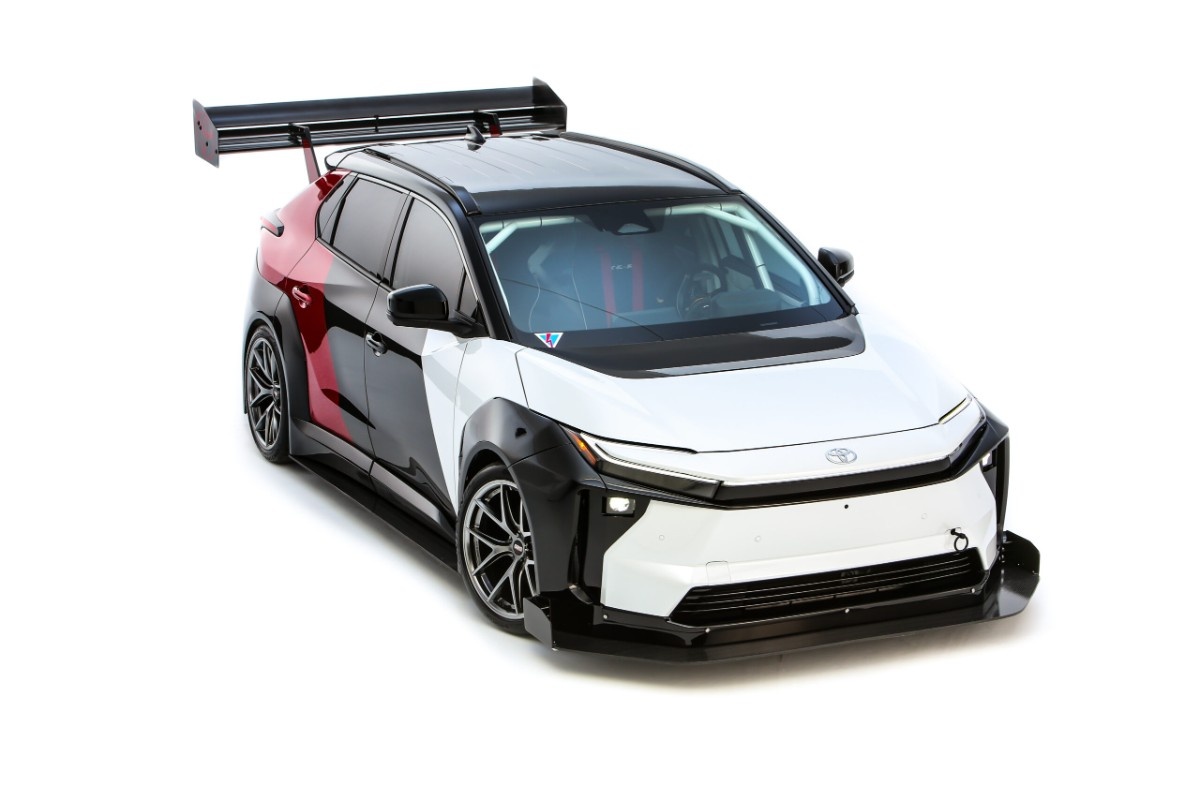
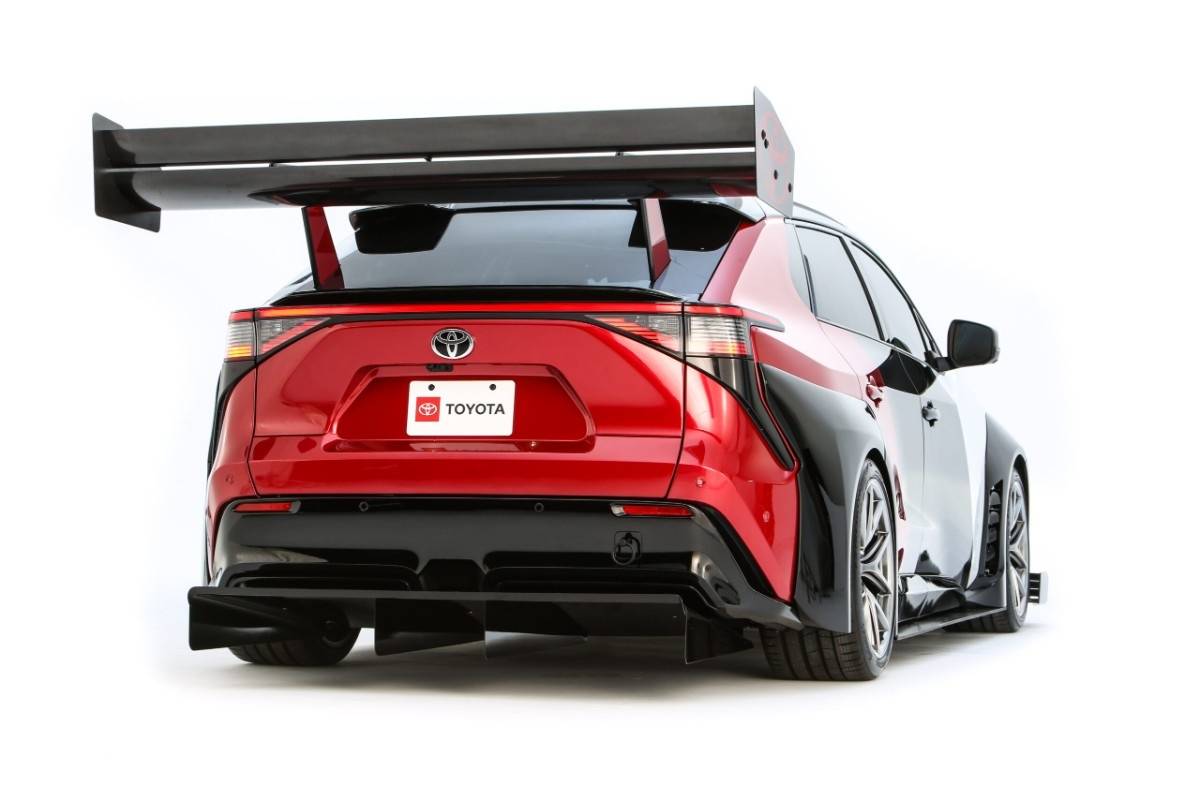
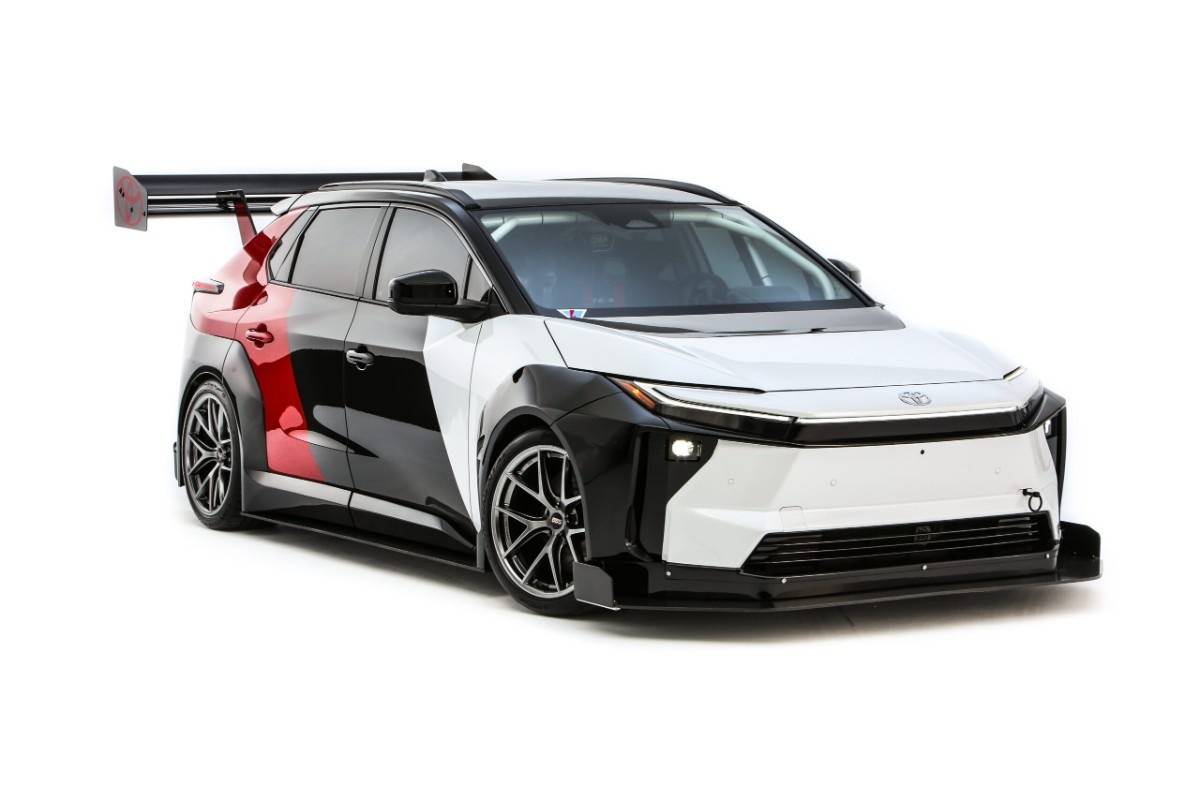
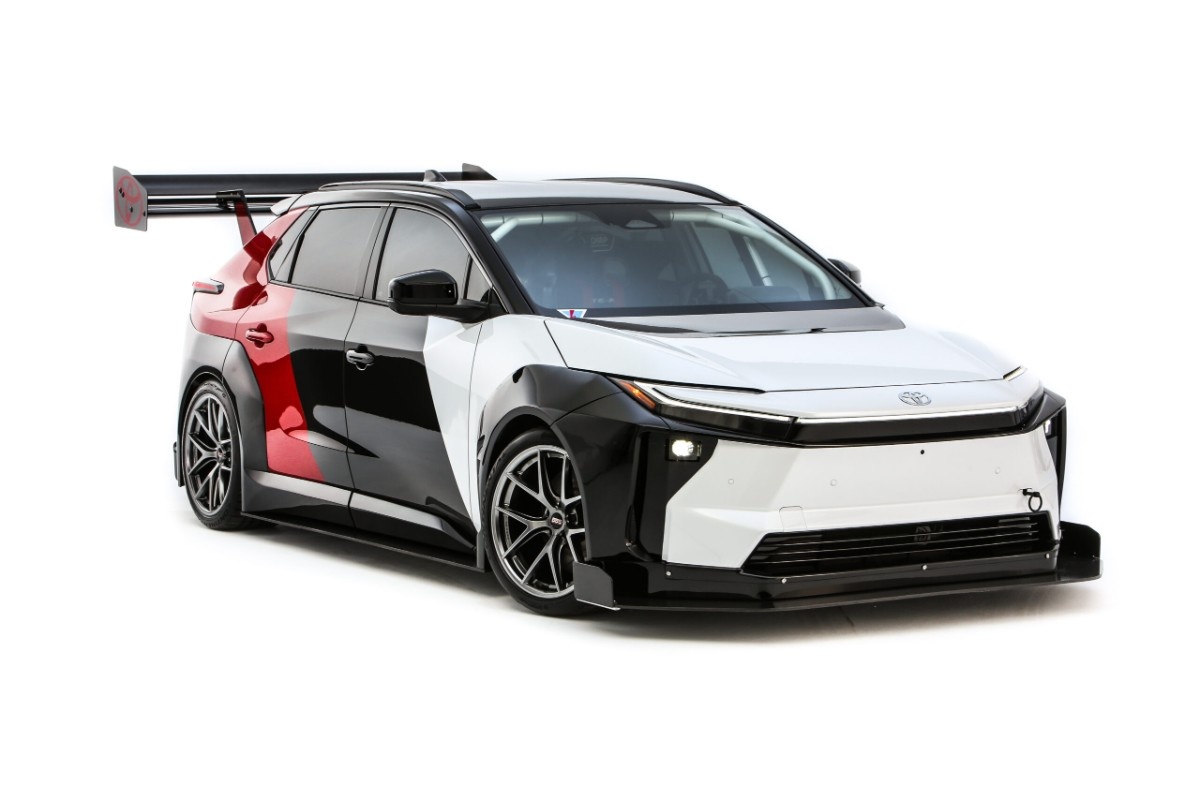
Toyota just unveiled their first-ever battery-electric SEMA concept build—the bZ Time Attack Concept—a purpose-built electric vehicle engineered specifically for time attack circuits and hill climbs. Built on the 2026 bZ AWD platform, the stripped-down racer showcases what’s possible when Toyota applies motorsports engineering to battery-electric propulsion, combining 400+ horsepower, competition aerodynamics, and cutting-edge fabrication techniques into a machine destined for real-world racing.
This isn’t just marketing posturing; Toyota is seriously exploring how EVs can compete in motorsports while pushing development boundaries that inform future production vehicles.
Toyota bZ Time Attack (11)
Toyota bZ Time Attack (9)
Toyota bZ Time Attack (8)
Toyota bZ Time Attack (7)
Toyota bZ Time Attack (6)
Toyota bZ Time Attack (4)
Toyota bZ Time Attack (3)
Toyota bZ Time Attack (2)
Toyota bZ Time Attack (1)
Toyota bZ Time Attack (10)
Toyota bZ Time Attack (5)
The bZ Foundation: Already Fast, Made Faster
The stock 2026 bZ AWD delivers an impressive 338 horsepower and achieves 0-60 mph in 4.9 seconds. That’s genuinely quick for a production electric vehicle, establishing reasonable performance credentials before extensive modifications.
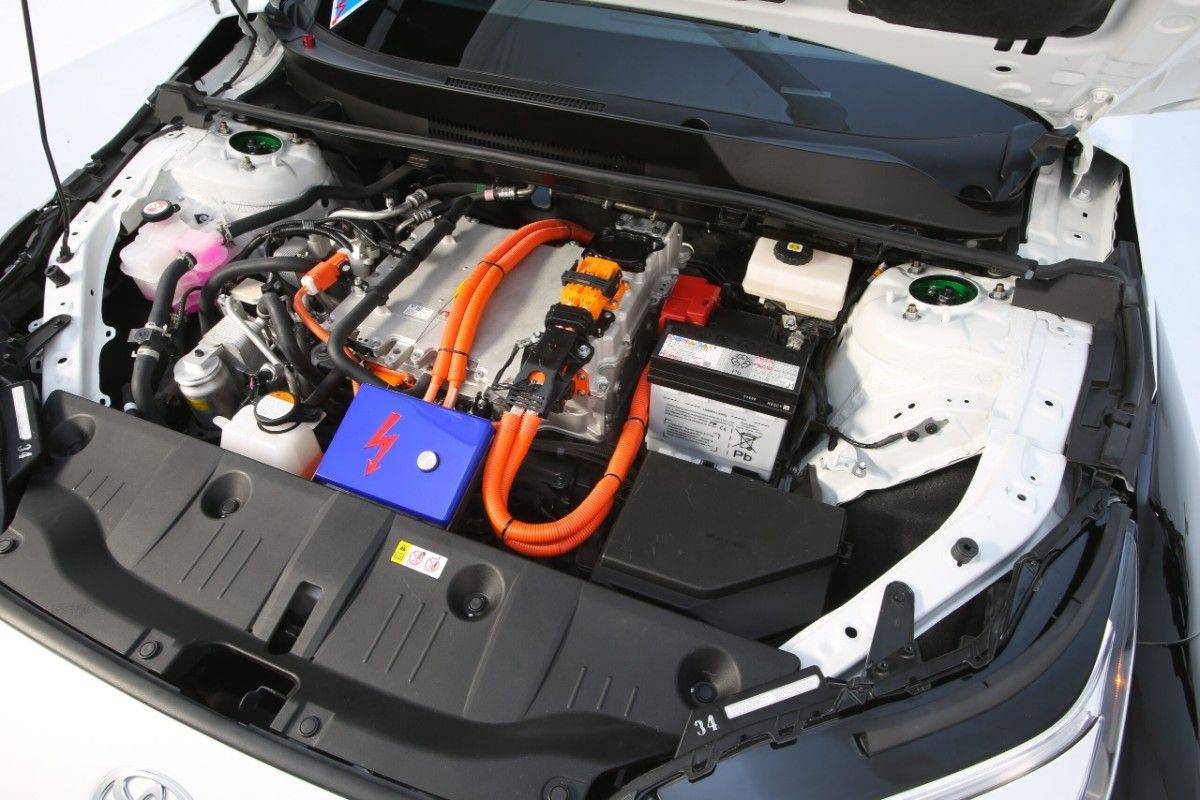
The Time Attack Concept takes that foundation and elevates it dramatically. Toyota R&D tuned the electric motors to deliver over 300 kW (400+ hp) through bespoke ECU calibration that optimizes power delivery across the RPM range for sustained acceleration rather than merely maximizing peak figures.
This approach acknowledges that track performance involves sustained power delivery under varying battery states of charge, not just straight-line acceleration. The ECU tuning ensures the motors maintain aggressive output during extended acceleration and multiple runs rather than tapering as battery voltage drops.
The Challenge: EV Performance Engineering
Marty Schwerter, lead builder and director of operations at Toyota’s Motorsports Technical Center, articulated the core challenge: “The goal wasn’t to simply create a showpiece—It was to see how far the new bZ platform could be pushed in a motorsport setting. And that meant that we had to tackle the two biggest hurdles for any electric competition car: battery performance and aerodynamic integration.”
Traditional performance builds focus on mechanical and aerodynamic modifications to existing platforms. EV builds introduce unique constraints: heavy battery packs impact weight distribution, unusual underbody layouts complicate aerodynamic design, cooling requirements differ dramatically from combustion vehicles, and packaging a widebody aero suite onto an electric platform requires rethinking fundamental design assumptions.
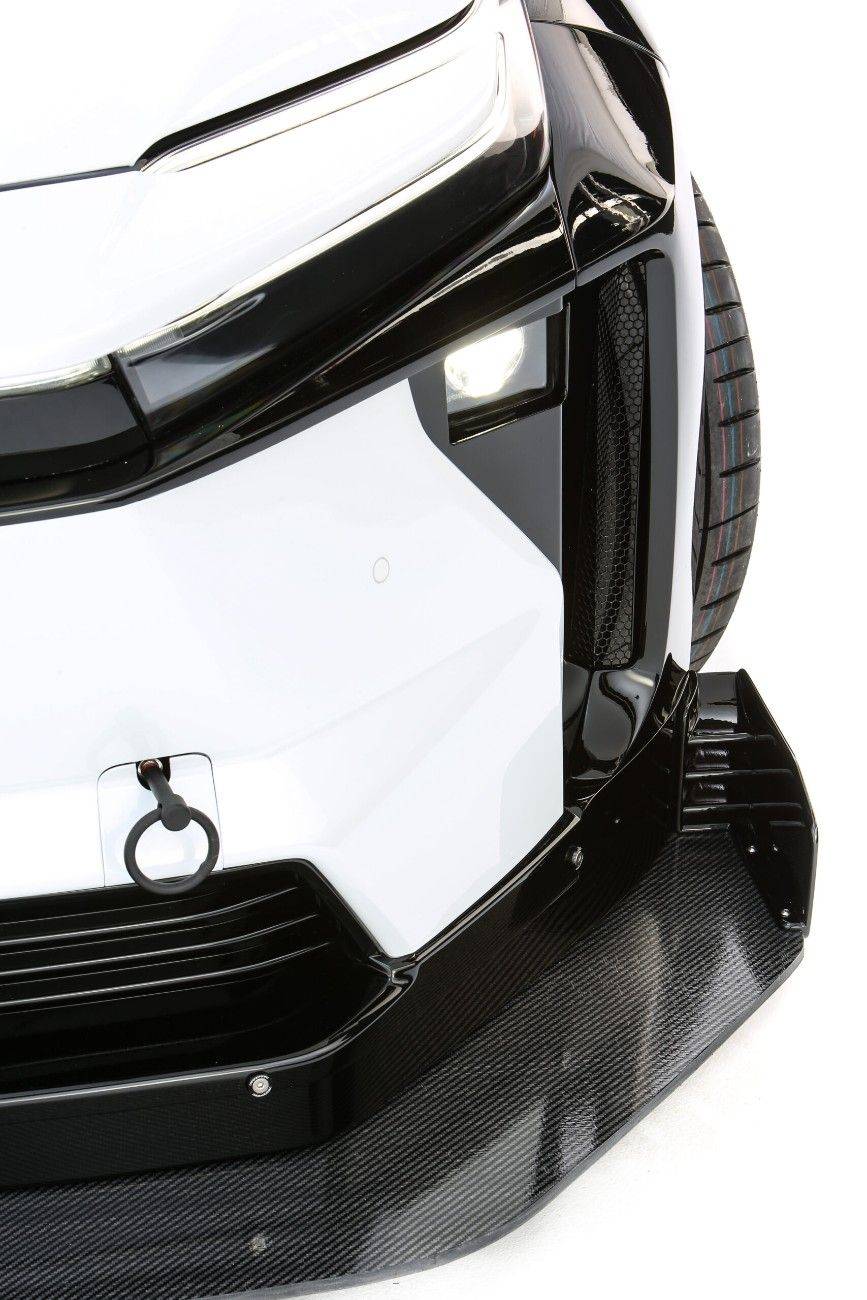
Packaging aggressive fenders, splitters, diffusers, and wings onto an EV chassis without compromising cooling or structural integrity demanded creative problem-solving.
Toyota bZ Time Attack
Toyota bZ Time Attack
Fabrication Innovation: 3D Printing Meets Traditional Craftsmanship
Rather than relying purely on traditional hand fabrication, Toyota employed cutting-edge manufacturing technology that combined digital design with rapid prototyping:
Laser Scanning and CAD Development: Dark Matter Laser Works used laser scanning to capture precise three-dimensional data, fed into CAD software for design iteration.
Additive Manufacturing: Toyota’s Add Lab in Georgetown, Kentucky—led by Sr. Engineering Manager Greg Stewart and Additive Manufacturing Engineer Dallas Martin—employed large-scale 3D printing to produce full-scale fender arches and bodywork components.
Hand Finishing: Printed components received meticulous hand-finishing for strength, precision, and surface quality, ensuring they function as race-car components rather than just appearance pieces.
This hybrid approach dramatically reduced prototyping timelines. Rather than fabricating multiple physical iterations of complex bodywork, engineers could print full-scale components, evaluate fit and function immediately, and iterate rapidly. This flexibility enabled hitting aggressive development deadlines while maintaining quality standards.
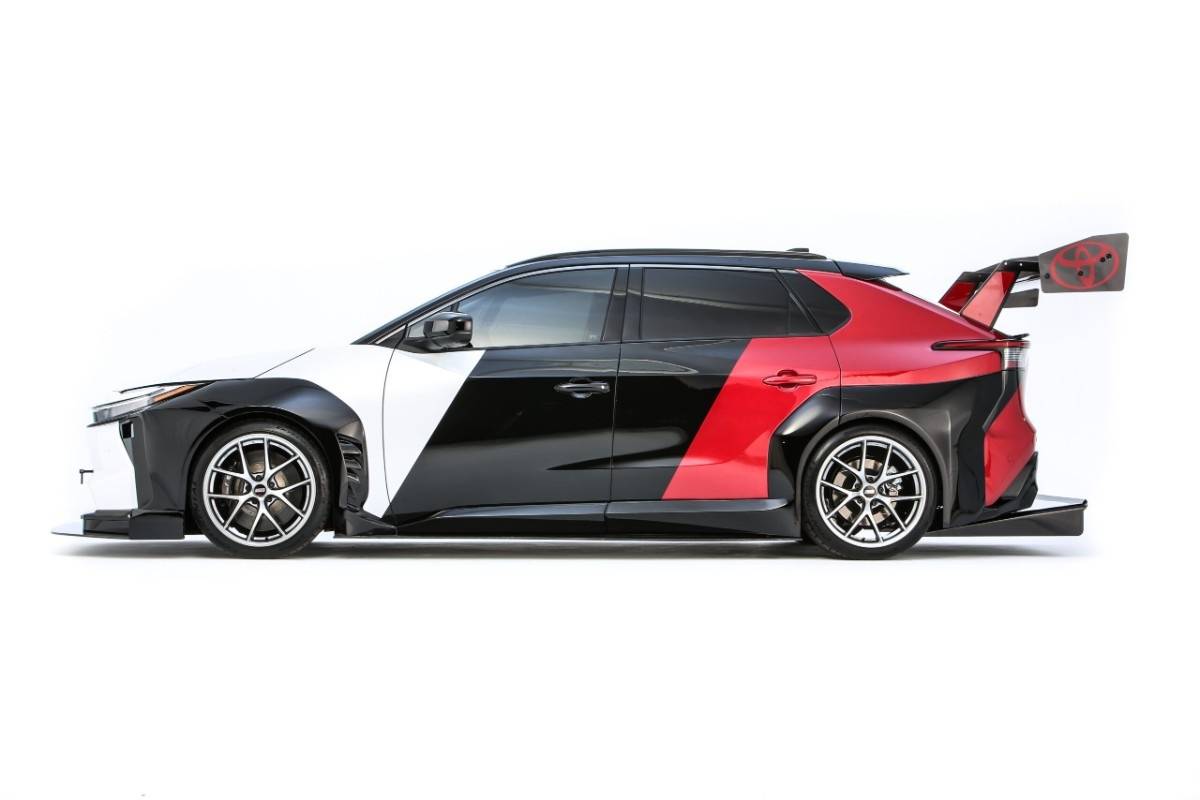
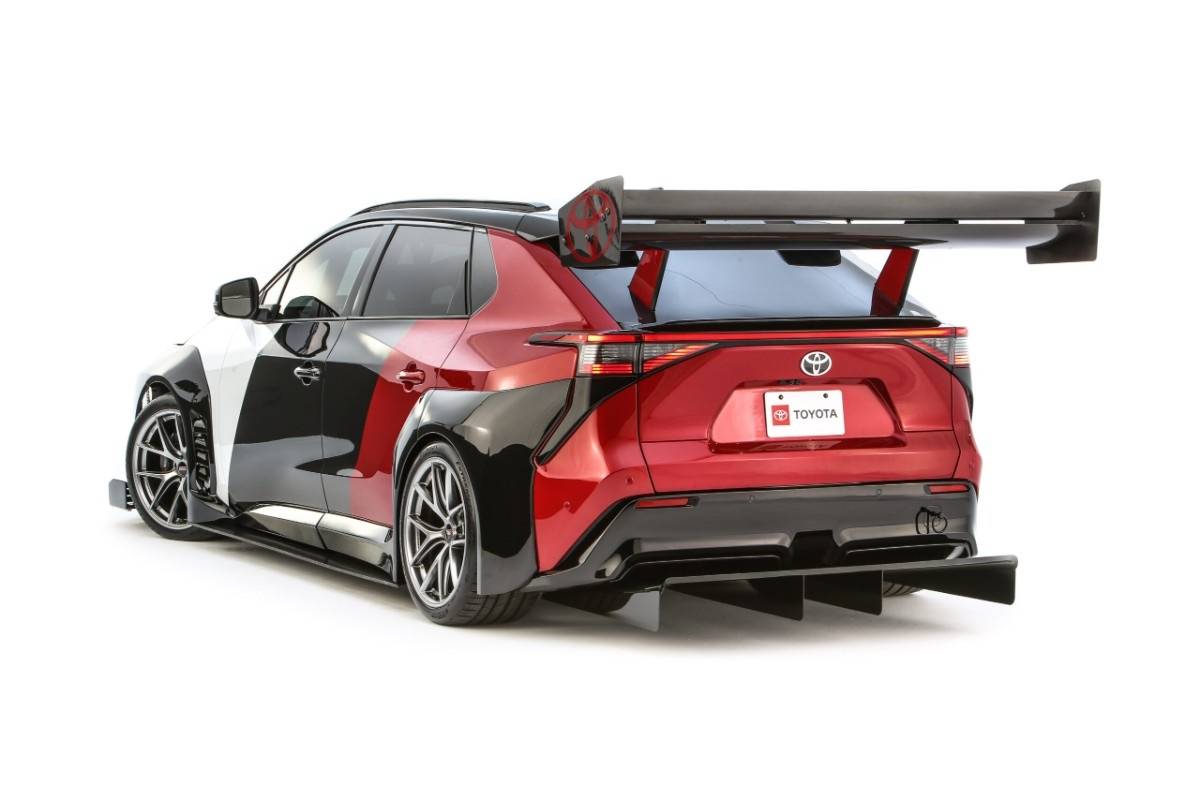
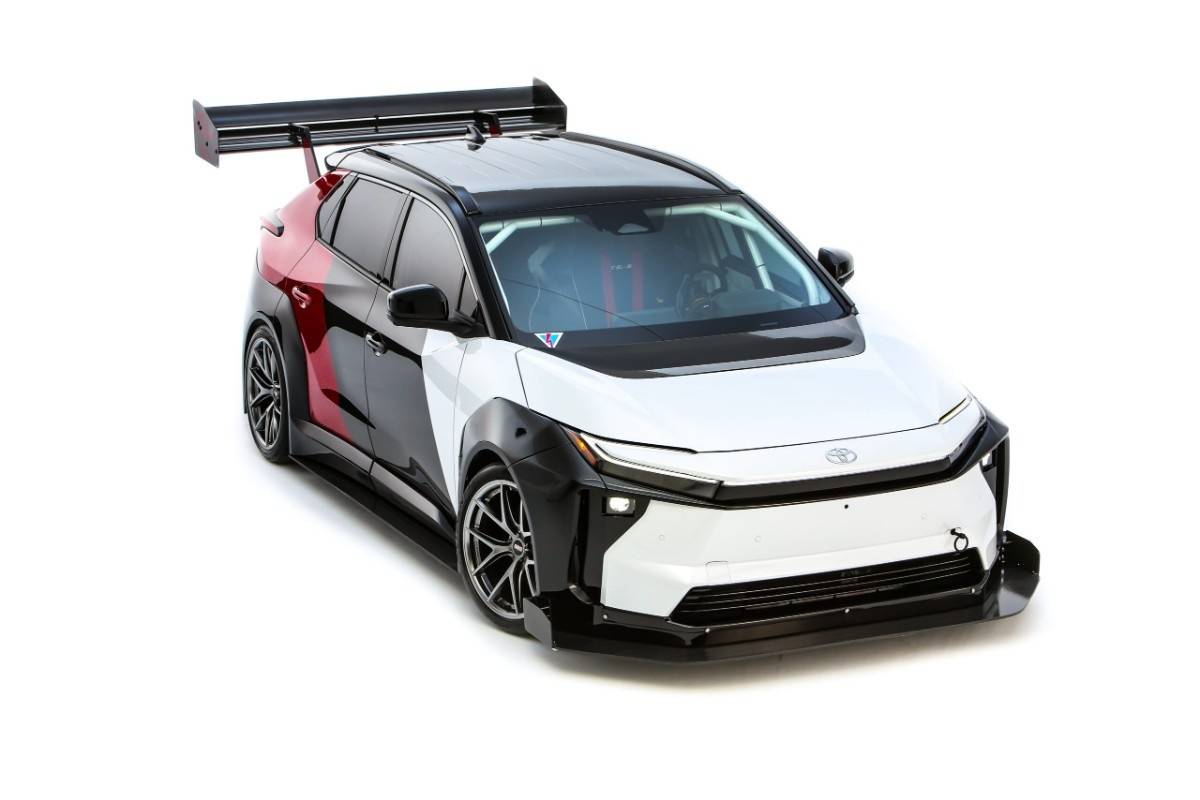
The result of this fabrication process is aggressive yet purposeful. The bZ Time Attack sits six inches lower than stock through suspension geometry changes. Track width expands by six inches per side through widened fenders, dramatically altering the visual stance while improving mechanical grip distribution.
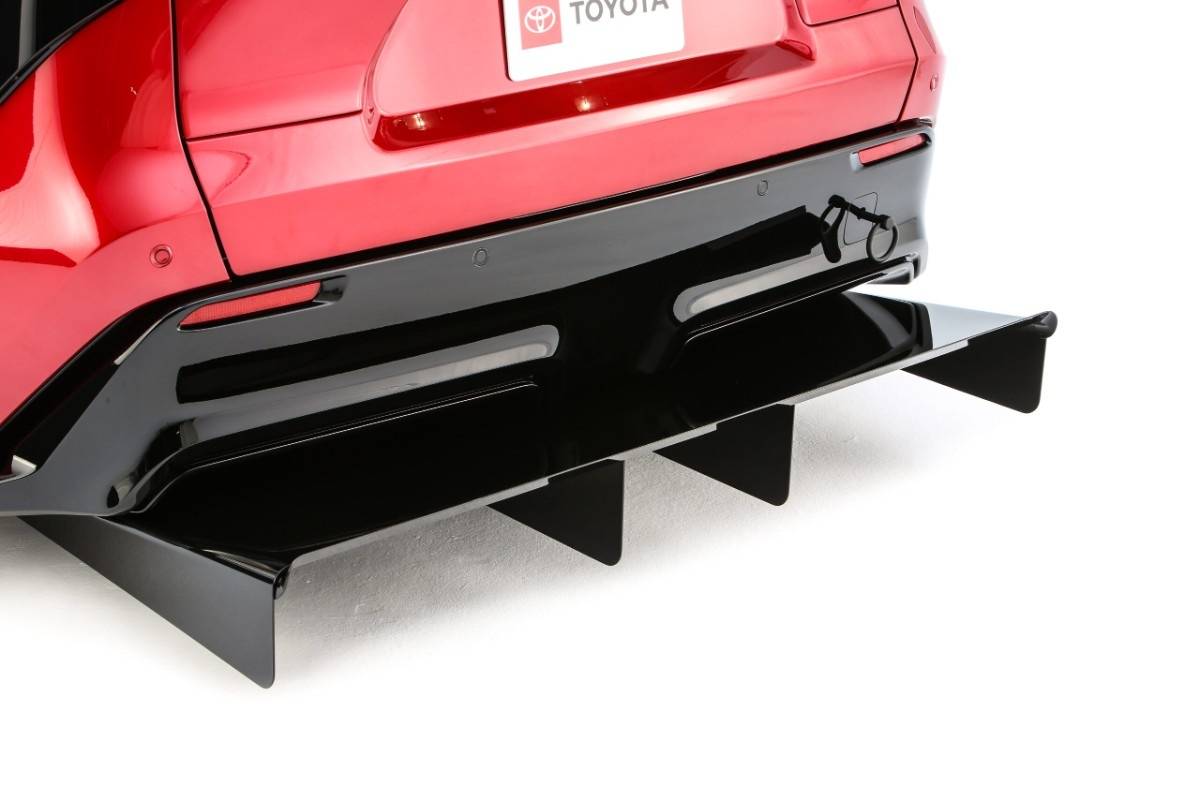
A fully integrated aero package includes front splitter, rear wing, side skirts, and rear diffuser designed for time attack environments where every element must contribute to performance rather than just visual impact. The tri-color bodywork—pearl/metallic white, metallic black, and red—combines high visibility for photographic purposes with the aggressive character appropriate for competition machinery.
The widebody transformation makes the bZ Time Attack visually distinctive while serving genuine aerodynamic functions. This is performance expression rather than decorative excess.
Toyota bZ Time Attack
Chassis and Suspension: Race-Grade Engineering
Suspension: TEIN coilovers and springs handle the mechanical suspension, tuned specifically for time attack environments where consistency and predictability matter more than comfort.
Braking: An Alcon brake system with Hawk pads—sourced from Toyota’s 86 Cup and Corolla TC race programs—provides motorsports-proven stopping power. Competition-grade braking is essential for repeated hard stops from racing speeds without fade or inconsistency.
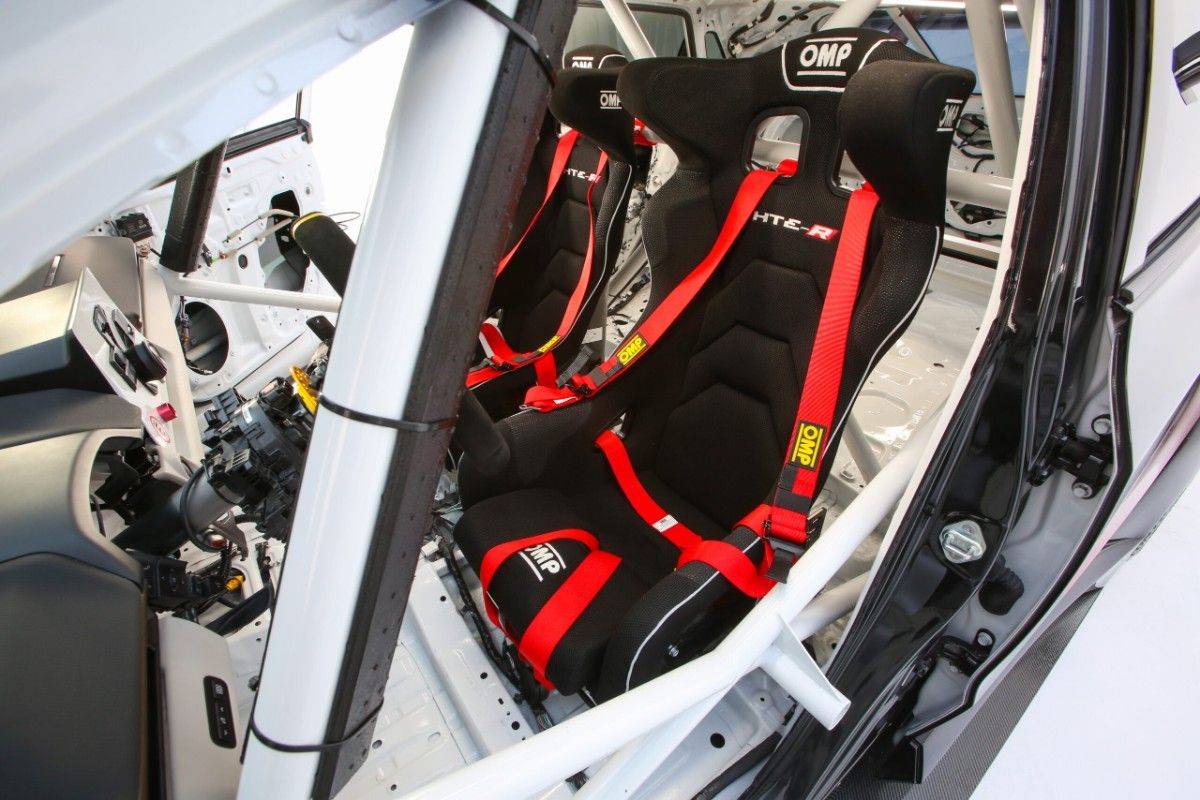
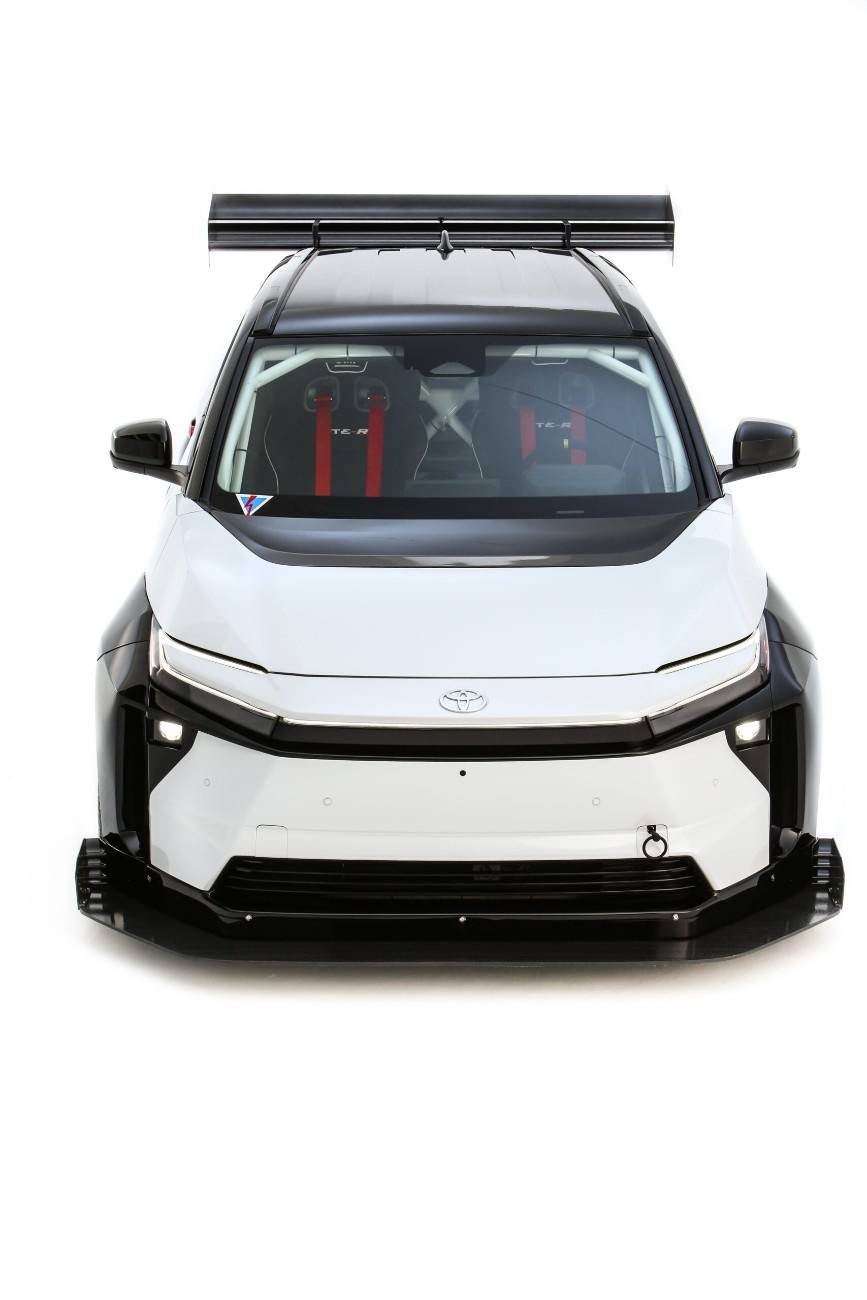
Structure: A full FIA-spec 4130 chromoly cage stiffens the chassis, distributing forces during aggressive cornering and providing occupant protection. This racing-specification safety cage represents serious engineering rather than cosmetic reinforcement.
Interior: OMP HTE-R racing seats and OMP harnesses keep the driver secured during extreme lateral forces, while stripped interior reduces weight and distractions.
Wheels and Tires: Nineteen-inch by eleven-inch BBS Unlimited wheels carry massive 305/30ZR19 XL Continental Extreme Contact Sport 02 tires. The large, lightweight wheels minimize unsprung mass while the extreme-performance tires provide mechanical grip complementing aerodynamic downforce.
Powertrain Reality: Torque and Temperature Management
The 400+ horsepower figure sounds impressive, but real performance requires managing motor torque, battery thermal load, and electrical efficiency simultaneously. All-wheel drive distribution to four independently controlled motors enables sophisticated traction management impossible with traditional drivetrains.
The bZ Time Attack’s success depends on proper thermal management throughout extended runs. Battery temperature, motor windings, power electronics, and brake components all generate heat that must be managed to maintain performance consistency.
Toyota’s engineers had to rethink cooling strategies developed for street vehicles, implementing more aggressive cooling approaches suitable for repeated hard driving. This represents significant engineering work rarely visible in final presentations.
Future EV Lineup: Production Intent
While the bZ Time Attack is a concept, Toyota’s expansion of the EV lineup signals serious electrification commitment:
Refreshed bZ: 2026 model year with improved range, power, and charging
These upcoming models incorporate lessons learned through concepts like the Time Attack build, suggesting customer vehicles will benefit from motorsports development.
SEMA Display and “Powered by Possibility” Theme
The bZ Time Attack appears at SEMA as part of Toyota’s “Powered by Possibility” booth theme showcasing builds for every powertrain: ICE, BEV, hybrid, plug-in hybrid, and fuel cell electric. This comprehensive approach positions Toyota as committing to diverse electrification strategies rather than betting everything on a single technology.
Toyota’s willingness to invest serious engineering resources in an EV SEMA build represents confidence in battery-electric performance potential. The company isn’t treating EVs as compliance exercises; they’re exploring genuine motorsports applications.