New Toyota Hilux Goes Electric—But Range Might Keep It in the Parking Lot
The midsize truck gets a full redesign with a new all-electric variant, though Toyota’s battery strategy feels more like box-checking than genuine innovation.
Ninth-generation Hilux adds electric variant alongside 48V hybrid, diesel, and gasoline options,
59.2-kWh battery delivers 149 miles on WLTP (roughly 126 miles EPA equivalent)
Global market launch December 2025; hydrogen fuel cell version coming 2028
Toyota’s Hilux pickup is back for a ninth generation, and it’s bringing an electric powertrain to the table. The Japanese automaker announced the redesigned midsize truck with a fresh look and an all-new EV variant, though whether that electric option actually solves anything is another question entirely. Alongside the battery-powered version, Toyota’s keeping the 48-volt hybrid, diesel, and gasoline engines in the lineup—a move that suggests the company knows perfectly well that an EV truck needs serious capability to justify its existence.
Toyota Hilux Ninth-Generation Pickup
Design Takes a Sharp Turn (Maybe Too Sharp)
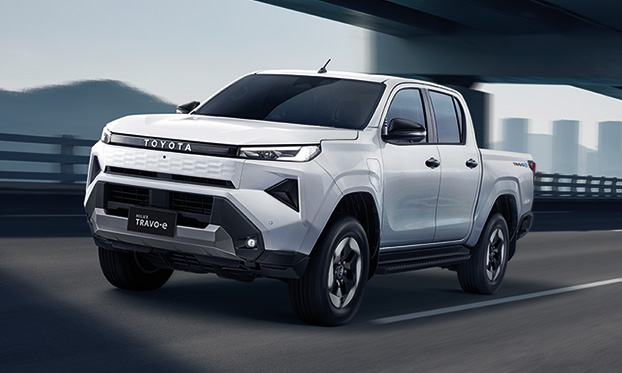
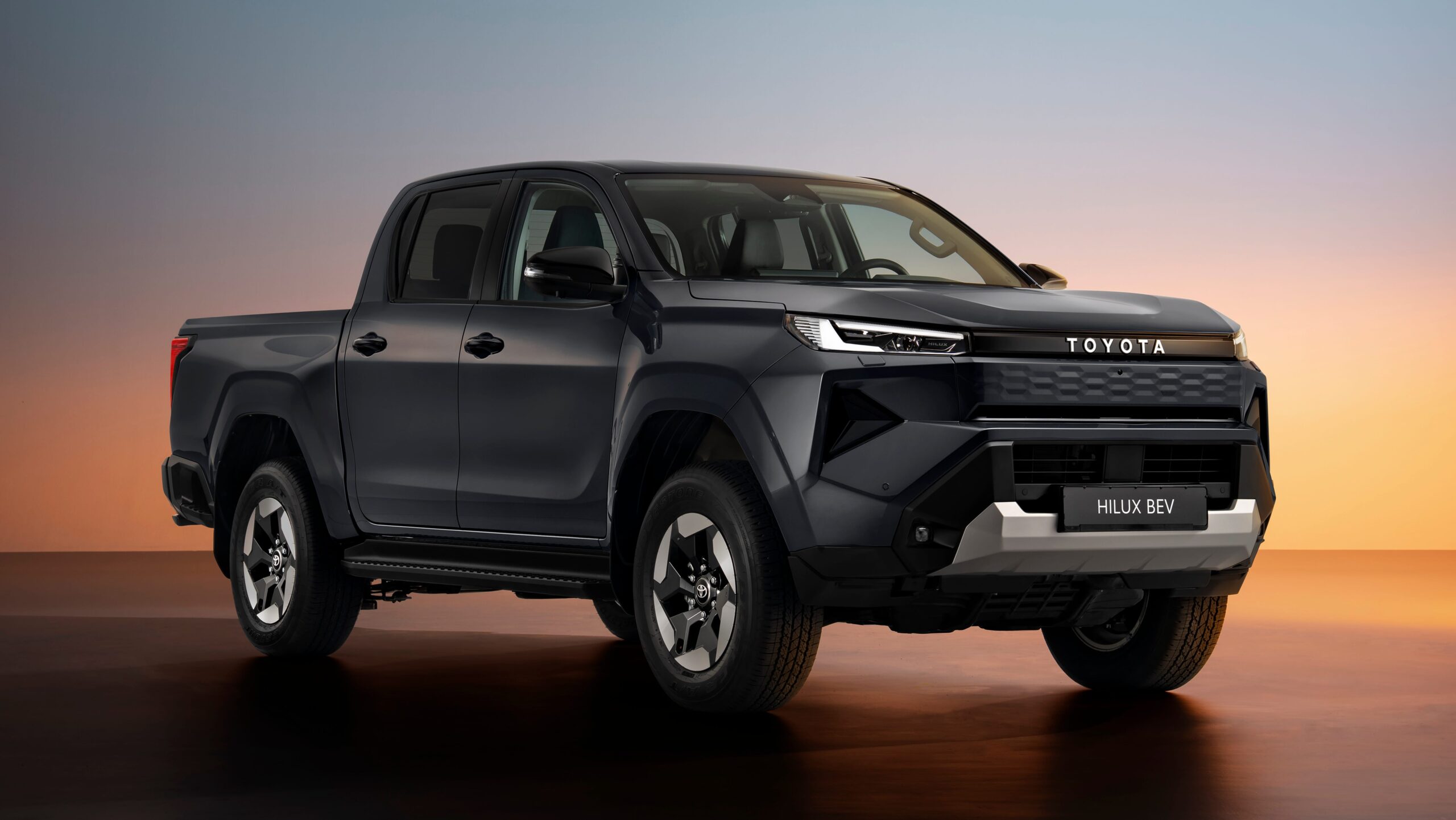
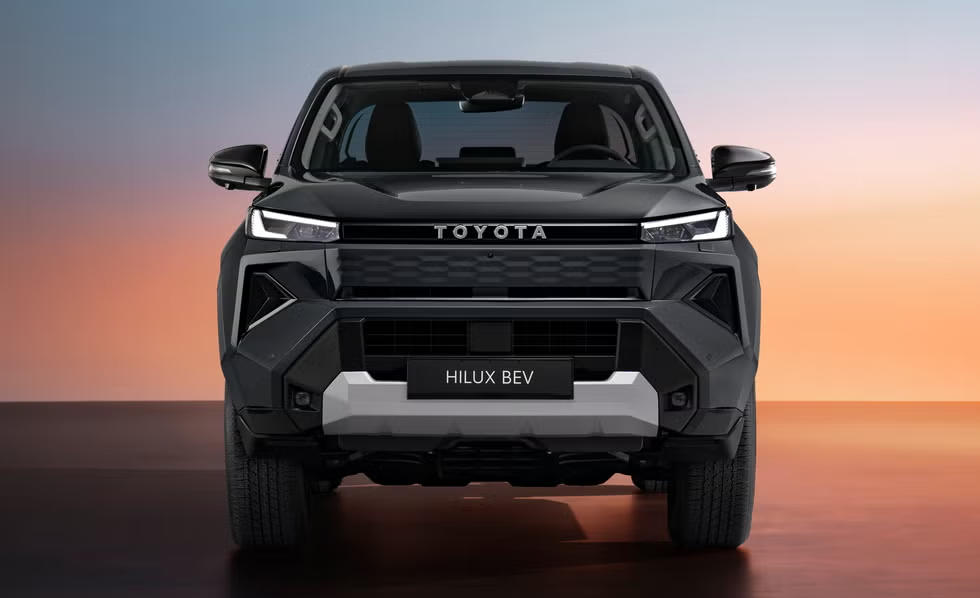
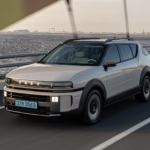
The new Hilux definitely looks different. Toyota’s design team went geometric with this generation, covering the front end in angular patterns and flanking them with narrow headlights that feel more aggressive than welcoming. The overall effect is sharp, contemporary, and undeniably intentional. Whether it’s actually attractive depends entirely on your tolerance for busy truck faces.
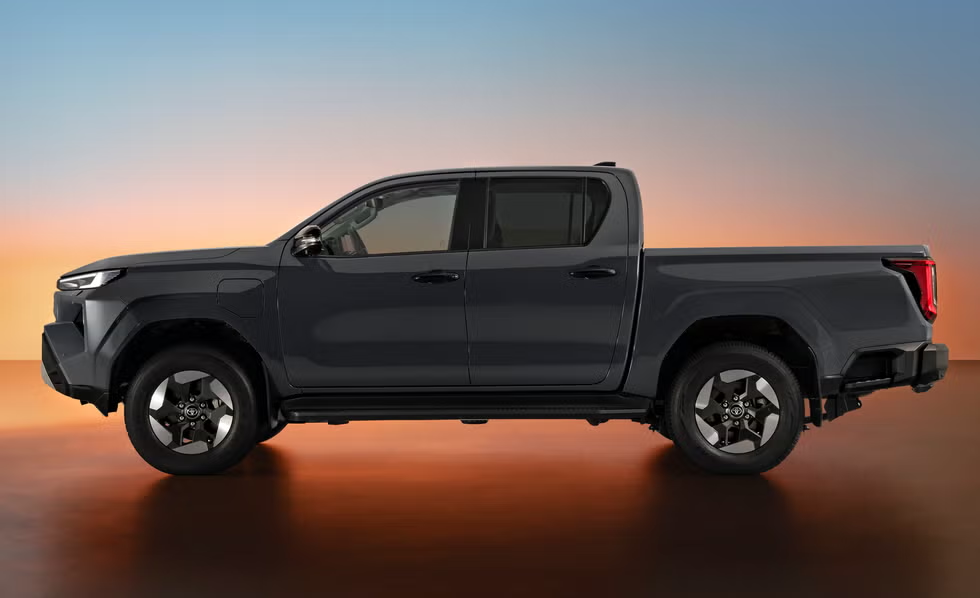
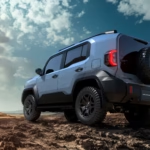
Practical updates include a new step at the rear for easier bed access—a genuinely useful feature for working trucks—plus redesigned side steps on select trims that continue the functional theme. The truck looks planted and modern, which is fine, but the sharp-edged styling occasionally feels like design for design’s sake rather than addressing real-world usability. It’s not ugly, but it’s not exactly refined either.
Toyota Hilux Ninth-Generation Pickup
The Electric Elephant in the Room
Now, about that electric motor. Toyota equipped the Hilux EV with a 59.2-kWh lithium-ion battery, which sounds reasonable until you check the range figures. The company claims 149 miles on Europe’s WLTP test cycle—a measurement that tends to be optimistic compared to real-world driving. That translates to roughly 126 miles using EPA measurements, which is, frankly, not great for a truck market where extended ranges are increasingly expected.
The battery is supposedly optimized for “best-in-class” charging speeds, according to Toyota, though the company conveniently hasn’t released what those speeds actually are. That vague language doesn’t inspire confidence, especially when competitors are being transparent about charging capabilities.
Load the truck bed with cargo, attach a trailer, or drive at highway speeds in cold weather, and watch that already-modest range crater further. For markets where the Hilux operates—often involving longer rural routes and serious work duties—the EV variant feels less like a solution and more like a regulatory checkbox. Toyota wanted an electric truck in the lineup, so it built one. Whether it’s actually practical for customers is a different story.
Toyota Hilux Ninth-Generation Pickup
Toyota Hilux Ninth-Generation Pickup
The Alternatives Make More Sense
Fortunately for buyers, Toyota didn’t bet the farm on the electric variant. The 48-volt hybrid system introduced earlier during the eighth-generation run sticks around, as do the proven diesel and gasoline engines. Those powertrains understand the Hilux’s purpose: reliable, capable trucks for diverse global markets with real operating demands.
Toyota is also planning a hydrogen fuel cell Hilux for 2028, which is interesting from a technology perspective but even further away than the EV—and hydrogen refueling infrastructure makes charging stations look abundant by comparison. That’s a longer-term play, and honestly, it feels more forward-thinking than the immediate EV offering.
Availability and the Tacoma Question
The Hilux EV launches in overseas markets beginning December 2025, so don’t expect to walk into a U.S. dealership looking for one. Toyota already fields the Tacoma in North America’s midsize truck segment, so the Hilux remains a global-market-only affair. European buyers, though, should start paying attention if they’re curious about an electric pickup with genuine heritage behind it.
Pricing hasn’t been announced yet, which typically means Toyota’s still calculating what they can charge without making potential customers laugh. That announcement will tell us a lot about whether this EV is genuinely viable or just a compliance vehicle masquerading as innovation.
Toyota Hilux Ninth-Generation Pickup
The Takeaway
The ninth-generation Hilux represents a thoughtful evolution of an iconic truck, with functional improvements and contemporary styling that mostly lands. The electric variant, however, feels like the automaker’s answer to a regulatory requirement rather than a genuine attempt to redefine what an electric truck could be. It exists, sure—but whether it exists for the right reasons is worth questioning.
For now, the diesel and hybrid versions remain the smarter choice for anyone actually planning to work with one of these trucks. The EV is interesting as a technology statement, but in practical terms, it’s a hard sell for the global market where the Hilux thrives.