Toyota Tacoma H2-Overlander: Hydrogen-Powered Adventure Truck Combines Mirai Tech with Off-Road Capability
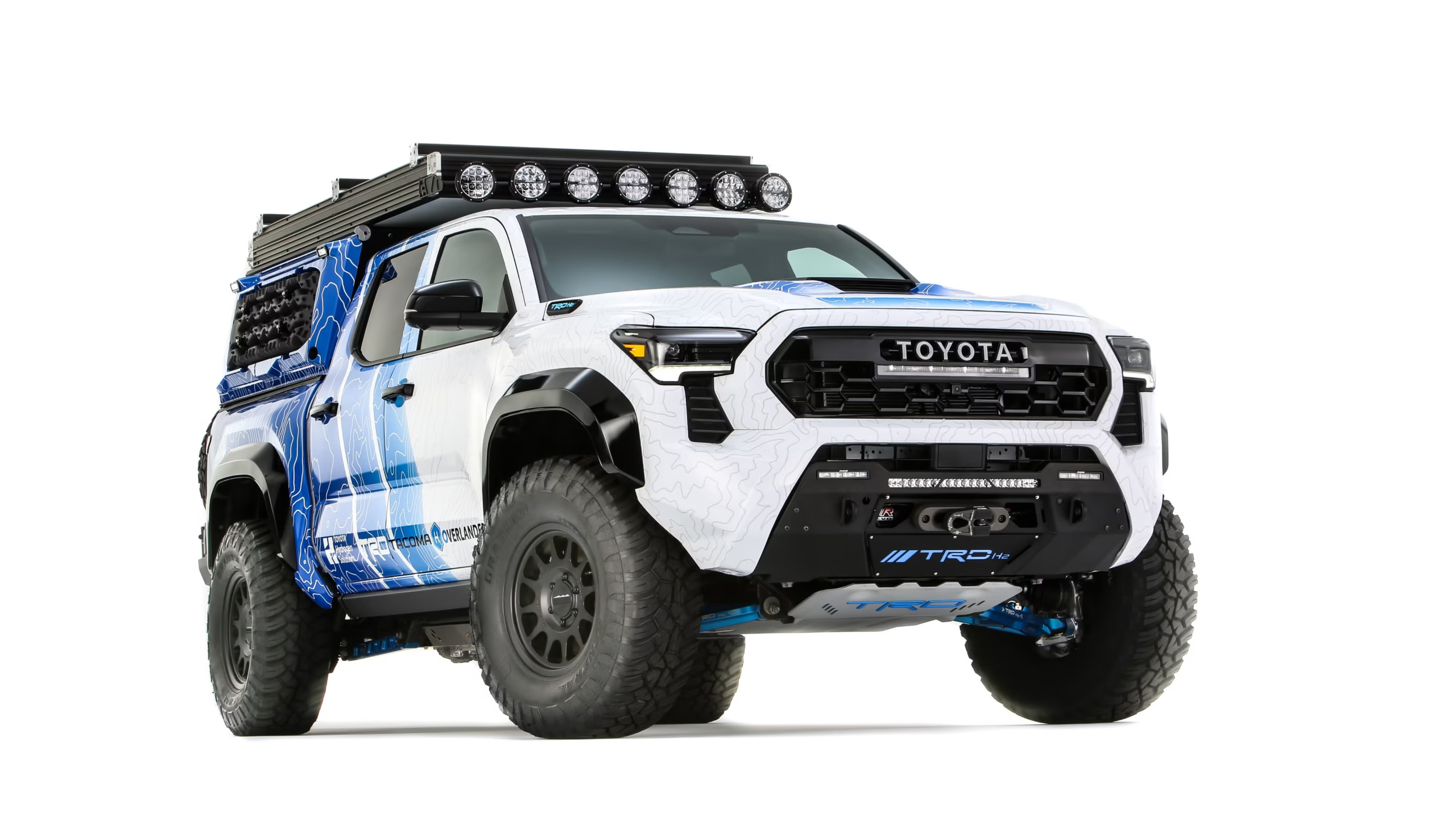
Toyota just revealed the Tacoma H2-Overlander concept at SEMA 2025—a hydrogen fuel-cell pickup that transplants the Mirai sedan’s FCEV powertrain into an off-road platform while adding innovative features like exhaust water recovery for campsite use. With 547 combined horsepower from dual motors, the H2-Overlander demonstrates Toyota’s continued commitment to hydrogen technology beyond passenger sedans.
Built by Toyota Racing Development (the same team engineering NASCAR V8s), this concept explores whether fuel-cell powertrains can work in adventure vehicles where range, power output, and refueling infrastructure matter more than in urban commuting.
The Hydrogen Foundation: Mirai Meets Tacoma
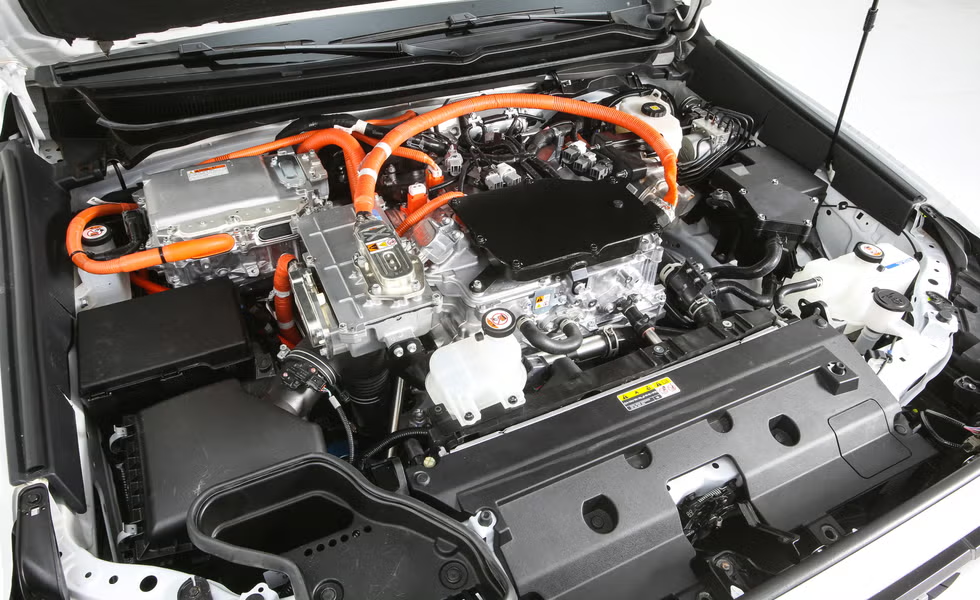
The H2-Overlander uses the second-generation fuel-cell stack from the Toyota Mirai, paired with three hydrogen tanks totaling 6 kilograms capacity mounted within the Tacoma’s frame rails. That packaging takes advantage of the truck’s body-on-frame TNGA-F architecture, which provides space conventional unibody crossovers lack.
A 24.9-kWh lithium-ion battery pack supplements the fuel cell, smoothing power delivery and capturing regenerative braking energy. The front motor produces 301 horsepower while the rear delivers 252 hp, combining for 547 horsepower total—significantly more than the stock Tacoma’s turbocharged four-cylinder or available V6.
Power distribution goes through a front limited-slip differential and rear electronic locking differential, enabling serious off-road traction management. That combination should provide genuine capability on technical terrain where wheel speeds vary dramatically.
Toyota Tacoma H2-Overlander
TRD Engineering: Racing Development Meets Adventure
Toyota Racing Development handled the engineering and build, bringing motorsports expertise to hydrogen fuel-cell application. The custom cooling system combines components from the Tacoma TRD Pro and Lexus RZ, demonstrating Toyota’s willingness to raid parts bins across their lineup for optimal solutions.
The chassis and suspension received significant upgrades for off-road performance:
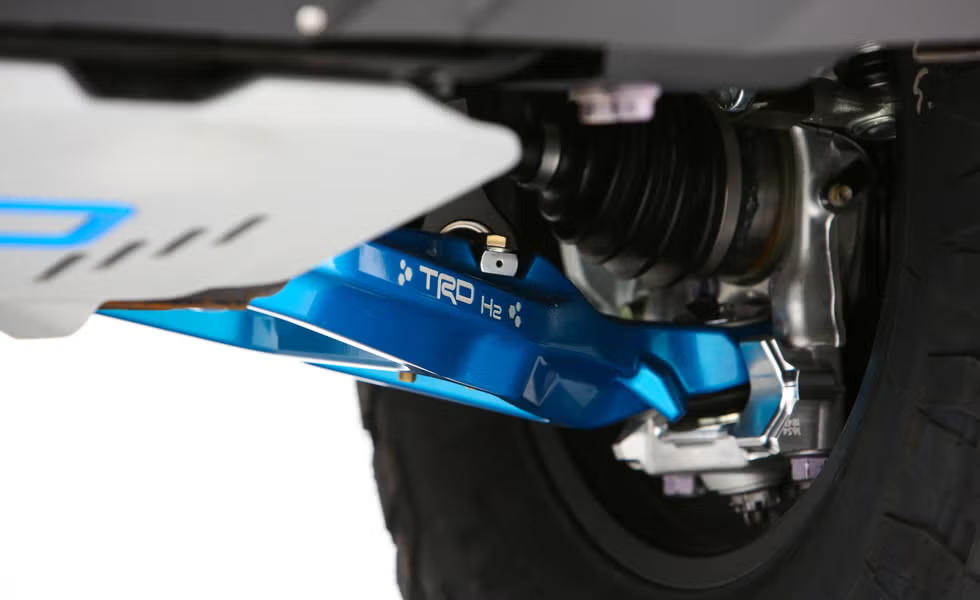
Suspension: TRD billet long-travel kit with Fox 2.5 Performance Elite Series shocks sourced from Tundra suspension development. This provides extended wheel travel for absorbing terrain irregularities while maintaining tire contact.
Brakes: Front brake components borrowed from the Tundra handle stopping duties for the heavier hydrogen-equipped truck.
Wheels and Tires: Seventeen-inch Method Race wheels wrapped in rugged 35-inch General Grabber all-terrain tires provide substantial ground clearance and grip.
This suspension work addresses a fundamental challenge with hydrogen fuel-cell vehicles—they’re heavy due to tanks, fuel cells, batteries, and motors. Making a heavy vehicle handle rough terrain requires serious suspension engineering.
Toyota Tacoma H2-Overlander
The Water Recovery Innovation
Here’s where the H2-Overlander gets genuinely interesting. Hydrogen fuel cells produce water as their only emission—the chemical reaction between hydrogen and oxygen creates H2O as a byproduct. The H2-Overlander features a patent-pending exhaust water recovery system that captures and filters this water for campsite use.
Toyota explicitly states the water works for washing items and showering but shouldn’t be consumed. That’s reasonable caution—while the chemical reaction produces pure water, the filtration system and storage may introduce contaminants making it unsafe for drinking without additional treatment.
The concept is clever: rather than treating water output as waste requiring drainage, turn it into a resource. In overlanding scenarios where water availability matters, having a vehicle that produces usable water could provide genuine utility.
Whether the system produces sufficient volume for practical use is questionable. The Mirai produces roughly 5 liters of water per 100 kilometers driven. That’s not much for showering or washing, though it could supplement water supplies carried conventionally.
Power Export: 15kW Campsite Electrification
The H2-Overlander provides 15 kilowatts of exportable power through dual NEMA 14-50 outlets. Toyota claims this can electrify an entire campsite or charge two EVs simultaneously.
Fifteen kilowatts is substantial—enough to run multiple appliances, lighting, and electronics simultaneously. It’s also enough to provide meaningful EV charging, though “simultaneously charging two EVs” suggests slow Level 2 charging split between vehicles rather than rapid charging.
This vehicle-to-load (V2L) capability makes sense for adventure applications where electrical infrastructure doesn’t exist. Running refrigerators, cooking equipment, lighting, and entertainment from the truck eliminates generator needs and associated noise/emissions.
The hydrogen fuel cell essentially becomes a mobile generator with the advantage of quick refueling (when hydrogen infrastructure exists) versus gasoline generators requiring fuel cans.
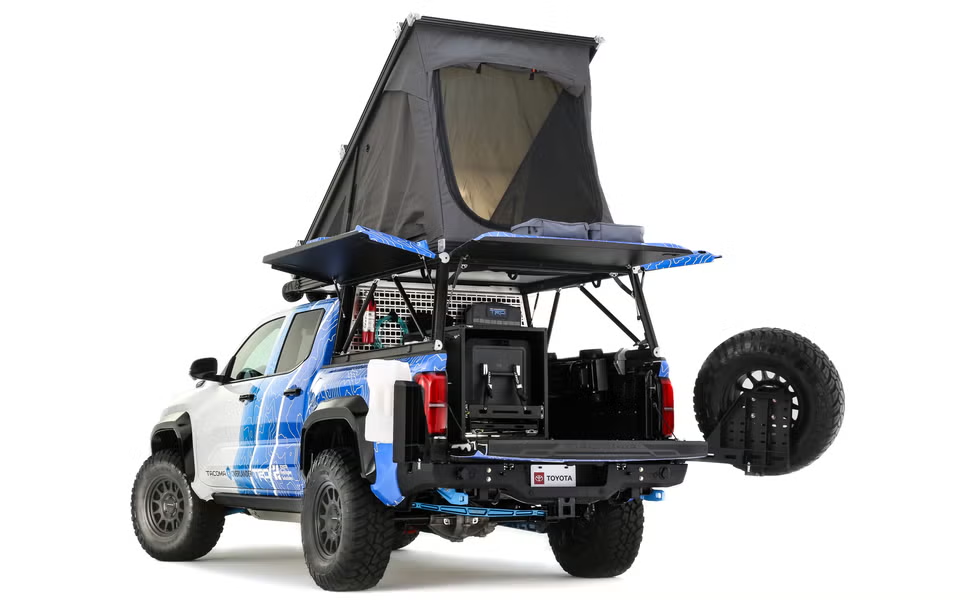
Custom Bed Storage: Recycled carbon-fiber panels lift upward revealing integrated campsite equipment including grille and refrigerator. Recovery boards and a roof-mounted tent complete the overlanding setup.
Heavy-Duty Bumpers: Front and rear bumpers feature integrated tow hooks, with a front-mounted winch for vehicle recovery.
Auxiliary Lighting: Light bar in the front bumper and seven circular roof lights provide illumination for camp setup and nighttime off-roading.
The bed storage system demonstrates thoughtful integration rather than just bolting accessories onto the truck. Lifting panels keep equipment secure during transit while remaining accessible at camp.
The Hydrogen Reality Check
Toyota’s hydrogen commitment stands nearly alone among major automakers. The Mirai remains available in California where hydrogen infrastructure (barely) exists. Other manufacturers have largely abandoned passenger vehicle fuel-cell development, focusing instead on commercial applications like buses and trucks.
Toyota recently announced a next-generation FCEV system that’s 20% more efficient, destined for the upcoming Corolla which will offer combustion, hybrid, electric, and hydrogen options. That multi-powertrain approach reflects Toyota’s hedging strategy—developing diverse technologies rather than betting everything on batteries.
The Tacoma H2-Overlander serves multiple purposes:
Proof of Concept: Demonstrates fuel-cell powertrains work in truck applications, not just sedans.
Technology Showcase: Highlights innovations like water recovery and high-output power export.
Marketing Statement: Reinforces Toyota’s hydrogen commitment when most competitors have abandoned it.
Engineering Exercise: Provides real-world development experience applying fuel cells to applications beyond urban commuting.
Production Reality: Don’t Hold Your Breath
Will Toyota build a production hydrogen Tacoma? Almost certainly not in this form. The concept serves exploratory and promotional purposes rather than previewing imminent production.
Challenges include:
Infrastructure: Hydrogen fueling stations barely exist outside California and select metro areas. Overlanding by definition involves remote areas lacking infrastructure.
Cost: Fuel-cell systems remain expensive. Adding Mirai powertrain costs to Tacoma pricing would create a truck few could afford.
Complexity: The H2-Overlander’s dual-motor AWD, battery pack, fuel cell, hydrogen tanks, cooling systems, and power export hardware dramatically increase complexity versus conventional powertrains.
Market Size: The overlap between “buyers wanting hydrogen vehicles” and “overlanding enthusiasts” is vanishingly small.
Toyota’s immediate FCEV focus targets semi trucks and commercial applications where refueling infrastructure can be controlled and costs justified. Passenger vehicles remain niche.
What This Actually Signals
Despite production unlikelihood, the H2-Overlander represents Toyota’s willingness to explore hydrogen beyond obvious applications. If fuel-cell technology reaches cost parity with batteries and infrastructure expands, adventure vehicles could benefit from hydrogen’s quick refueling and range advantages over battery-electric.
The water recovery and power export features demonstrate thinking beyond simple powertrain swaps toward addressing real-world use cases. Those innovations could apply to future vehicles regardless of hydrogen adoption.