Bentley’s Continental GT Supersports Throws Away Complexity to Find Clarity
The new Supersports strips the hybrid system, ditches all-wheel drive, and removes a thousand pounds. It’s the purist’s answer to an increasingly complicated world.
Bentley’s doing something almost counterintuitive with the new Continental GT Supersports. In an era when luxury automakers respond to performance expectations by adding power, adding systems, adding complexity, Bentley is instead taking things away. The hybrid powertrain—gone. All-wheel drive—abandoned. A thousand pounds of mass—shed. What remains is something rarer than horsepower: a statement about what matters.
The Supersports nameplate carries weight in Bentley’s history. When it last appeared in 2017, as the performance capstone for the previous-generation Continental GT, it arrived as a 700-horsepower statement. Two-seat-only exclusivity. A W-12 engine turned up to levels that threatened the very concept of restraint. Before that, the original Supersports lived from 2009 to 2012, a different era, when 621 horsepower felt like adequate drama.
This new one is different. This is Bentley acknowledging that more isn’t always better. Sometimes less is.
2027 Bentley Continental GT Supersports (3)
2027 Bentley Continental GT Supersports (2)
2027 Bentley Continental GT Supersports (1)
2027 Bentley Continental GT Supersports (12)
2027 Bentley Continental GT Supersports (11)
2027 Bentley Continental GT Supersports (10)
2027 Bentley Continental GT Supersports (9)
2027 Bentley Continental GT Supersports (8)
2027 Bentley Continental GT Supersports (7)
2027 Bentley Continental GT Supersports (6)
2027 Bentley Continental GT Supersports (5)
2027 Bentley Continental GT Supersports (4)
The Philosophy of Subtraction
Walk around the 2027 Supersports and what strikes you first isn’t what you see—it’s what’s missing. The rear seat is gone, sacrificed entirely to the weight-reduction agenda. Inside, the sound deadening has been stripped down. The audio system has been reimagined for just two passengers, which sounds like a compromise until you realize it’s actually clarity.
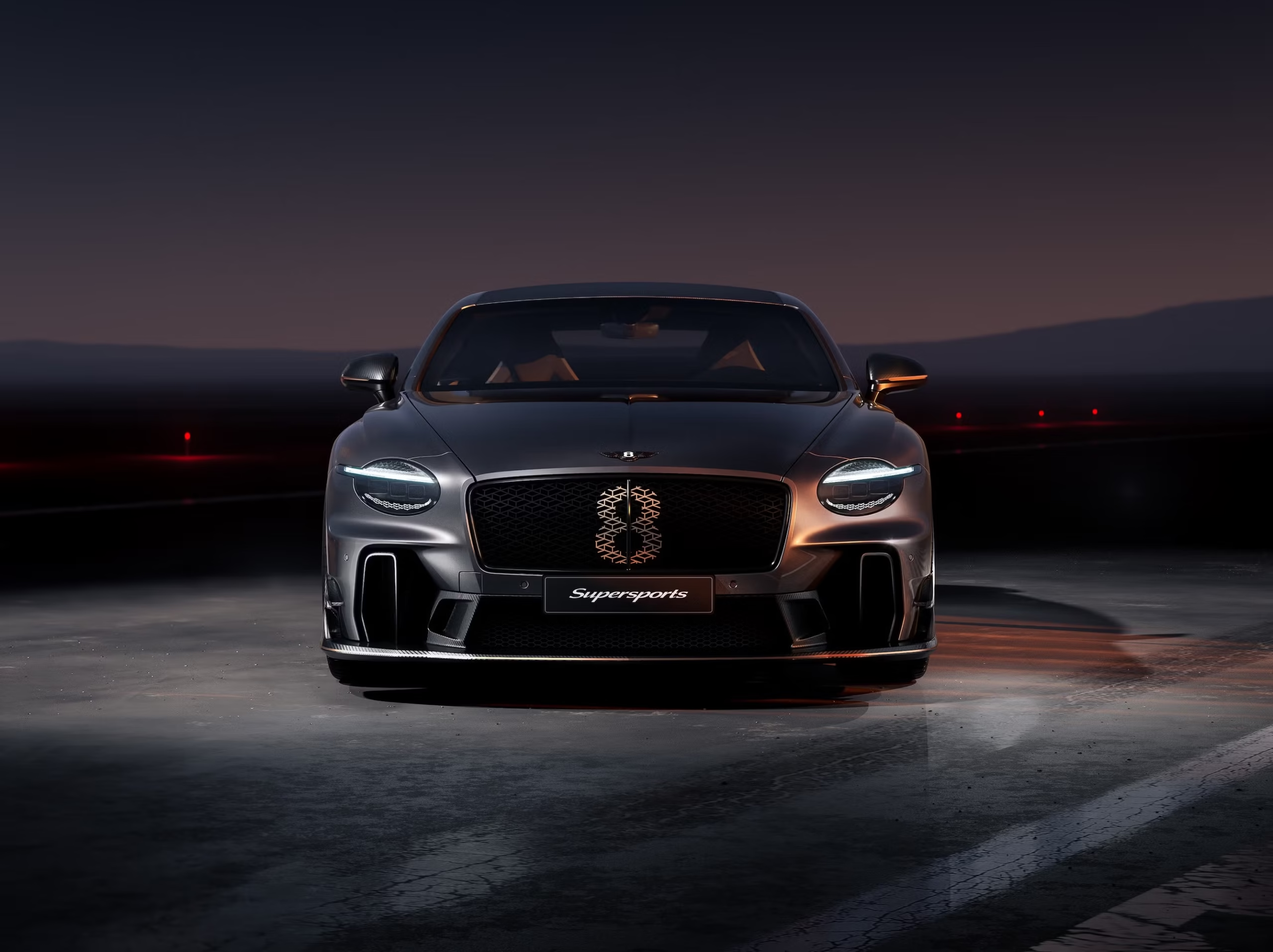
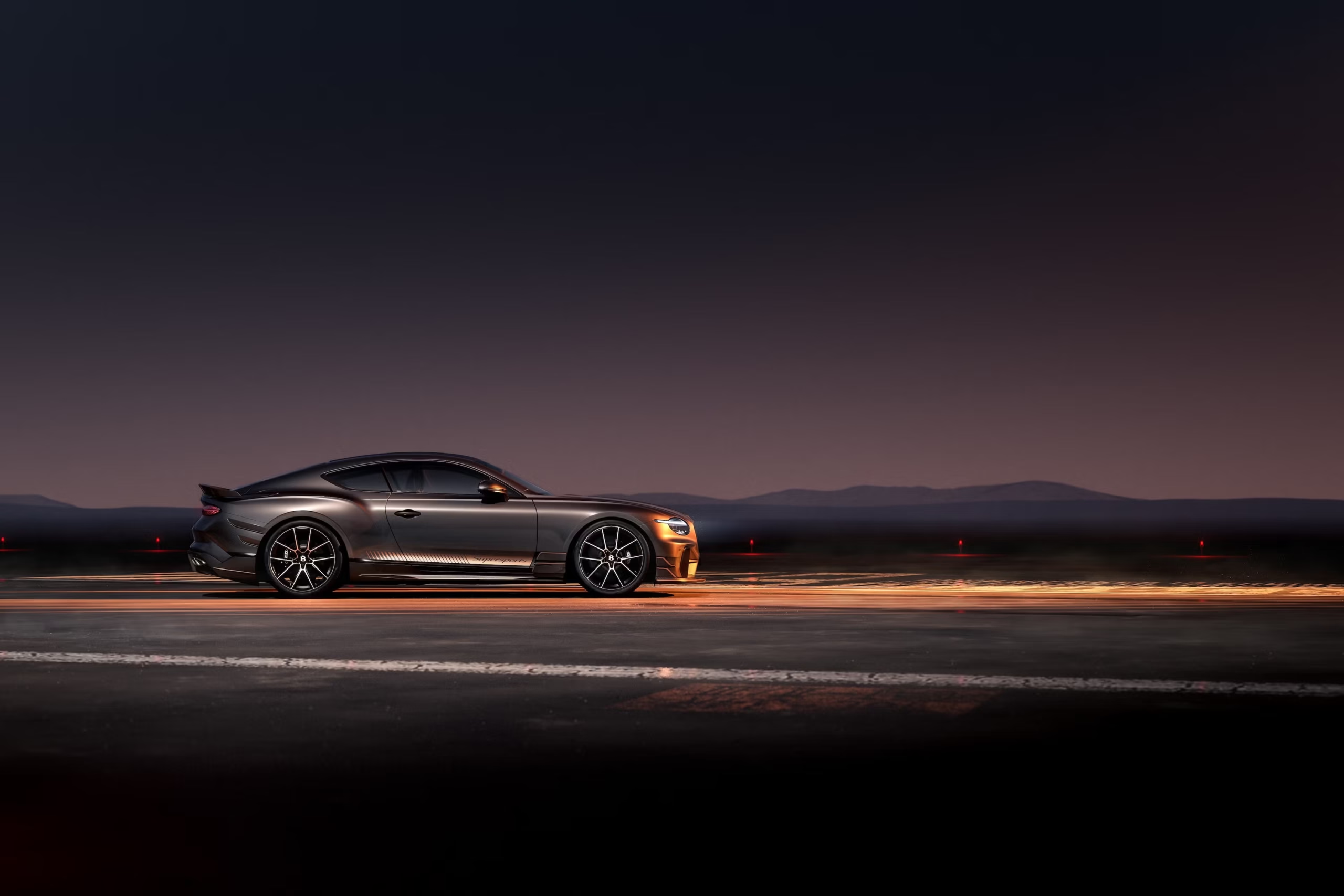
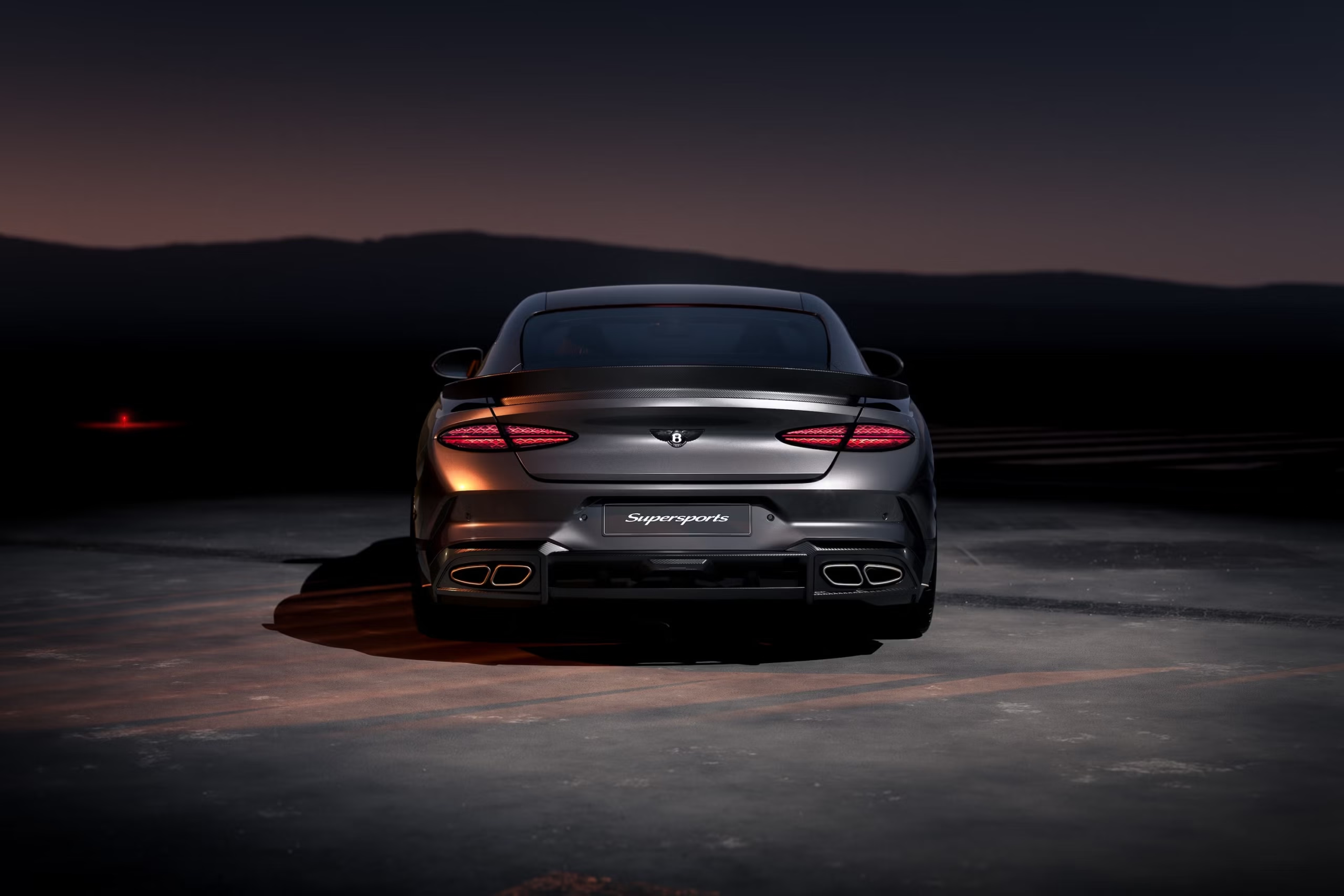
“This Supersports is defined by what it removes as much as what it includes,” a Bentley engineer explained during the technical briefing. That philosophy extends everywhere. Carbon fiber forms the roof panel. Carbon is used for the lower front fascia, the rear diffuser, the fixed rear wing. These aren’t cosmetic gestures. Every panel is a statement: we chose this because it matters.
The results are staggering. The first-generation Supersports was considered a marvel of lightweighting at 220 pounds less than comparable cars. It still weighed more than five thousand pounds. The second generation hovered around the 2.5-ton mark. This new Supersports? Less than 4400 pounds. A thousand-pound reduction. That’s not incremental. That’s transformational.
View Exterior Photos
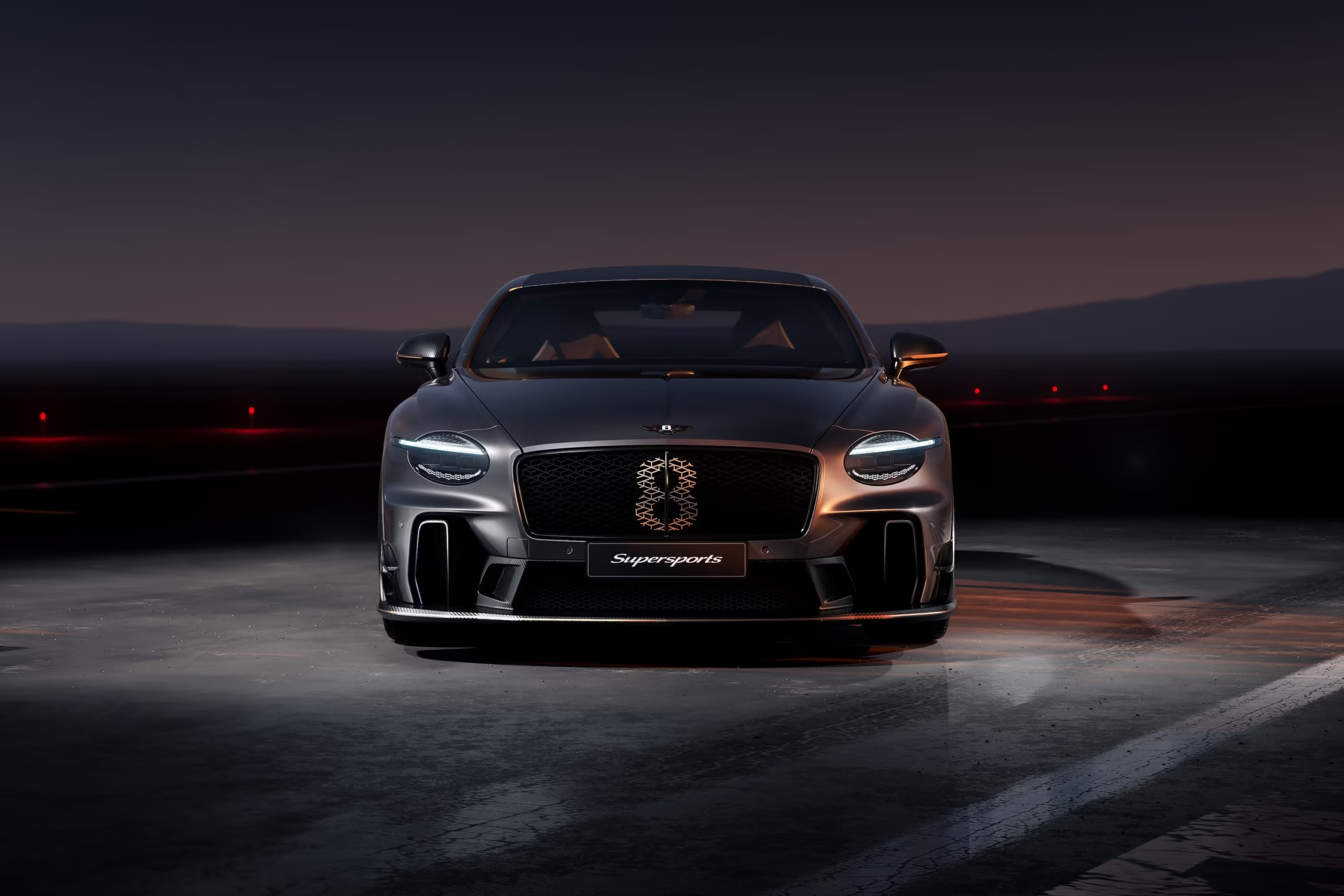
Under the hood, the story becomes even more intriguing. The regular Continental GT offers a twin-turbocharged 4.0-liter V-8, standard in most configurations. But there’s also the plug-in hybrid option—an additional system, additional complexity, additional weight. The Supersports rejects this entirely.
Instead, you get a V-8 alone. Twin-turbocharged, yes. 657 horsepower, yes. But here’s the catch: that’s actually 66 fewer horses than what you’d get with the regular Continental GT’s twin-turbo alone. The regular GT’s hybrid system produces 671 total horsepower. The Speed and Mulliner versions jump to 771. The Supersports, with its isolated, unassisted V-8, delivers 657.
On paper, that looks like a step backward. On the road, it becomes clarity itself.
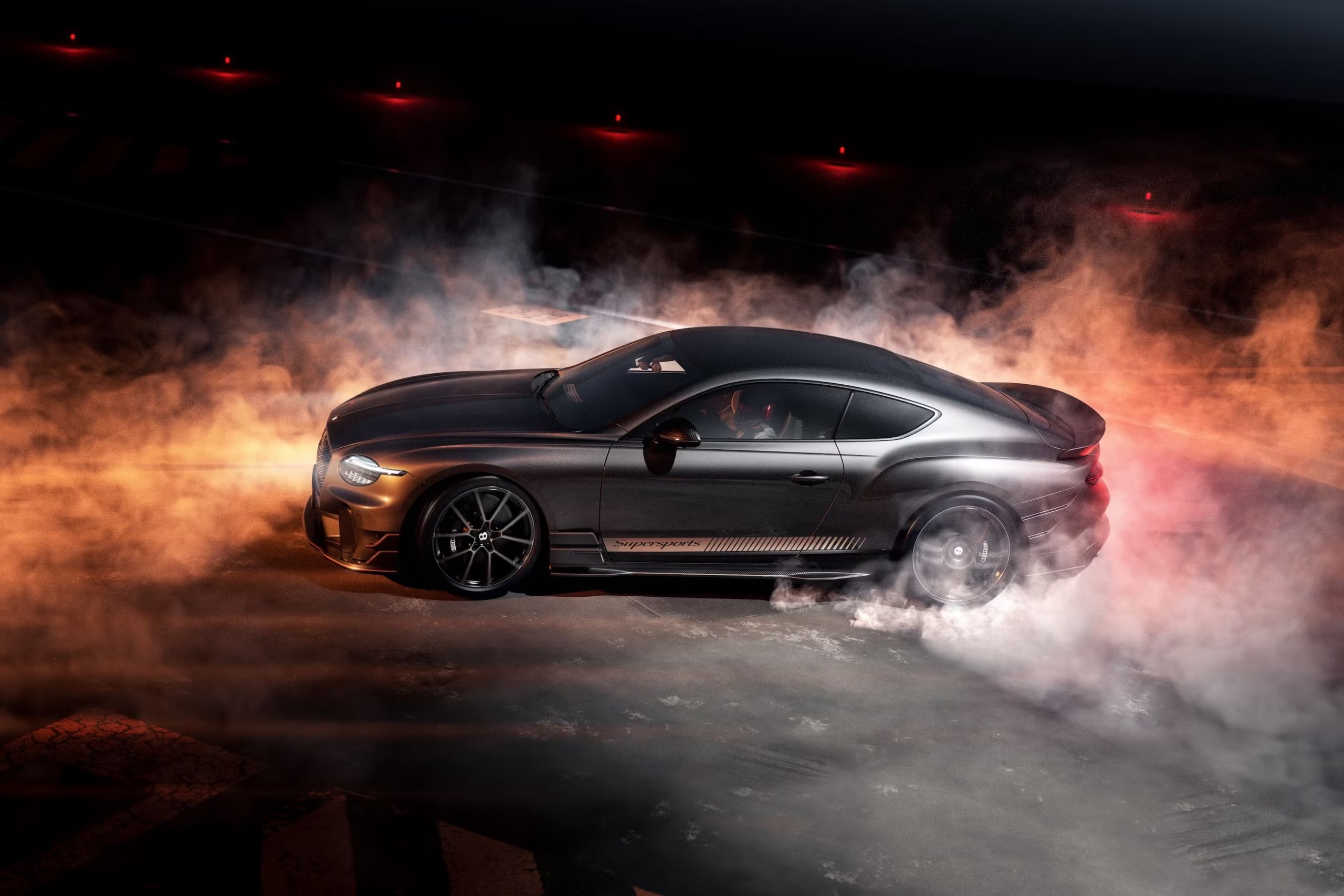
The torque—590 pound-feet—flows exclusively to the rear wheels through an eight-speed dual-clutch transmission that’s been tweaked for quicker shifts. This is the first Continental GT since the nameplate’s resurrection in 2003 to abandon all-wheel drive entirely. The rear axle features an electronically controlled limited-slip differential and brake-based torque vectoring. Everything is calibrated to make the driver feel every decision.
“We wanted to create something that responded instantly to driver input,” said the chassis engineer. “All-wheel drive is wonderful for stability. But the Supersports isn’t about stability. It’s about connection.”
2027 Bentley Continental GT Supersports
2027 Bentley Continental GT Supersports
The Details That Reveal Intent
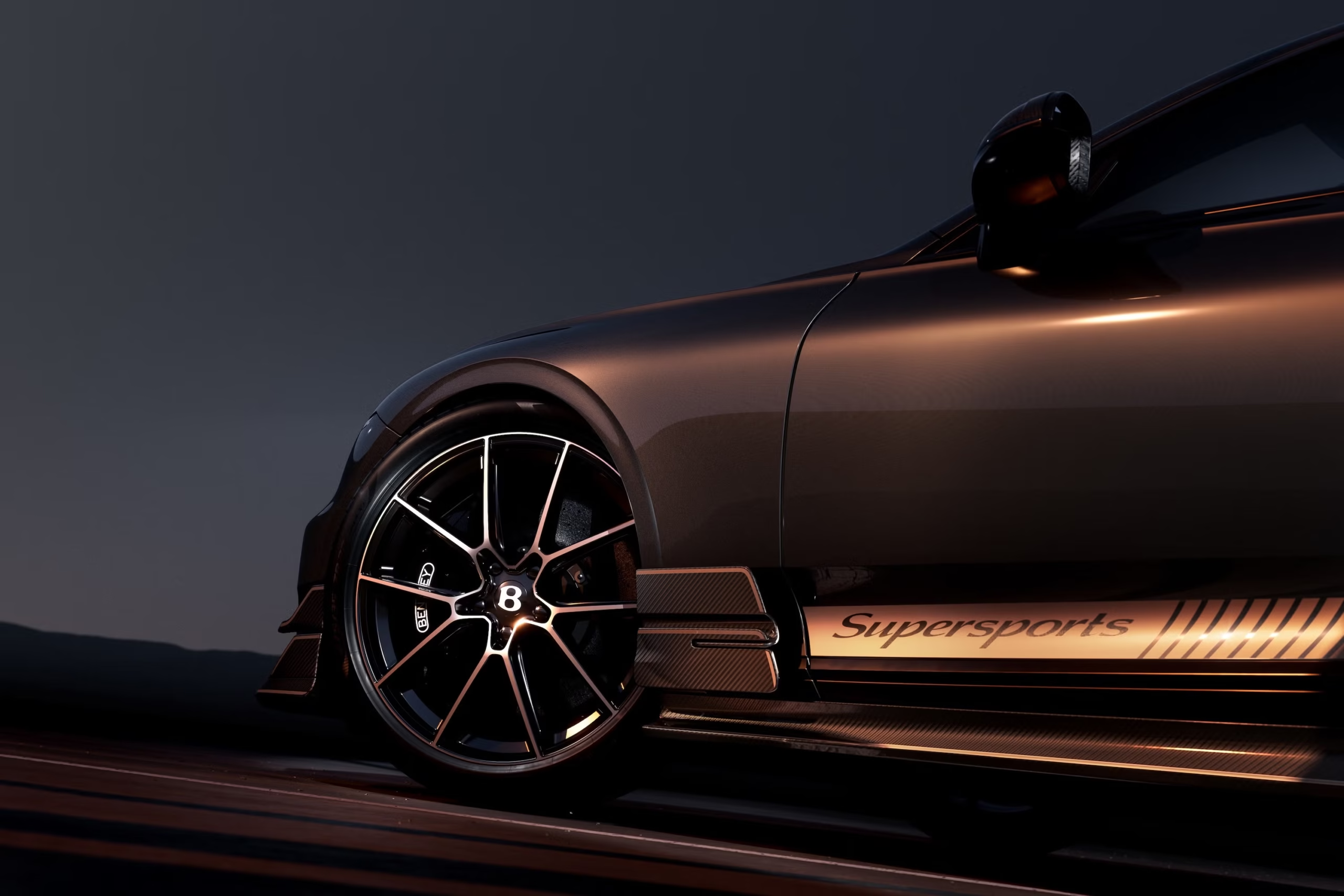
The brakes are carbon-silicon-carbide—the same material used in fighter jets and high-end racing programs. They’re not just strong. They’re communicative. A titanium exhaust system by Akrapovič replaces the standard equipment. This isn’t about raw sound. It’s about saving 30 pounds and optimizing flow for the naturally aspirated feel the engineers were chasing.
Four-wheel steering remains, inherited from the rest of the Continental GT line. Air springs are retained. Bentley’s 48-volt active anti-roll bars are standard. The drive modes—Touring, Bentley, and Sport—are specific to the Supersports, with calibrations that acknowledge this car’s different priorities.
Inside, the seats are lighter than the standard Continental GT’s, though they retain heating and power adjustment. It’s a balance between weight reduction and luxury. You’re not sitting in a racing harness. You’re not perched on carbon fiber shells. But you’re aware, constantly, that everything here serves a purpose.
The interior trim follows the same philosophy. Reduced sound deadening means you hear the engine more clearly, the transmission more distinctly, the road surface more honestly. Some might call this sparse. Bentley calls it authentic.
View Interior Photos
Performance figures tell part of the story. The Supersports is claimed to accelerate from zero to 62 mph in 3.7 seconds. We predicted, based on historical Bentley performance and the significant weight reduction, that real-world figures would be closer to 3.3 seconds. Top speed is estimated at around 192 mph—less than the GT Speed’s 208 mph, but that comparison misses the entire point.
“This Supersports isn’t about straight-line thrust,” a Bentley product manager explained. “There’s the GT Speed for that. The Supersports is about how a car feels when you’re asking everything from it. It’s about connection between driver and machine.”
Bentley is building exactly 500 Continental GT Supersports models. This is scarcity as statement. Not limited production for production’s sake, but production limited because this car requires a specific philosophy, a specific mindset, a specific kind of owner.
Deliveries begin in early 2027. Production starts in the fourth quarter of 2026. Pricing starts at over $486,000—substantial by any measure, though not exceptional for what Bentley is offering. A fully spec’d version, loaded with options and personalization, will exceed half a million dollars easily.
The Question of Purpose
What Bentley is doing with this Supersports represents something increasingly rare in the luxury market: clarity of purpose. Every other Continental GT is, in its way, trying to be everything. This one is trying to be one specific thing: the purest expression of what a grand tourer can feel like when stripped to essentials.
The hybrid system in the regular Continental GT adds complexity and weight. It also adds power. Some might argue it adds value. The Supersports disagrees. It argues that a driver who wants a thousand pounds less and a direct connection to a turbocharged V-8 doesn’t need the additional horsepower. That driver needs presence. Needs authenticity. Needs to feel the machine responding to their inputs without layers of electronic interpretation.
This is countercultural in 2026. Most manufacturers are adding active suspension systems, adding torque vectoring across all wheels, adding complexity to compensate for mass they can’t seem to shed. Bentley is doing the opposite. It’s removing. Removing weight. Removing power. Removing systems. And in that removal, it’s creating something that feels less like modern excess and more like a conversation about what luxury actually means.
2027 Bentley Continental GT Supersports
2027 Bentley Continental GT Supersports
View Exterior Photos
The specific choice to abandon all-wheel drive is especially provocative. All-wheel drive has become almost standard in performance luxury cars. It provides stability. It provides safety. It provides confidence. The Supersports rejects all of this. It says: the driver doesn’t need a safety net. The driver wants to feel the road. The driver wants to understand what the car is doing at any given moment.
Engineers familiar with Bentley’s development process describe the Supersports as the most challenging Continental GT variation to tune. With all-wheel drive and hybrid systems, compromises are easier to hide. With just rear-wheel drive and a naturally aspirated-feeling turbocharged engine, every adjustment reveals itself. The team had to get the electronic differential exactly right. The torque vectoring calibration required months of track testing. The brake feel needed to be immediate but not abrupt.
“It took longer to get right than any other variant,” one engineer said off the record. “Because there’s nowhere to hide.”
The Philosophy Extended
What’s happening here extends beyond just this car. Bentley’s larger strategy includes electrification plans, hybrid systems, technological evolution. But the Supersports represents a deliberate counterargument. It’s the brand saying: we understand the future. We’re building it. But we also understand that some people, some market segment, wants connection over convenience. Wants purity over pragmatism.
The 500-unit production run suggests this won’t be a volume play. But volume was never the point. The point is creating something for owners who see the Continental GT Supersports not as a car to own, but as a statement about what they value. Purity in an impure world. Directness in an age of mediation. Connection in an era of increasing digital abstraction.
The first Supersports will arrive in early 2027. The waiting lists are already forming. Some of those buyers will be collectors, parking the car safely away. But Bentley engineers quietly hope most will actually drive them. They built this car for someone who values what’s missing more than what’s included. Someone who would rather shed a thousand pounds than add a hundred horsepower. Someone who looks at the modern world’s increasing complexity and decides to build something simpler.
That, ultimately, might be the most radical thing Bentley’s done in years.