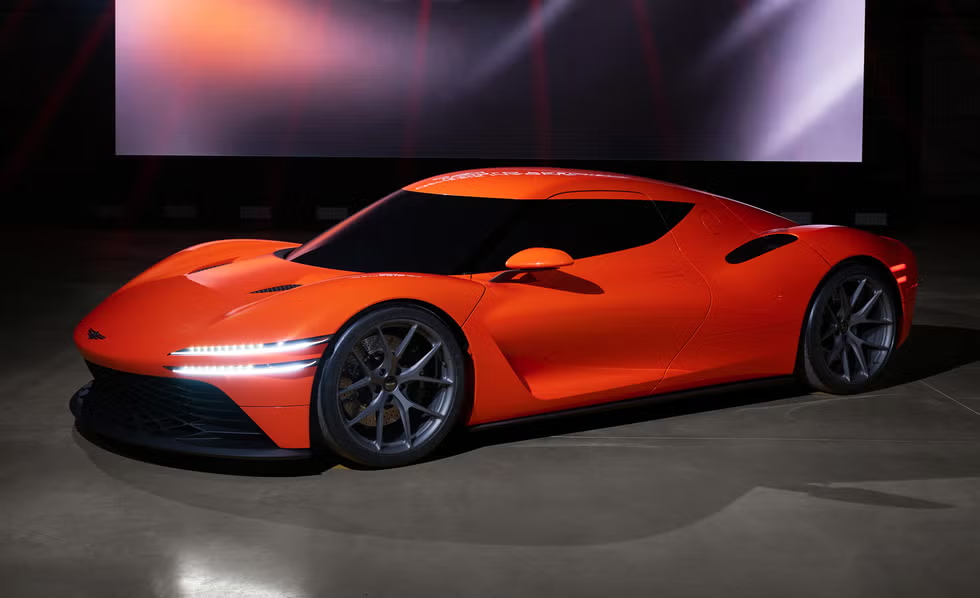
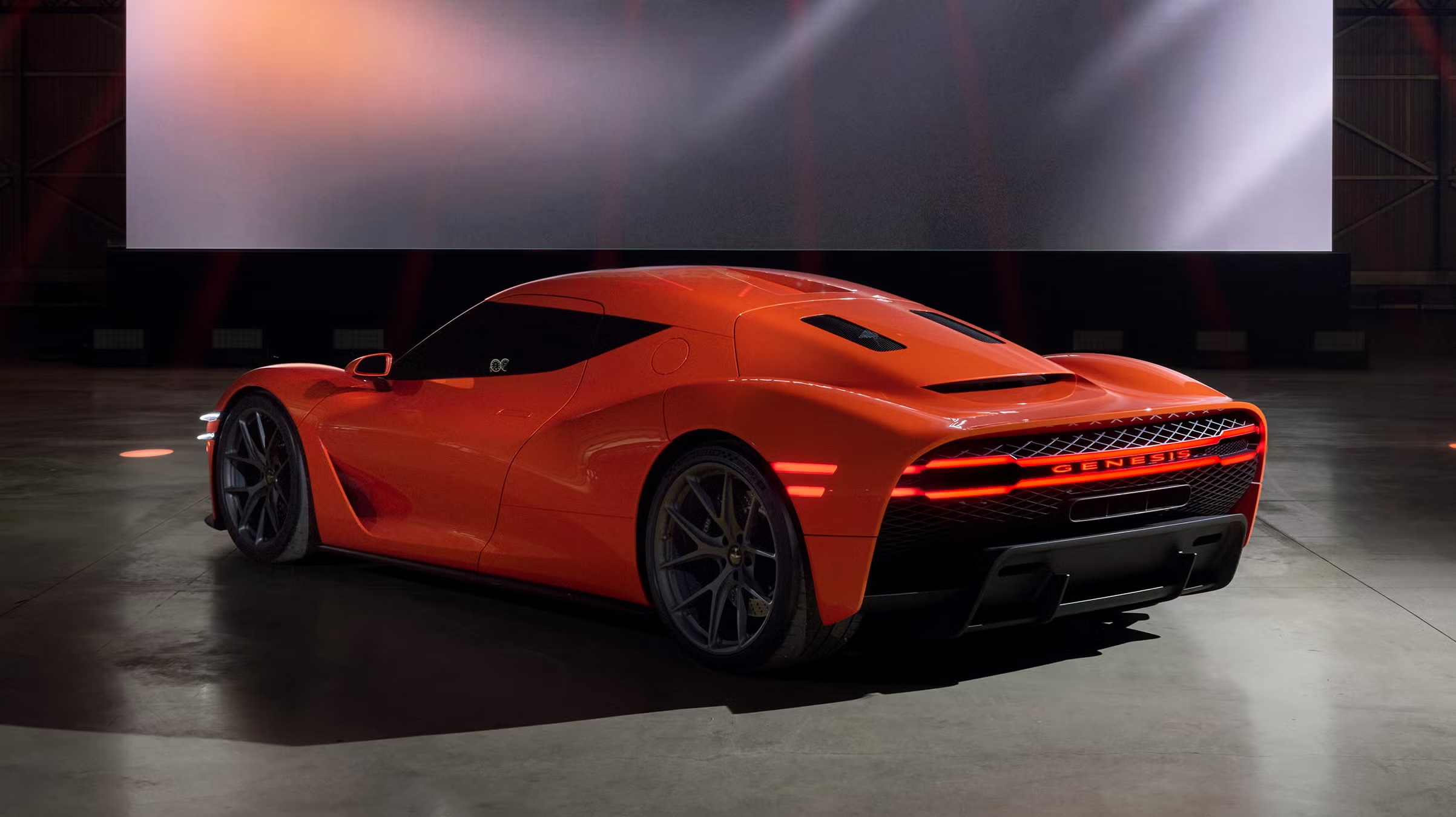
The 2028 Genesis Magma GT is the brand’s first clean-sheet supercar: a mid‑engined, V‑8–powered halo intended to sit on the same mental shelf as a Porsche 911 Turbo, Mercedes‑AMG GT, and mid‑engine Corvette, not just the GV70 and GV80 in your neighbor’s driveway. It’s the centerpiece of Genesis’s new Magma performance sub‑brand, previewed by the wild GV60 Magma and backed up by a full-on Le Mans prototype program.
Visually, the Magma GT trades the soft, sculptural lines of Genesis’ssedans and SUVs for proper supercar drama: low nose, cab‑forward cockpit, and a tightly packaged rear deck that makes it obvious the engine now lives behind the seats. Think more “European exotic” than “luxury coupe” and you’re in the right ballpark.
Why It Matters
Genesis has spent the last decade climbing the premium ladder with quietly excellent sedans and SUVs; now it wants a seat at the enthusiast table next to brands that built their reputations in pit lanes, not boardrooms. The creation of the Magma division—and a headline product like the GT—is how you signal that intent.
The motorsport link is not window dressing. Genesis is developing the GMR‑001 endurance prototype to run at the 2026 24 Hours of Le Mans, and the Magma GT will exist both as a road car and in GT3 racing form, putting it directly against the 911, AMG GT, and Ferrari and McLaren customer cars on track. If Genesis can show up at Le Mans, Nürburgring, and global GT series with a car that’s competitive, it instantly accelerates its credibility among enthusiasts who currently equate the brand mostly with quiet cabins and long warranties.
In short, this isn’t a styling exercise or a marketing special. It’s Genesis telling Porsche, Mercedes‑AMG, and Chevrolet: “We’re here, and we’re not scared of lap times.”
2028 Genesis Magma GT Preview
Platform
Genesis has no existing mid‑engine architecture to lean on, which is why the Magma GT is expected to ride on a bespoke platform designed from scratch for this car. The layout will be classic supercar: engine behind the seats, power to the rear wheels (with all‑wheel drive potentially in the mix for future variants), and a structure aimed at keeping weight centralized and the polar moment low.
That new architecture will likely be flexible enough to support a full family of variants, much like the Porsche 911 range. Expect:
A base coupe with “standard” power
A higher‑output S or Track variant
A convertible version with minimal compromise to stiffness
Possible lightweight or Clubsport‑style specials aimed squarely at track‑day regulars
Aluminum and composite construction are almost guaranteed, with strategic use of carbon fiber in body panels and structural elements for the more focused trims. The goal will be to keep mass in check even as hybrid components and modern safety gear pile on.
Powertrain
The headline act is a new V‑8, something Genesis currently does not offer in any production car. The concept Magma GT was shown with a loud, high‑revving eight‑cylinder, and the smart money says the production engine will be a twin‑turbocharged V‑8 making comfortably north of 600 horsepower.
How do you get a V‑8 when your showroom is full of four‑ and six‑cylinders? One answer is to look at the race car. The GMR‑001’s engine reportedly “stitches together” two of Genesis’s 1.6‑liter turbo fours to create a compact V‑8, then adds a hybrid system for a combined 670 hp. A road‑going Magma GT could borrow the basic architecture and detune it for durability and emissions, or adopt a similar “twin‑four” approach with lower boost and a more luxury‑friendly calibration.
A plausible scenario:
Base V‑8: twin‑turbo, ~600–620 hp, purely ICE with 8‑speed dual‑clutch and rear‑wheel drive
Range‑topper: V‑8 plus a compact hybrid module on the transmission input for 650–700 hp combined, minor EV creep capability, and torque fill for lag‑free response
Genesis has also hinted at an entry‑level variant using a twin‑turbo 3.5‑liter V‑6, a development of the engine that makes 375 hp in the G80, G90, GV70, and GV80. In Magma GT tune, you’d expect something in the 450–500‑hp range, giving buyers a way into the platform at a lower price point, much like how Porsche uses Carrera vs Turbo vs GT3 tiers.
Regardless of cylinder count, the engine will live amidships, ahead of the rear axle, driving through an eight‑speed automatic or dual‑clutch transaxle. Don’t expect a manual; do expect launch control, multiple drive modes, and a track‑oriented calibration with fast, authoritative shifts.
Performance targets will have to match the company Genesis wants to keep:
0–60 mph in the low 3‑second range for the V‑8
Top speeds nudging or exceeding 200 mph in the highest trims
Nürburgring and Suzuka lap times that put it in the conversation with 911 Turbo, AMG GT 63, and Corvette Z06
2028 Genesis Magma GT Preview
Competition
Genesis isn’t shy about where it wants the Magma GT to land. The aim is to challenge:
Porsche 911 (Carrera S through Turbo S), the default choice in the “usable dream car” space
Mercedes‑AMG GT Coupe, particularly the top 63‑series versions that blend luxury with real track capability
Chevrolet Corvette, whose move to a mid‑engine layout unlocked a new level of balance and performance at a relatively attainable price
More aspirational foes like the McLaren Artura and Maserati MC‑based supercar (Genesis name‑checks “MCPura” class rivals), where hybrid powertrains, carbon tubs, and low production volumes are the norm.
The Magma GT’s challenge will be to thread the needle between these: offering the emotional appeal and pace of an exotic while retaining some of the usability and perceived value of “upper‑end” sports cars. If Genesis can undercut McLaren and Maserati on price while overdelivering on cabin quality and tech, it becomes a serious spoiler in a segment that hasn’t seen a true new player in years.
What Might Go Wrong
Plenty of smart manufacturers have pointed a new sports car squarely at the 911 and bounced off. Genesis faces several real risks:
Heritage gap: Porsche and AMG can lean on decades of 911 and GT lore. Genesis, in performance terms, is the new kid who showed up with very nice shoes but no trophy case. Enthusiasts may be skeptical, at least initially.
Regulatory timing: Launching a V‑8 supercar into a world marching toward stricter emissions rules and electrification is a bold move. Even with hybridization, tightening CO₂ targets in Europe and other key markets could limit volumes or shorten the model’s lifespan.
Dealer and service readiness: Selling luxury SUVs is one thing; supporting track‑driven, mid‑engine supercars is another. Parts availability, technician training, and crash repair networks will all need to catch up.
Brand perception: Genesis has done an excellent job moving from “Hyundai spin‑off” to genuine premium alternative, but a six‑figure supercar risks sticker shock. Some buyers might wonder if they’re paying Porsche money for a badge that’s still earning its stripes.
Execution at the limit: Building a fast car is relatively straightforward. Building a communicative, confidence‑inspiring, durable track car is much harder. If early reviews find numb steering, tricky behavior at the limit, or thermal issues, the internet will not be gentle.
That said, the racing program cuts both ways: if the GMR‑001 and GT3 versions of the Magma GT perform well, they’ll quickly mute a lot of those concerns and give Genesis the halo it needs.
Estimated Arrival and Price
Genesis is signaling a late‑decade debut. Current expectations have the Magma GT arriving in late 2027 or early 2028, with the GT3 race car likely appearing in the same general window as the road car or shortly after. That timing dovetails with the brand’s ramp‑up in endurance racing and gives Genesis a chance to tie road‑car marketing directly to results at Le Mans and in GT series.
Pricing will determine how seriously buyers cross‑shop it against established players. Early indications suggest a base figure well north of $150,000, with highly optioned or hybrid‑boosted models potentially eclipsing $200,000. That would put the Magma GT in the same financial orbit as a well‑specced 911 Turbo S, mid‑range McLaren, or upper Corvette ZR1‑type offering.
If Genesis nails the execution—performance, feel, durability, and that intangible “specialness” you only get from true driver’s cars—the Magma GT could become the car that finally makes enthusiasts say, “Yeah, I’d take the Genesis over the usual suspects.” That’s a big ask, but it’s exactly the kind of ambitious swing that builds a brand’s next chapter.