BYD’s Yangwang U8L Took a 4,000-Pound Palm Tree to the Roof—and Barely Flinched China’s most ambitious SUV shrugs off a brutal drop test to prove its strength and cement its luxury-meets-engineering identity.
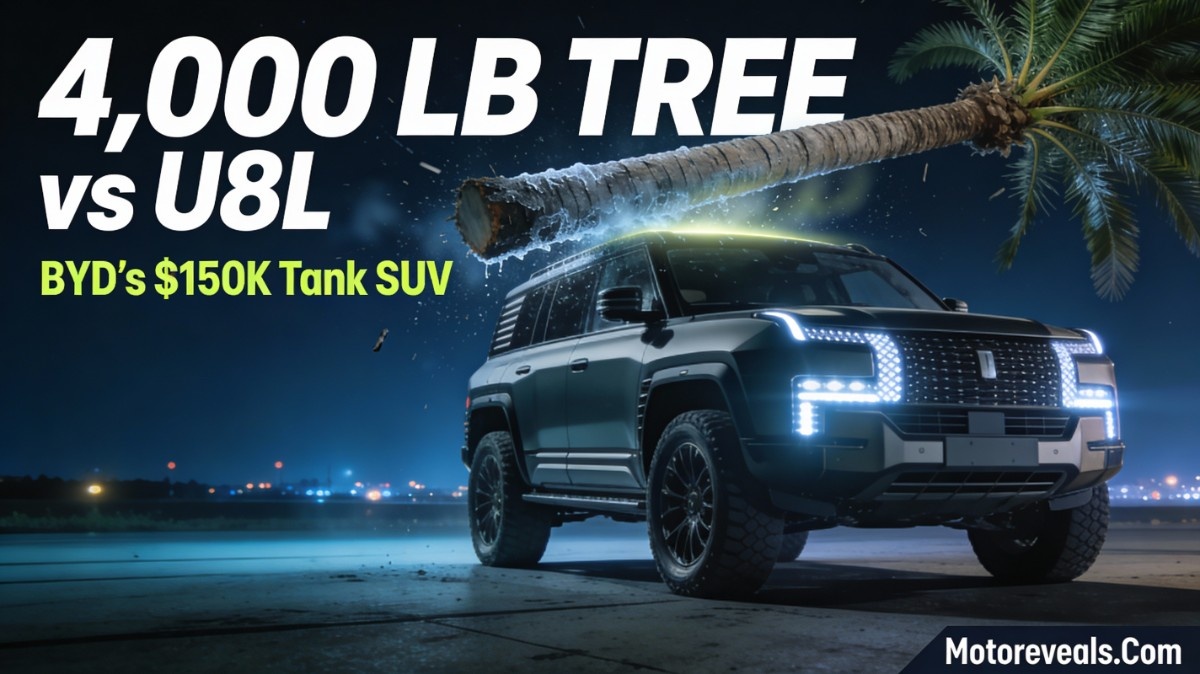
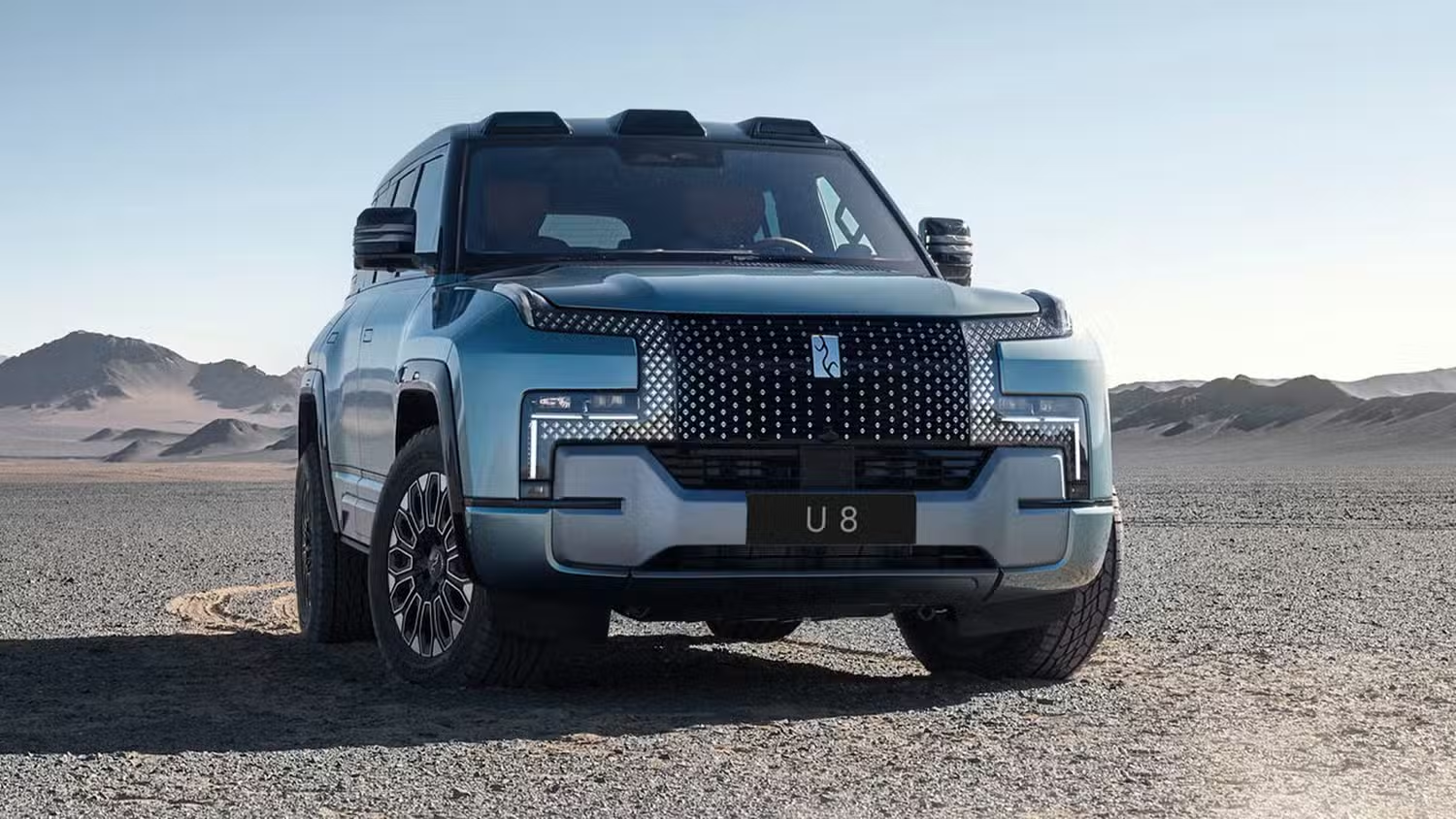
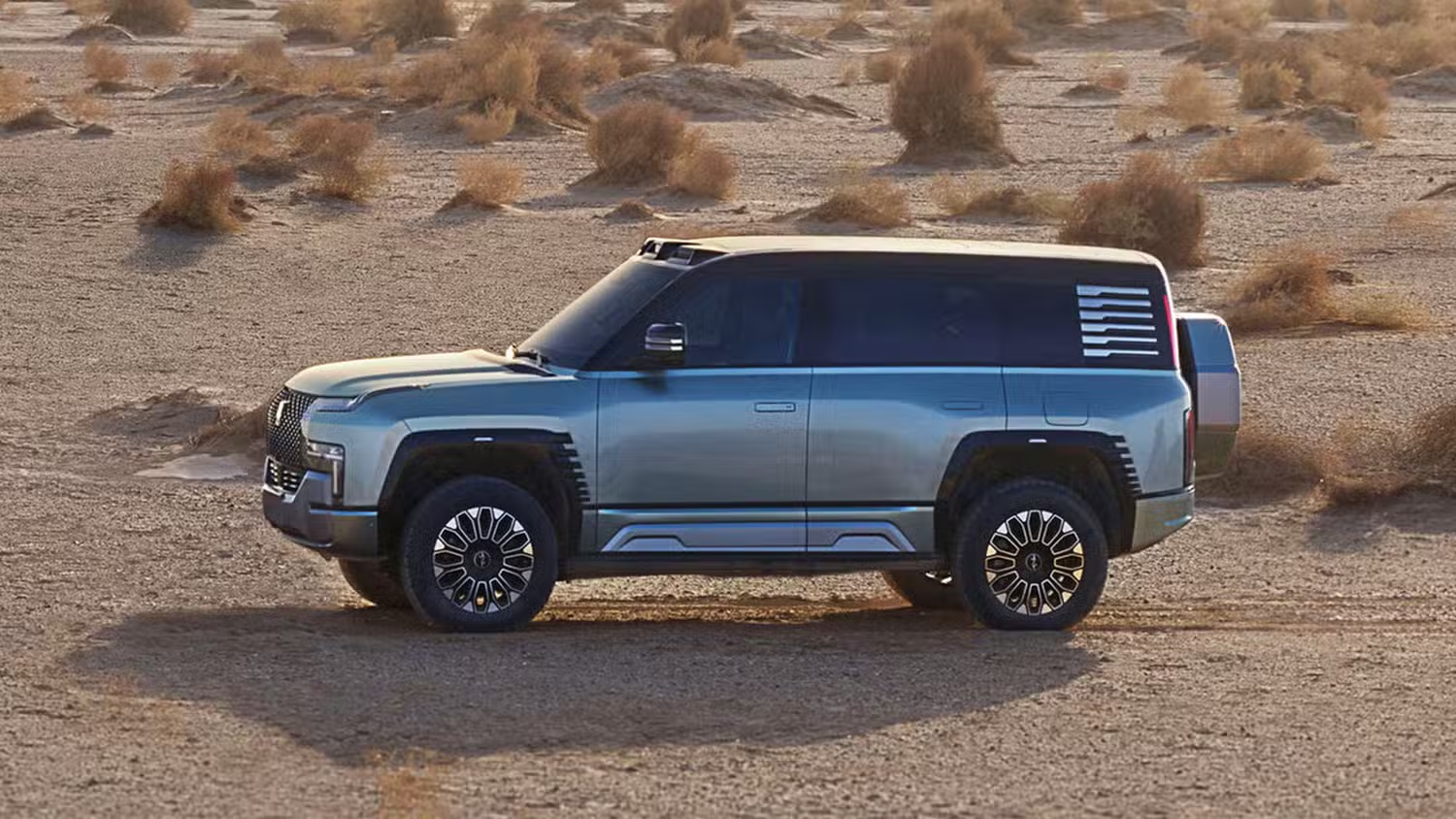
Few brands are as determined to make a statement as BYD’s ultra-premium sub-brand, Yangwang, and few statements are as unmistakable as dropping a 4,000‑pound palm tree on the roof of your newest SUV. The Yangwang U8L, an extended-length version of the brand’s $150,000 flagship SUV, recently endured precisely that torture—and emerged with little more than a dent, a measurable testament to its structural toughness and engineering excess.
A Palm Tree, a Roof, and a Point to Prove
The test unfolded like a small-scale mythmaking session in Shenzhen: BYD engineers mounted a massive palm trunk—roughly 4,000 pounds of tropical lumber—onto a hinge and released it directly onto the U8L’s roof rail. The idea was simple: simulate an extreme, sudden load at the exact point where many SUVs would cave in or at least shatter glass.
Instead, the roof barely rippled.
Video snippets of the test show the first strike leaving only light creases along the roof channel. The panoramic glass roof and side windows remained intact, the doors opened normally, and suspension geometry appeared—at least externally—undisturbed. For good measure, Yangwang repeated the assault, each time increasing energy by changing the hinge position. The final drop equated to an estimated 37,000 foot‑pounds of impact force—enough to sheer the crown off the palm tree itself—yet the SUV stood firm, visibly battered but operational.
BYD’s Yangwang U8L Survives 4,000‑Pound Palm
Why It Matters
In a luxury world dominated by soft‑riding SUVs that prefer valet stands to test tracks, the Yangwang U8L is trying to prove a point: capability still matters, even at the six‑figure level. With a 7,900‑pound curb weight, it’s not exactly light, yet the structure absorbed punishment with composure. One industry observer noted that while a 4,000‑pound drop barely challenges that mass in static terms, the suddenness of the impact makes it a far harsher test than conventional IIHS roof‑crush procedures, which apply pressure slowly with a fixed plate.
Put another way: most premium SUVs don’t get pounded by palm trunks, and Yangwang’s found a way to turn physics into publicity.
BYD’s Yangwang U8L Survives 4,000‑Pound Palm
A Technical Marvel Hiding Beneath the Drama
For all the spectacle, the U8L’s engineering probably deserves more attention than the dramatic stunt itself. The enormous SUV uses four individual electric motors, one on each wheel, producing a combined 1,180 horsepower. A range‑extender engine—a compact turbocharged gasoline generator—keeps the 49‑kilowatt‑hour battery topped up, giving it long‑distance practicality beyond a typical EV’s range.
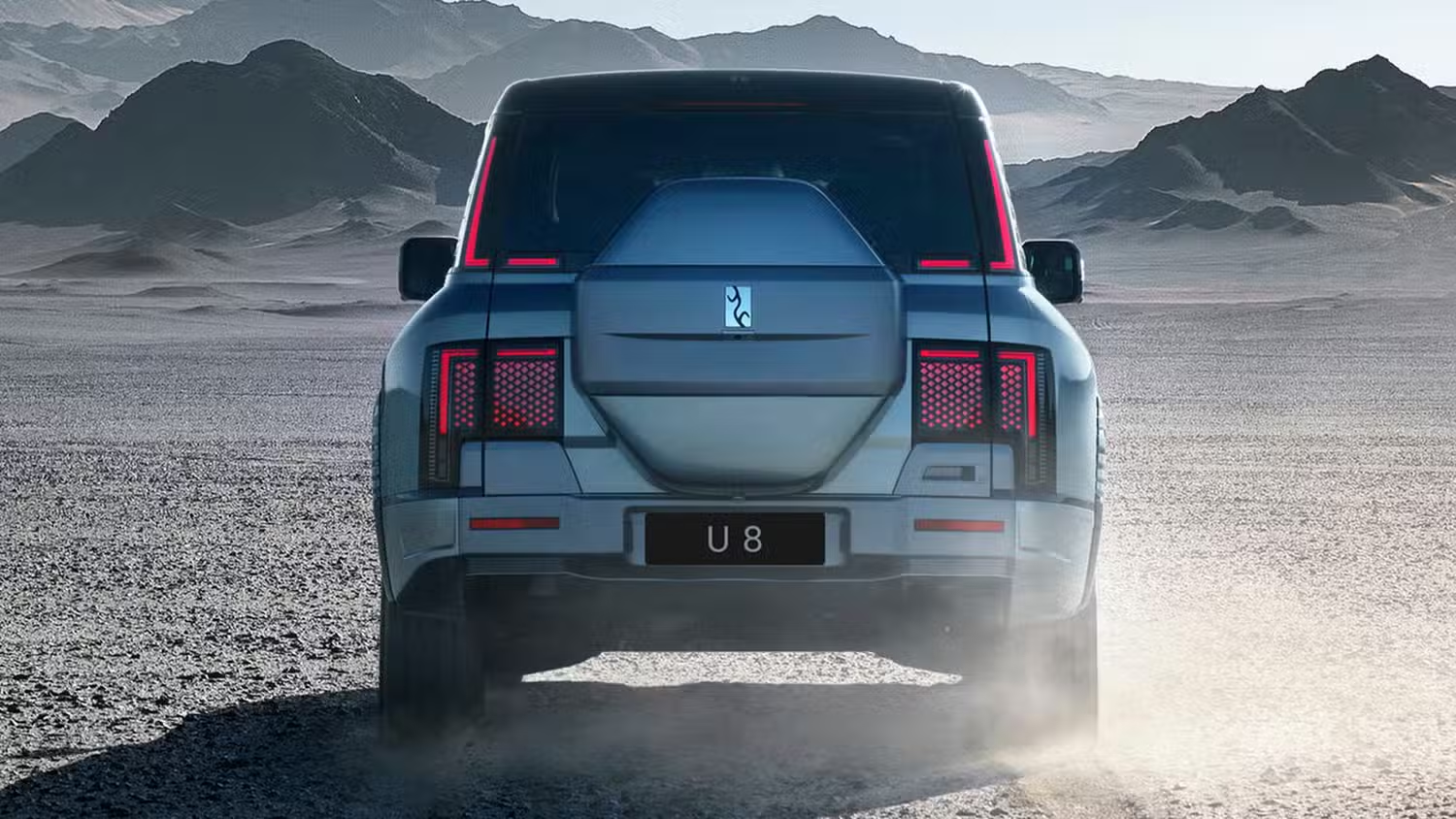
The quad-motor setup allows precise torque vectoring and even party tricks like a 360‑degree “tank turn”, enabling the nearly eight‑ton SUV to pirouette on its axis. BYD has also demonstrated the vehicle’s ability to float and drive briefly while submerged, an outrageous capability that, until now, sounded more like marketing poetry than plausible engineering.
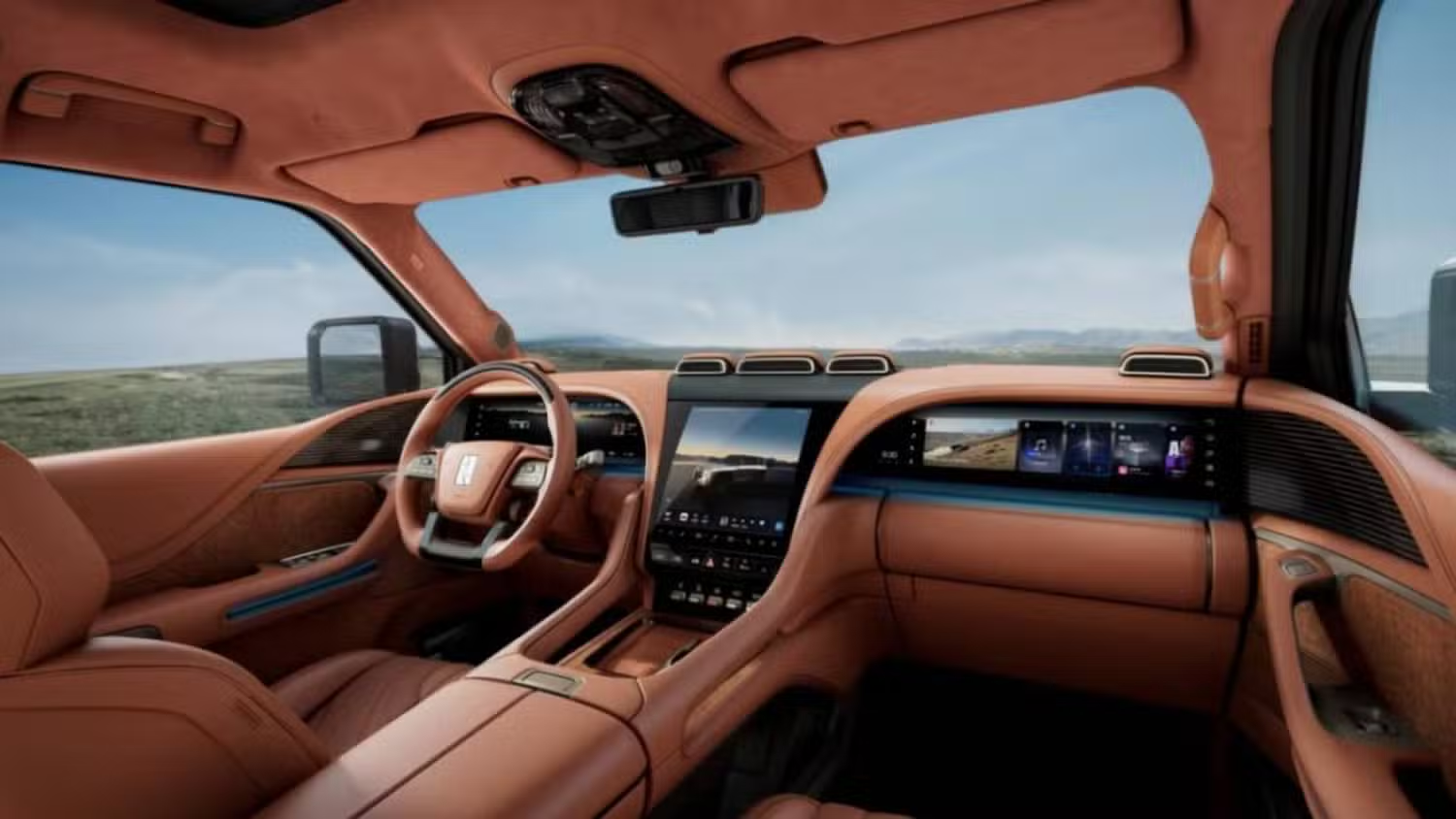
Inside, the U8L trades utilitarian toughness for indulgence. Every touch surface—from the multi‑tone leather to the crystal center controller—aims directly at Bentley and Range Rover territory. That blend of indestructibility and opulence is central to Yangwang’s brand identity, as it tries to carve out a niche in the high-end segment once thought inaccessible to Chinese manufacturers.
BYD’s Yangwang U8L Survives 4,000‑Pound Palm
Comparing It to the Establishment
The U8L sits in a strange space somewhere between the Mercedes‑Benz G‑Class and the forthcoming Range Rover EV, though it’s heavier, more complex, and arguably more audacious than either. Buyers who view power as a yardstick will note that its electric torque outguns nearly anything short of a Rivian R1S Quad‑Motor or Tesla Cybertruck Plaid, yet its extended‑range configuration gives it flexibility those pure EVs lack.
At nearly $180,000 in select markets, the U8L also outprices most premium SUVs. That might limit its Western appeal, but for BYD, the target is less about global volume and more about symbolism—a demonstration that Chinese engineering can combine power, durability, and luxury without compromise.
BYD’s Yangwang U8L Survives 4,000‑Pound Palm
The Takeaway: More Than a Stunt
Skeptics might see the palm‑tree drop as a marketing spectacle—and to some extent, it is—but the aftermath is hard to ignore. No broken glass. No twisted frame. No blowouts. The vehicle reportedly drove away under its own power after absorbing over 37,000 foot‑pounds of kinetic energy. Even accounting for hidden structural fatigue, that’s an impressive display of metallurgical resilience.
It’s unlikely that any BYD customer will ever park under a falling palm tree, but in a world where luxury SUVs are rarely tested beyond a gravel driveway, the Yangwang U8L has offered a powerful reminder of what overengineering looks like. And if the roof can shrug off a half‑ton of timber, it’s safe to say this is one luxury SUV few will accuse of being fragile.