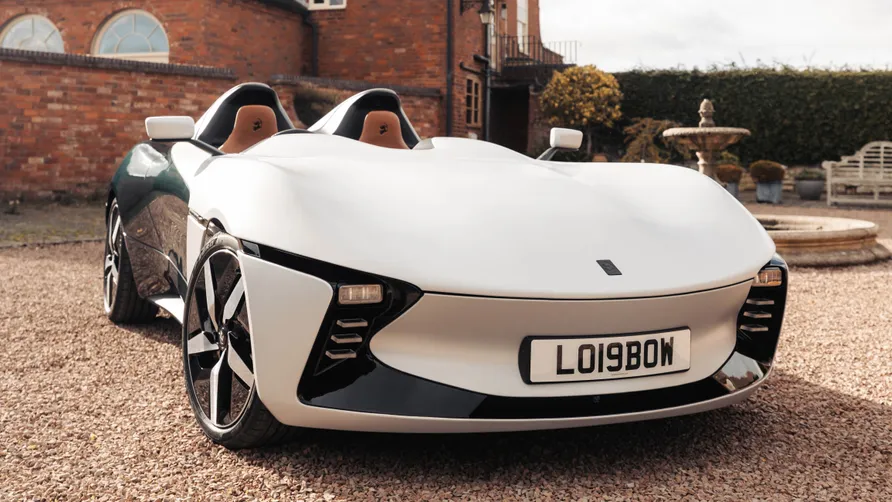
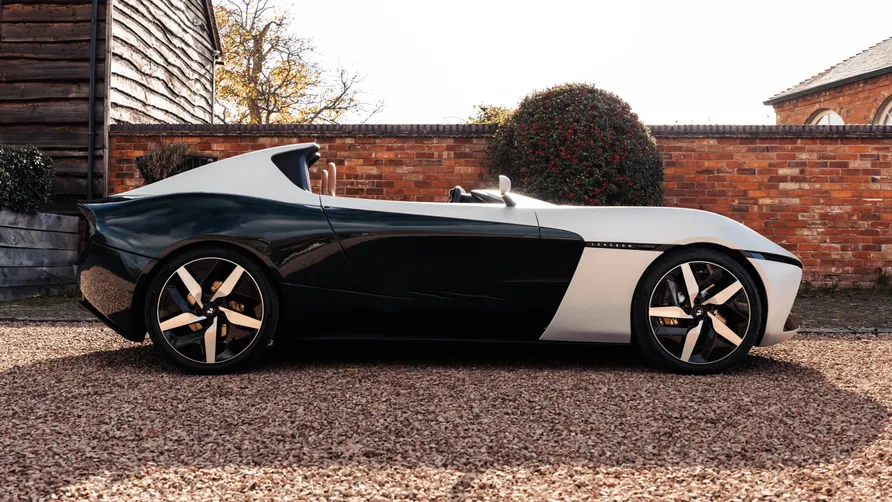
Longbow Speedster: British EV Startup Delivers Working Prototype Six Months After Announcement
A British electric vehicle startup just accomplished something remarkable: Longbow Motors built a fully functional prototype of their Speedster EV in just six months after announcing the project. That timeline is astonishingly compressed compared to traditional automotive development, where 18 months typically separates concept from working prototype.
Founded in 2023 by Daniel Davey and Mark Tapscott—veterans with experience at Polestar, Lucid, Uber, and BYD—Longbowpositions itself as reviving British lightweight sports car tradition through electric propulsion. The Speedster represents their first model, targeting the heritage of icons like the Lotus Elise and Jaguar E-Type while weighing just 895 kilograms.
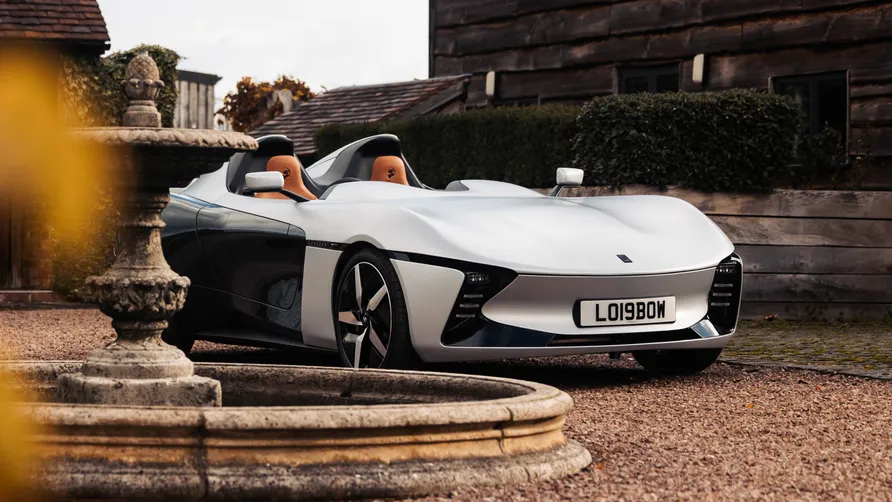
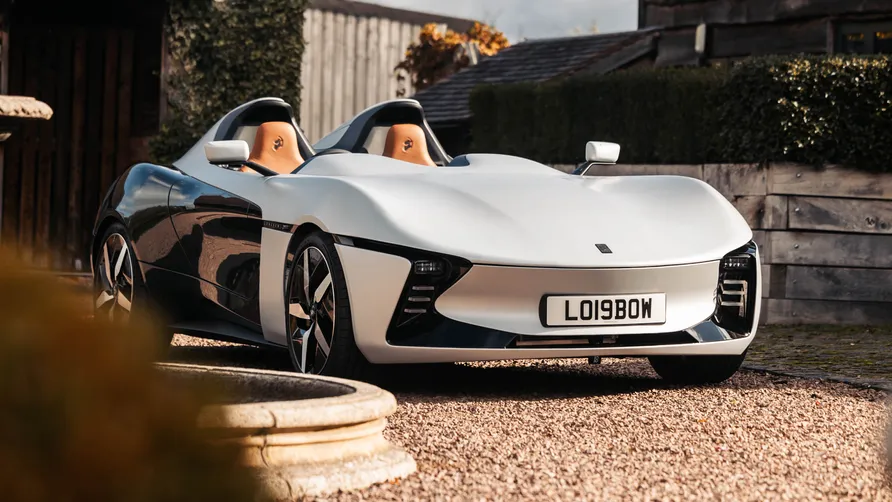
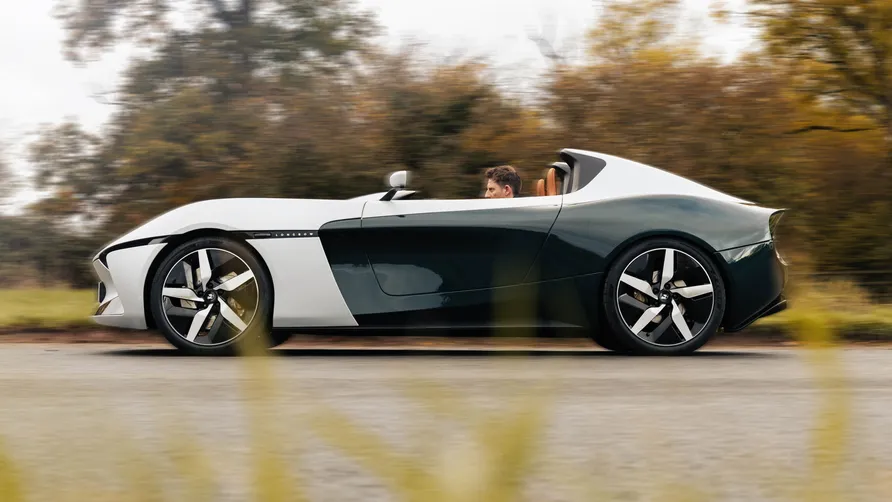
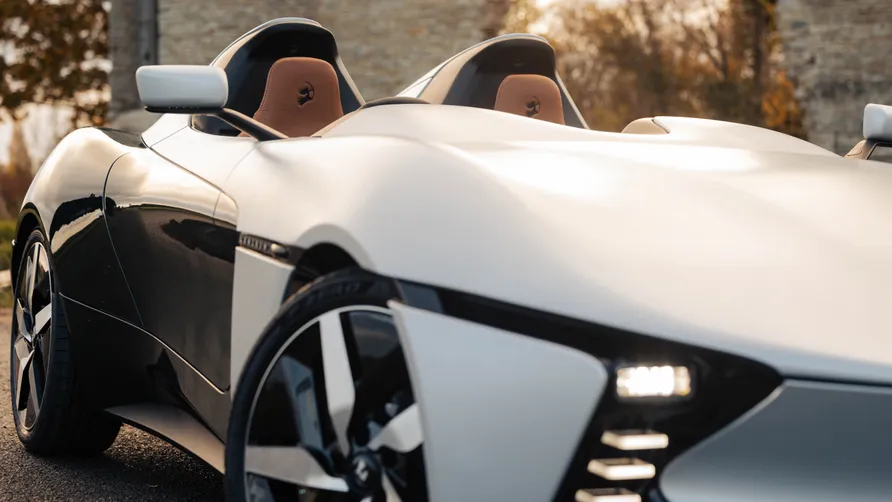
Longbow Speedster EV (8)
Longbow Speedster EV (7)
Longbow Speedster EV (6)
Longbow Speedster EV (5)
Longbow Speedster EV (4)
Longbow Speedster EV (3)
Longbow Speedster EV (2)
Longbow Speedster EV (1)
The Featherweight Philosophy
Longbow calls their vehicles “featherweight electric vehicles,” emphasizing mass reduction as the core design principle. At 895kg, the Speedster weighs significantly less than typical EVs, which often exceed 2,000kg due to heavy battery packs.
This weight advantage comes through several engineering choices:
Aluminum chassis provides structural rigidity while minimizing mass compared to steel construction.
Compact electric motor delivers necessary performance without the bulk of larger powertrains.
Module-to-chassis battery technology integrates battery cells directly into the structural framework, eliminating redundant packaging weight while improving rigidity.
The module-to-chassis approach is significant—rather than mounting a separate battery pack to the chassis, the cells become structural elements themselves. This technique, also used by vehicles like the Tesla Model Y with structural battery packs, removes weight while improving crashworthiness.
Performance and Range Claims
Longbow claims the Speedster achieves 0-62 mph in 3.5 seconds—genuinely quick acceleration that puts it in sports car territory despite relatively modest power figures (not disclosed). The lightweight construction enables strong acceleration without requiring massive motors and batteries.
The estimated range of 275 miles appears reasonable given the low weight and presumably modest battery capacity. Less mass requires less energy to move, enabling smaller, lighter batteries to achieve respectable range.
These figures remain unverified pending independent testing, but they align with expectations for a lightweight electric sports car prioritizing driving dynamics over outright performance numbers.
Longbow Speedster EV
Pricing Strategy: Two Models, Two Markets
Longbow plans two variants with dramatically different pricing:
Speedster (open-top): Limited edition starting at £84,995. The first year’s production run is already allocated, with deliveries beginning in 2026.
Roadster (hardtop): Starting at £64,995. Weighs approximately 100kg more than the Speedster due to roof structure but offers weather protection crucial for British climate practicality.
That £20,000 price difference between models seems substantial for adding a fixed roof. The Speedster’s premium pricing likely reflects limited production volume, early-adopter positioning, and the appeal of open-top motoring to enthusiasts willing to pay extra.
The Roadster’s £64,995 starting price positions it competitively against sports cars like the Porsche Cayman while undercutting vehicles like the Lotus Emira. Whether buyers embrace an unknown startup over established marques at this price point will determine commercial success.
Development Speed: Unusually Fast
Six months from announcement to working prototype is remarkably quick. Traditional automotive development involves:
Design iteration and refinement (6-12 months)
Engineering validation and testing (12-18 months)
Prototype fabrication (3-6 months)
Systems integration and debugging (6-12 months)
Longbow compressed this timeline dramatically, suggesting either:
Extensive pre-work before the public announcement, meaning the six-month clock started later than actual development.
Off-the-shelf components reducing custom engineering and validation requirements.
Simplified vehicle architecture compared to mass-market cars requiring crash testing, emissions certification, and regulatory compliance across multiple markets.
Experienced team with established supplier relationships and development processes from previous manufacturers.
The founders’ backgrounds at major EV manufacturers likely provided crucial knowledge about battery integration, powertrain packaging, and prototype development shortcuts unavailable to teams building from scratch.
Longbow Speedster EV
Longbow Speedster EV
The British Sports Car Heritage Claim
Longbow positions the Speedster and Roadster as “spiritual successors to British icons like the Lotus Elise and Jaguar E-Type.” That’s ambitious positioning invoking two of the most celebrated British sports cars ever built.
The E-Type connection seems tenuous—that car was about grand touring elegance and straight-line speed, not lightweight minimalism. The Elise comparison makes more sense: both prioritize low weight, pure driving dynamics, and simple functionality over luxury features.
The real question is whether electric propulsion can deliver the visceral, mechanical connection that made those classics special. The Elise succeeded through tactile feedback—steering feel, chassis communication, gear changes. Electric vehicles excel at different attributes: instant torque, silent operation, smooth power delivery.
Whether enthusiasts who loved the Elise’s raw, mechanical character will embrace an electric interpretation remains uncertain. Some will appreciate the environmental benefits and modern technology. Others will reject EVs on principle regardless of capability.
Longbow Speedster EV
Competition: MG Cyberster and Others
The article mentions the MG Cyberster as potential competition. That Chinese-developed electric roadster targets similar buyers at comparable pricing (around £55,000-£60,000). MG brings established dealer networks, brand recognition, and manufacturing scale that Longbow lacks.
Other competitors include:
Tesla Roadster (if it ever launches): Higher performance, more expensive, completely different brand positioning.
Lotus Type 135 (upcoming electric sports car): Direct heritage competitor with established brand and sports car credibility.
Porsche Boxster Electric (rumored): Premium brand, proven sports car architecture, higher pricing.
Longbow’s challenge is convincing buyers to trust an unknown startup with their £65,000-£85,000 when established alternatives exist or are coming soon.
Longbow Speedster EV
Production Reality Check
The Speedster’s first year production is “already allocated,” which could mean:
Strong demand: Genuine buyer interest filling available production slots.
Limited production: Very few units planned, making “sold out” less impressive.
Pre-orders vs. deposits: Refundable deposits differ dramatically from committed orders.
Small manufacturers often announce limited production runs to create urgency and exclusivity while managing capital requirements and risk. Building 50-100 units per year is dramatically different from 5,000+ unit volumes requiring significant infrastructure investment.
Whether Longbow can actually deliver those vehicles on schedule and at quality standards buyers expect remains the crucial question. Many EV startups have shown prototypes and taken deposits without successfully reaching production.