New Toyota MR2 Revival: GR Yaris M Test Bed Confirms Hybrid Path Ahead
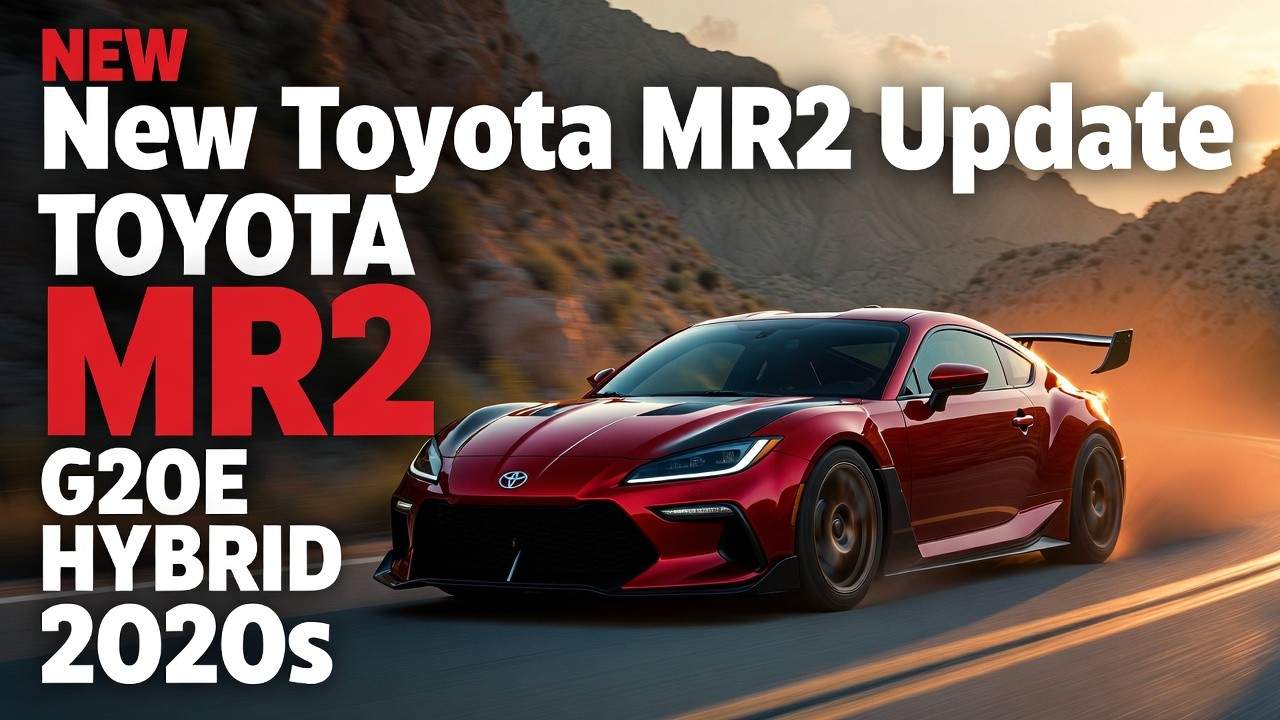
Rumors ignited ahead of the Tokyo Auto Salon promised a mid-engine MR2 revival—fueled by Akio Toyoda’s cryptic teases and the GR Yaris M’s rear-mid engine layout. The reveal? A kei truck. No disappointment needed. Gazoo Racing president Tomoya Takahashi clarified in an Automotive News interview: the next MR2 lives, powered by the versatile G20E turbo four-cylinder, with hybrid potential. Development’s early, but the foundation looks solid.
Rumors Grounded: GR Yaris M as Proving Ground
Toyota’s GR Yaris M—unveiled last year with its mid-mounted G20E—serves as the MR2’s rolling lab. Currently racing in Japan, it validates packaging, cooling, and dynamics under real stress. Takahashi: “We developed it to fit in a small car like the GR Yaris because the packaging and engineering is more demanding. If we can do that, we can easily deploy it in bigger vehicles.”
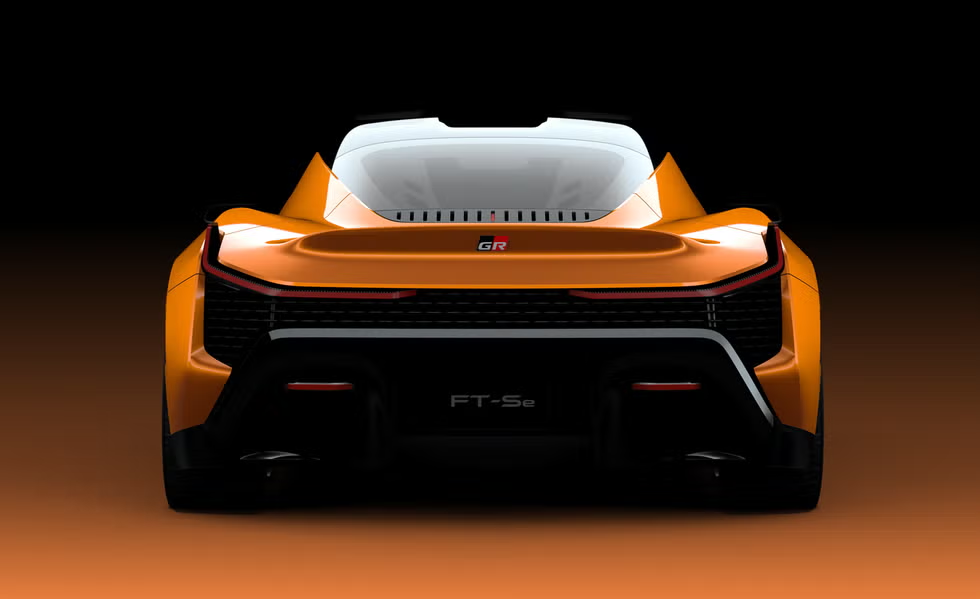
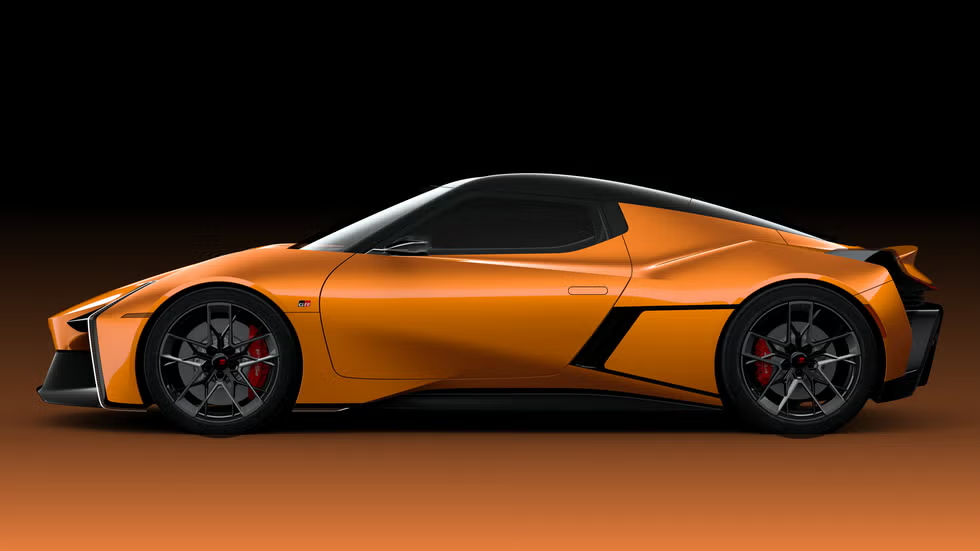
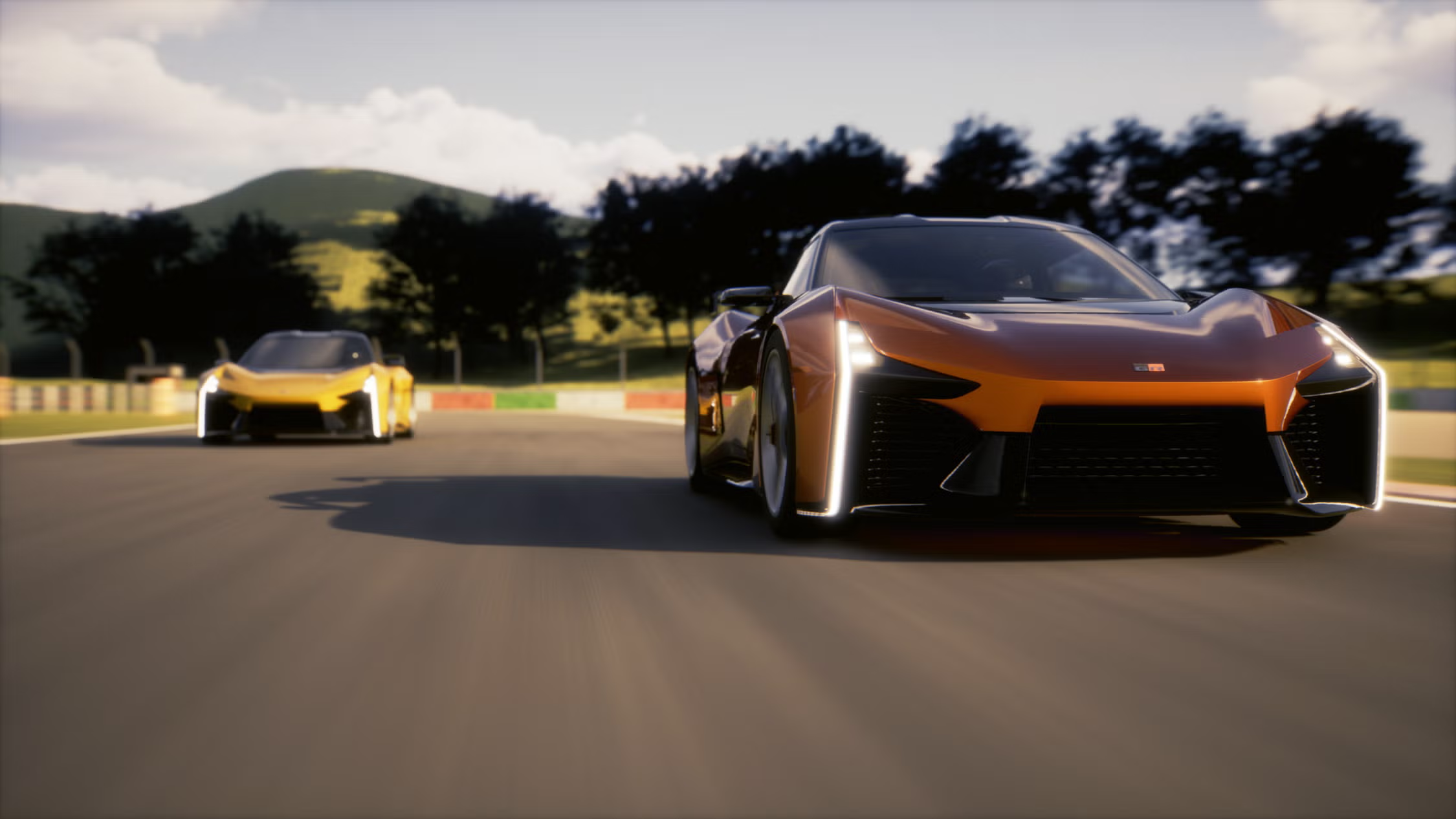
This isn’t vaporware. The Yaris M races now, gathering data on heat management, rear-drive balance, and G20E durability. Early expectations of an EV (echoing the FT-Se concept) have shifted to internal combustion with hybrid upside—aligning Toyota’s multi-pathway philosophy.
New Toyota MR2 Update GR Yaris M
Development Timeline: Stage One of Four
Takahashi pegs the MR2 at “first of four development stages,” a process spanning four to five years. Expect debut late-decade, production early 2030s. No panic—this methodical pace mirrors the GR Supra and GR Corolla, both born from race programs.
The G20E anchors everything: a compact turbo 2.0-liter four replacing the 2.4L, mountable longitudinally/transversely, front/mid/rear. Power eclipses the outgoing mill (~300 hp in GR Corolla guise), with smaller dimensions easing mid-engine fitment. Euro 7 compliance baked in without hybridization, but Takahashi notes: “If we are going to mount this engine on many different vehicles, it’s almost mandatory to be able to combine it with hybrid technology.”
Powertrain Philosophy: ICE Core, Hybrid Flex
Toyota doubles down on multi-path powertrains—pure ICE where it shines, hybrids for efficiency/performance hybrids, EVs selectively. The MR2 embodies this:
Base: G20E turbo four (~320-350 hp projected, rear-drive focus)
Likely: e-Axle hybrid assist (mild or full, adding 100+ hp torque fill)
No full EV—preserving MR2’s analog soul amid regulatory pressures
This matters because it rejects one-size-fits-all electrification. The G20E’s compactness enables Miata-rival proportions (likely ~170-inch wheelbase, sub-3000 pounds), with hybrid boosting to Supra 4.0 levels without battery bulk.
The GR Yaris M racer isn’t show: it’s stress-testing G20E cooling (mid-engine heat hell), e-Axle integration, and torque vectoring diffs under race abuse. Lessons flow directly: refined NVH, sharper throttle mapping, aero-optimized underbody.
Takahashi emphasizes packaging wins—”small car like GR Yaris” proves scalability. The production MR2 scales up slightly (two-seater coupe roofline expected), inheriting battle-tested dynamics for canyon carving and occasional track days.
Realistic Expectations: Mid-Engine Purity Returns
Picture a two-door mid-engine coupe, Miata-sized but GR86-spirited: targa roof nod to originals, 300-450 hp range, sub-$70K starting (Japan first, U.S. follow). No GT styling—pure sports car ethos.
Delays sting less when the direction thrills. Toyota’s not rushing a half-baked EV; it’s honing an ICE/hybrid icon via racing crucible. The MR2 returns not as nostalgia bait, but enduring enthusiast tool—proof Gazoo Racing builds for drivers, timelines be damned. Late 2020s arrival means worth the wait.