Subaru’s BRZ STI Sport Type RA Channels Super Taikyu Spirit
A sharper chassis, a freer-revving heart, and a lottery just to get one—Subaru builds its most focused BRZ yet, but only Japan gets a taste.
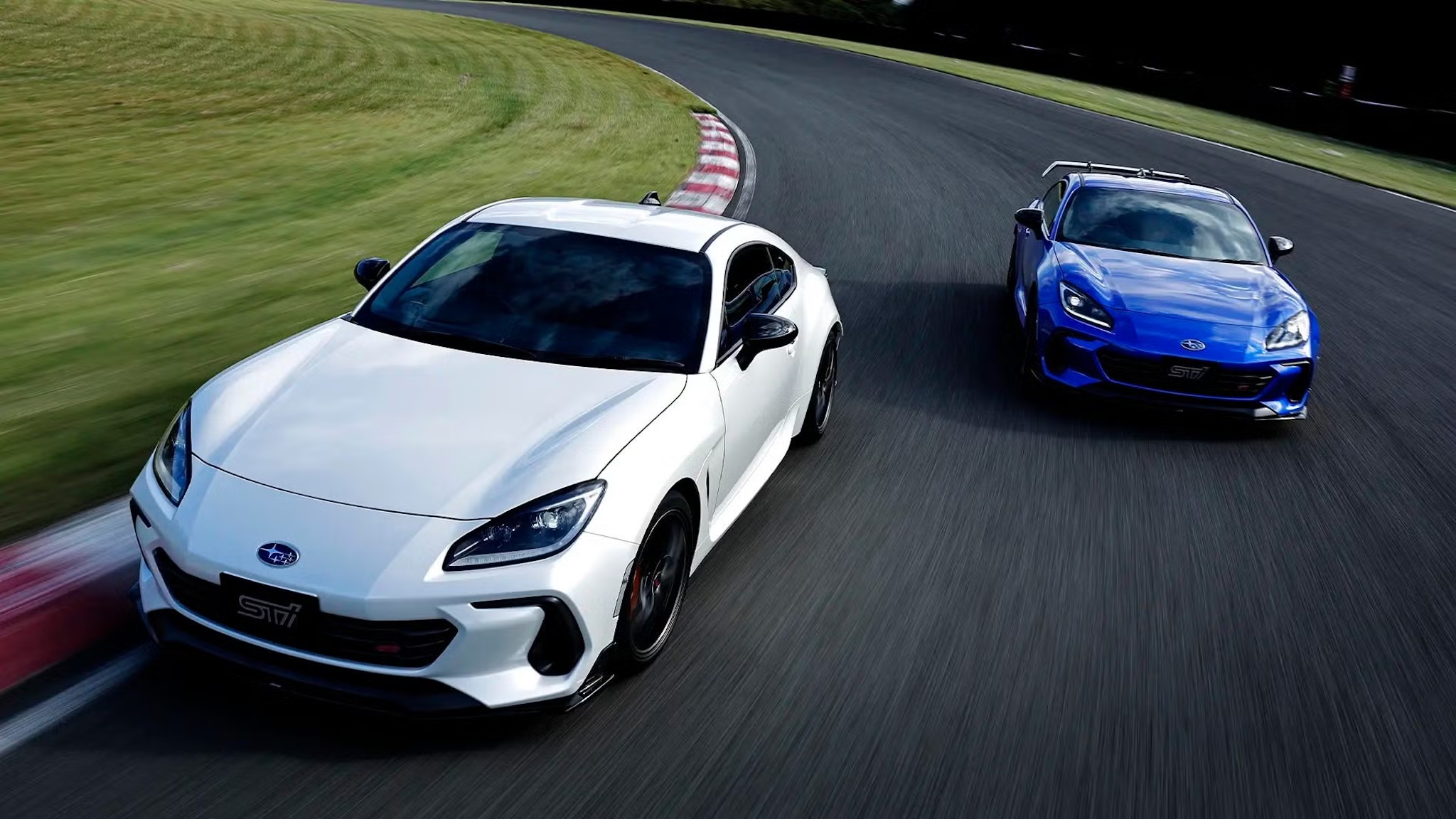
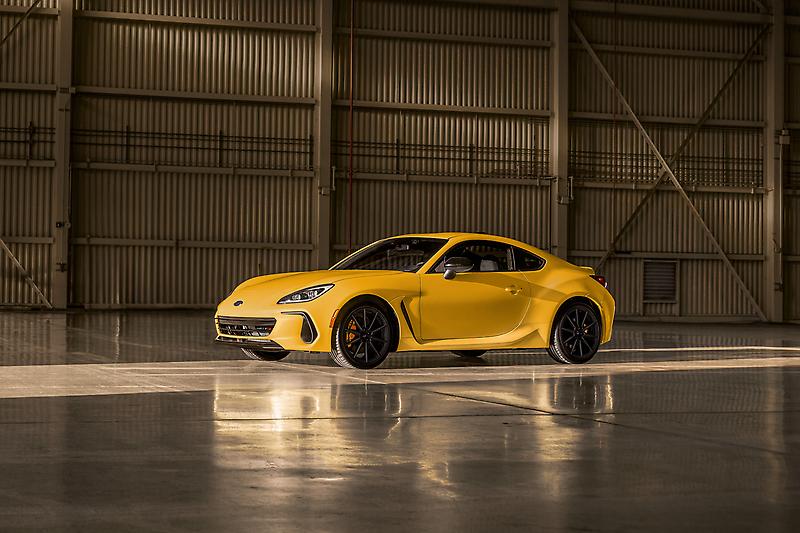
The automotive world is full of forbidden fruit, but few taste quite as bittersweet as Subaru’s newest creation. The 2026 Subaru BRZ STI Sport Type RA isn’t just another badge-and-wing special; it’s a distilled lesson in what motorsports engineering can do for a lightweight sports coupe. And like so many of Subaru’s most intoxicating projects, this one won’t be leaving Japan anytime soon.
The RA badge stands for “Record Attempt,” a name steeped in Subaru lore and rooted in competition. This newest interpretation draws heavily from the brand’s experience in the grueling Super Taikyu endurance series—a championship where reliability, precise handling, and finely calibrated engines matter just as much as outright speed. The result? A BRZ that doesn’t shout louder, but breathes cleaner, moves sharper, and feels more alive through every corner.
2026 Subaru BRZ STI Sport Type RA
Motorsports Lessons, Street-Legal Form
Subaru’s engineers didn’t start with power. They started with feel.
That meant ZF dampers tuned for endurance consistency, upgraded Brembo brakes, and a rear differential strengthened and cooled with new fins. The chassis itself is stiffer. A retuned sway bar and flexible V-band joints sharpen responses. Underneath, a fully redesigned underbody aero kit smooths airflow with racer-like precision. Lightweight forged STI BBS aluminum wheels drop rotational mass while adding a subtle flash of motorsport pedigree.
“We didn’t want to simply make the BRZ louder—we wanted to make it purer,” says an imaginary Subaru STI development engineer, nodding toward a disassembled RA prototype. “Super Taikyu pushes every component to the limit. What we learned there lets the car feel more connected, more trustworthy, and more eager.”
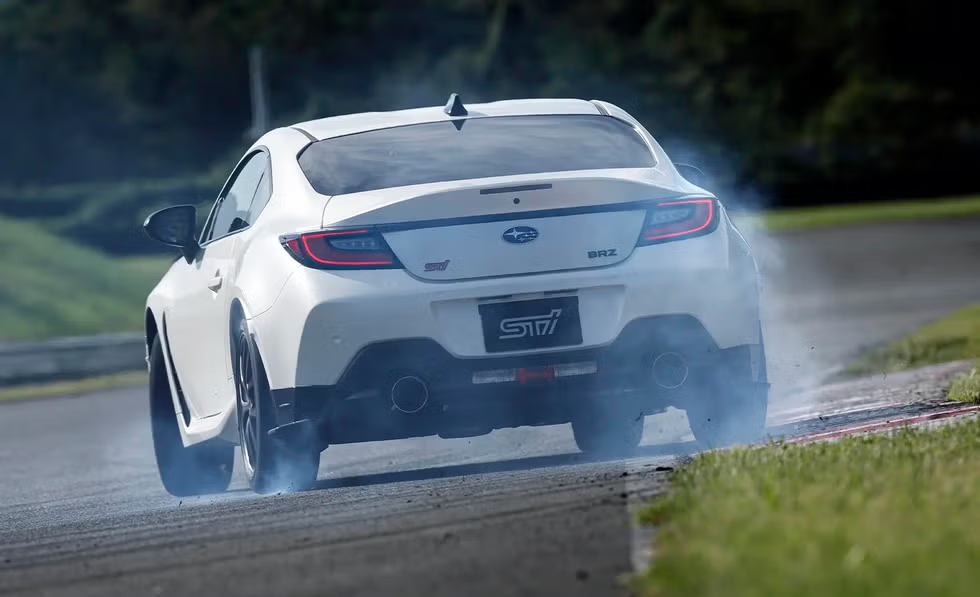
Of course, no STI-touched Subaru escapes without an exhaust rethink. The Type RA’s new muffler system is tuned to breathe better and deliver a cleaner, sharper note through the higher revs.
STI BBS wheels and Brembo brakes on the Type RA
Under the Hood: Precision Over Power
Pop the hood and you’ll still find the familiar FA24 2.4-liter naturally aspirated boxer four. But almost nothing inside it has been left untouched.
Instead of squeezing out more horsepower—a tempting but ultimately unnecessary upgrade—Subaru chased mechanical harmony. The pistons and connecting rods now boast 50 percent tighter weight tolerances. The crankshaft’s rotational balance has been fine-tuned by 80 percent. The flywheel is a remarkable 67 percent lighter; the clutch, 50 percent.
“These changes don’t show up on a dyno sheet,” explains a powertrain engineer involved in the RA program. “But they completely transform how the engine spins. It’s smoother, freer, and more responsive. It feels alive.”
To amplify the motorsports edge, the Type RA adds factory rev-matching and even flat-foot shifting—a rarity in a world increasingly afraid to let drivers be drivers.
Designed for the Devoted
Visually, the Type RA isn’t a loud car. It’s purposeful.
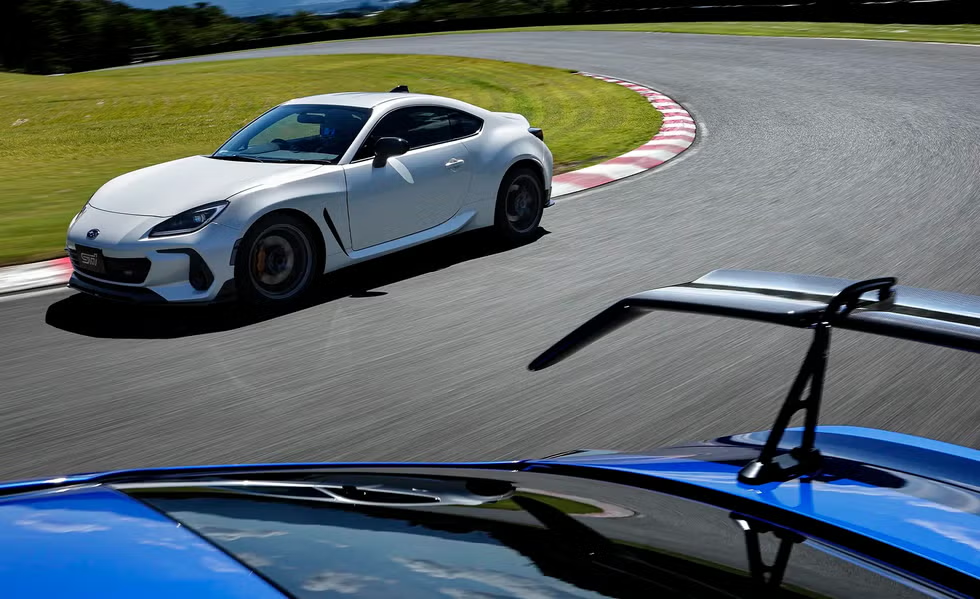
The forged BBS wheels tuck neatly under subtly stiffened arches. The underbody aero, mostly hidden, reveals itself as sharp, functional shapes when viewed from a lift. Buyers can choose a cleaner, wingless look—200 units will be produced that way—or one of the 100 cars fitted with a full STI spoiler for maximum attitude and stability. Either way, the stance looks tighter, the attitude more serious.
Inside, the cabin remains familiar BRZ territory, but small STI cues—a badge here, stitching there—hint that this is a driver’s special, not a cosmetic package.
Behind the Build
Subaru will build just 300 in total. That’s barely enough to satisfy a single prefecture, let alone global fans.
And money alone won’t secure one. Buyers in Japan must enter a lottery before the end of November for the chance—just the chance—to purchase a Type RA. Pricing starts around the equivalent of $32,000 for the wingless version and $35,400 for the spoiler-equipped variant, based on current exchange rates. Reasonable numbers, a priceless opportunity.
The limited run, engineers admit, wasn’t just about exclusivity. “Machining these components to the tolerances we wanted takes time,” one project lead says. “We built this car like a race engine. Mass production wasn’t the goal.”
Subaru BRZ STI Sport Type RA
The One We Can’t Have—Yet
For enthusiasts abroad, especially in the U.S., the Type RA is destined to become another entry on the long list of Subarulegends we’ll be waiting decades to import. But maybe that’s part of its charm. Subaru isn’t trying to please everyone with this car; it’s rewarding the faithful, indulging in the purity of a driver’s machine at a moment when analog performance is disappearing.
In a world chasing EVs, autonomy, and lap-time bravado, Subaru has delivered something exquisitely human-scaled. A lightweight coupe that revs freer, corners sharper, and connects more deeply.
It’s a reminder that some records aren’t meant to be broken—they’re meant to be attempted, again and again, for the love of driving.