The mid-capacity retro motorcycle segment in India is on the verge of a massive shake-up. For years, buyers looking for a classic roadster or cruiser under ₹4 lakh have naturally gravitated toward a few established names. However, an interesting trend has emerged across Indian showrooms: many buyers are delaying their purchases, holding onto their cash, and waiting.
The reason? Frequent spy shots suggest that Bajaj and Triumph are secretly developing an absolute game-changer. The upcoming TriumphBonneville 400 (also rumored to be called the Triumph BW 400) has been spied testing on Indian roads in near-production form.
For riders who love the timeless, elegant charm of the legendary Triumph Bonneville T120 but want something accessible, lightweight, and pocket-friendly, this upcoming motorcycle is generating immense hype. It is shaping up to be much more than just another option in the market; it could become a serious Royal Enfield rival capable of redefining the modern-retro class.
Why This Bike Is Getting So Much Attention
Triumph’s entry into the single-cylinder space with the Speed 400 and Scrambler 400 X proved that premium British design could be localized successfully at an aggressive price point. However, while those bikes lean toward sporty performance, a massive portion of Indian riders still crave pure, old-school retro charm.
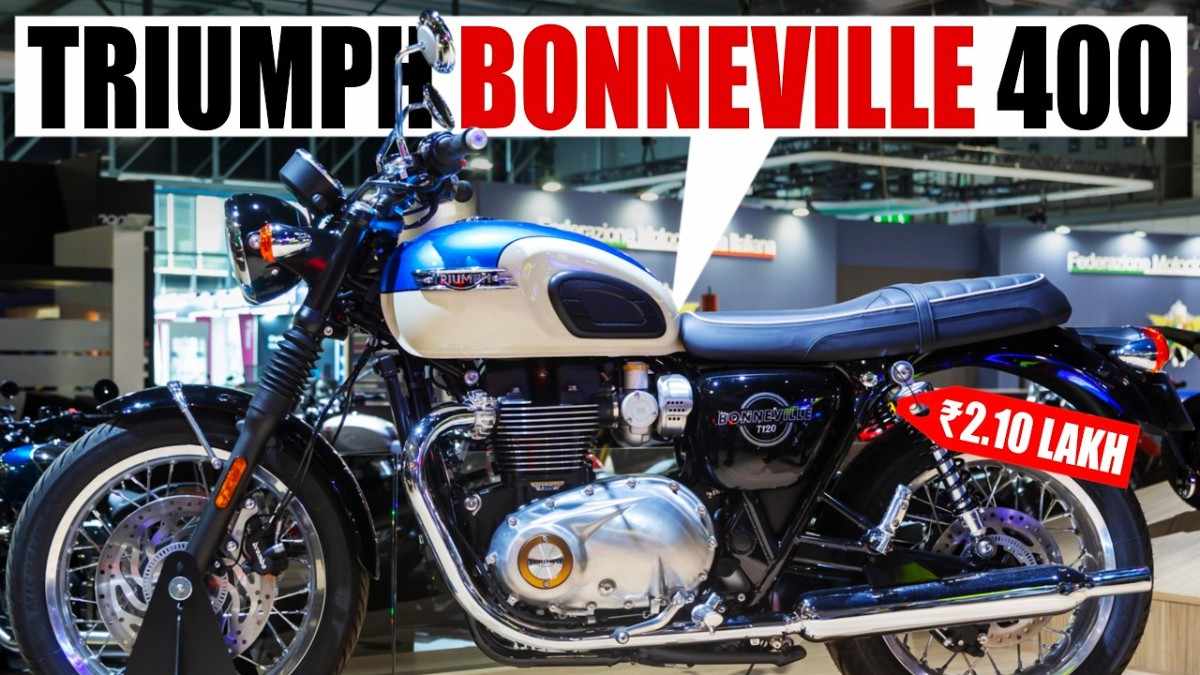
The Triumph Bonneville 400 targets this exact audience. It brings a level of design sophistication, premium fit and finish, and prestige that has traditionally been reserved for expensive, multi-cylinder imports. Instead of looking like a basic commuter with retro paint, early test mules show a motorcycle that perfectly mimics the stance, weight distribution, and road presence of its larger, iconic 900cc and 1200cc Bonneville siblings.
Furthermore, industry expectations indicate that buyers will no longer have to choose between old-school looks and modern performance. The baby “Bonnie” aims to offer the best of both worlds: timeless styling paired with an advanced, liquid-cooled engine layout that can easily cruise at highway speeds without breaking a sweat.
Triumph Bonneville 400
Engine & Performance Details: Two Expected Options
The biggest talking point among automotive journalists centers around the powertrain configuration Triumph will choose for the Indian market. India’s tax laws heavily favor motorcycles with engine displacements under 350cc (relying on an 18% GST bracket rather than the steeper luxury tax applied to larger displacements). Consequently, Triumph is highly likely to utilize its newly developed 349cc TR-series engine platform.
Even if Triumph uses the more relaxed Speed T4 engine tune to give the Bonneville 400 a casual, torque-heavy cruiser character, its performance metrics will still be superior to existing retro bikes in India.
To put this in perspective, the Royal Enfield Classic 350 and Honda H’ness CB350 rely on traditional air-cooled setups that deliver roughly 20 to 21 PS. The liquid-cooled Triumph engine will provide an immediate advantage in horsepower and thermal management. This means smoother acceleration, zero engine overheating during dense city commutes, and a comfortable highway cruising sweet spot of 110–120 km/h, which typically strains standard 350cc retro singles.
Design Breakdown: Inspired by the Legends
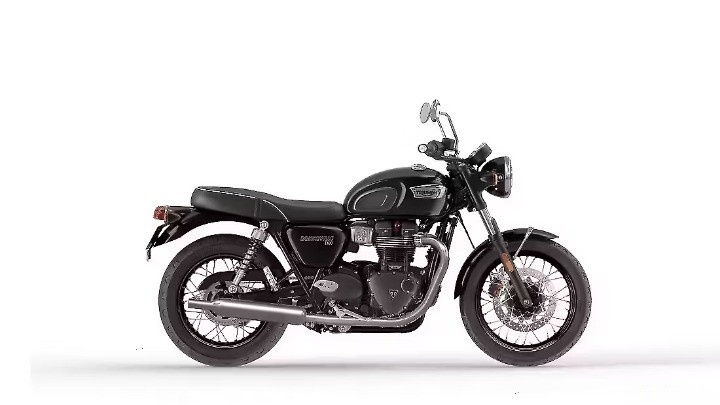
The clearest look at this upcoming Triumph bike India comes from recent spy shots of all-black test mules running near-production components. Unlike the sportier models in Triumph’s stable, the Bonneville 400 uses an entirely revised chassis and subframe designed to accommodate a classical aesthetic.
Front Profile: A circular LED headlamp sits between right-way-up telescopic front forks wrapped in iconic rubber gaiters, immediately setting a vintage tone.
Fuel Tank: A wide, sculpted teardrop fuel tank takes center stage. It lacks the deep modern knee indents seen on the Speed 400, opting instead for a smooth, elegant curve that honors historical British design.
Exhaust System: A low-slung, beautiful peashooter-style exhaust sweeps out past the engine. Spy shots have shown variants alternating between premium brushed aluminum, chrome detailing, and matte black powder-coated finishes.
Rear Profile: A flat, single-piece bench seat with premium stitching flows back into a broad, muscular rear fender. This gives the bike a substantial, bulky rear profile that enhances its overall road presence.
Wheels: True to its heritage, the motorcycle rides on wire-spoke wheels, which will likely feature tube-type tires to maintain its authentic vintage look.
Expected Features & Technology
Triumph is careful not to let old-school looks compromise modern safety and convenience. The baby Bonneville is expected to offer a robust suite of rider electronics that rivals modern sport bikes.
Advanced Safety & Electronics
Dual-channel ABS will come standard, providing excellent braking safety on unpredictable road surfaces. Triumph is also expected to include switchable traction control, a highly uncommon feature among entry-level cruiser bikes under 4 lakh. This system prevents rear-wheel slip on wet roads or gravel, offering peace of mind to newer riders.
Instrument Console & Ergonomics
The test mules reveal a brand-new single-pod instrument console. While it remains unconfirmed whether this display will use a premium high-res TFT screen or a reverse-LCD layout, it will likely feature a clean, minimalist user interface with turn-by-turn navigation and phone connectivity.
The switchgear has also been updated to a four-way control pad, allowing the rider to navigate menus smoothly. Additionally, rumors suggest that a premium variant could include an entry-level cruise control system, making it an exceptional long-distance touring machine.
Comparison With Rivals: Speculative Analysis
Feature Criteria
Triumph Bonneville 400 (Expected)
Royal Enfield Classic 350
Honda H’ness CB350
Jawa 42
Engine Type
Liquid-Cooled, DOHC
Air-Oil Cooled, SOHC
Air-Cooled, SOHC
Liquid-Cooled, DOHC
Expected Power
29 PS to 35 PS
20.2 PS
21.07 PS
27.3 PS
Expected Torque
31 Nm to 36 Nm
27 Nm
30 Nm
26.8 Nm
Gearbox
6-Speed with Assist
5-Speed Regular
5-Speed with Assist
6-Speed with Assist
Rear Suspension
Twin Shock Absorbers
Twin Shock Absorbers
Twin Shock Absorbers
Twin Shock Absorbers
Traction Control
Yes (Switchable)
No
Yes (HSTC)
No
Wheel Type
Wire-Spoke
Spoke / Alloy
Alloy
Spoke / Alloy
Expected Specifications Table
The following technical data details the expected specifications for the production-spec Triumph Bonneville 400:
+--------------------------+-------------------------------------------------------+
| Specification Parameter  | Expected Details (Triumph Bonneville 400)             |
+--------------------------+-------------------------------------------------------+
| Engine Displacement      | 349cc (Single-Cylinder, Liquid-Cooled, DOHC)           |
| Maximum Power Output     | 29 hp to 35 hp (State of tune pending official launch)|
| Peak Torque Output       | 31 Nm to 36 Nm                                        |
| Suspension Setup (Front) | Conventional Telescopic Forks with Protective Gaiters |
| Suspension Setup (Rear)  | Dual Coil-Spring Shock Absorbers with Preload Adjust  |
| Braking Hardware         | Disc Brakes (Front & Rear) with Dual-Channel ABS       |
| Fuel Tank Stance         | Timeless Teardrop Profile (~13-14 Liters)             |
| Estimated Seat Height    | Accessible ~780mm to 795mm                            |
+--------------------------+-------------------------------------------------------+
Expected Launch Timeline & Pricing
The manufacturing process between Bajaj and Triumph in Chakan appears to be running efficiently, with the test mules looking completely production-ready.
Triumph 400 Launch Date Expectations
An official launch event or broad media announcement is highly anticipated around the June–July timeline. However, commercial showroom availability and full customer deliveries are rumored to be strategically targeted for the upcoming festive season (September–October), giving Triumph a prime opportunity to capitalize on the annual holiday buying surge.
Premium Retro Segment Pricing Strategy
Thanks to heavy component localization at Bajaj’s manufacturing facilities, Triumph can keep prices highly competitive. The base version, potentially using the relaxed T4 engine tune, is expected to start around ₹2.00 Lakh to ₹2.20 Lakh.
If Triumph decides to introduce a higher-performance variant equipped with premium paint finishes, chrome engine casings, and advanced TFT tech, pricing could reach up to ₹2.50 Lakh (ex-showroom). This positions it beautifully as a premium alternative to top-tier Royal Enfield models.
Should You Wait For This Bike?
Who Should Wait:
The Long-Distance Cruiser: If your current 350cc single feels strained at highway speeds and you want effortless touring capability without losing classic styling, you should definitely wait.
The Premium Aesthetic Enthusiast: If you value premium build quality, immaculate weld lines, brushed aluminum casings, and the prestige of owning an iconic global brand, this bike is worth the wait.
Tech-Driven Retro Fans: If you love classic looks but refuse to give up safety features like switchable traction control and advanced digital consoles, this machine fits the bill perfectly.
Who Should Buy Existing Bikes Instead:
Immediate Commuters: If your current vehicle is out of commission and you need a daily commuter right now, waiting until the festive season might not be practical.
Riders on a Strict Budget: If your absolute maximum budget is firmly capped under ₹2 Lakh on-road, options like the Royal Enfield Hunter 350 or Jawa 42 will remain more accessible.
FAQs
Q1: What is the expected Triumph 400 launch date for the Bonneville model?
While an official teaser announcement could arrive around June–July, industry insiders expect the commercial launch of the Triumph Bonneville 400 to take place during the festive season, around September or October.
Q2: Will the Triumph Bonneville 400 get a twin-cylinder engine?
No, it will not. To keep the motorcycle highly affordable and suited for daily commuting under the ₹4 lakh mark, it will feature a highly refined, liquid-cooled single-cylinder engine platform developed by Bajaj and Triumph.
Q3: How will the Triumph BW 400 compete with the Royal Enfield Classic 350?
The Triumph Bonneville 400 will offer a major performance advantage, putting out roughly 29 to 35 PS compared to the Classic 350’s 20.2 PS. It also adds modern tech like liquid cooling, a 6-speed gearbox, and switchable traction control.
Q4: Does the Triumph Bonneville 400 feature upside-down (USD) front forks?
Based on recent spy shots, the Bonneville 400 swaps the USD forks found on the Speed 400 for traditional, right-way-up telescopic forks with rubber gaiters. This change helps preserve its authentic, old-school look and delivers a plush ride.
Q5: Will the wire-spoke wheels on the Bonneville 400 support tubeless tires?
Early test mules feature traditional wire-spoke rims that will likely require tube-type tires to keep prices accessible. However, Triumph may offer tubeless-compatible alloy wheels as an official factory accessory at launch.
Conclusion
The TriumphBonneville 400 is shaping up to be one of the most significant entry-level motorcycle launches of the year. By combining the legendary look of the British Bonneville heritage with modern engineering, Bajaj and Triumph have created a machine that directly addresses what premium buyers are looking for. It offers a compelling alternative for those who want an authentic retro experience without sacrificing performance or safety. If you are currently shopping around for a premium cruiser, holding off on your booking for just a few more months could reward you with the most accomplished modern-retro motorcycle in its class.