Best Electric Scooters: Navigating Prices, Range, and Real-World Value
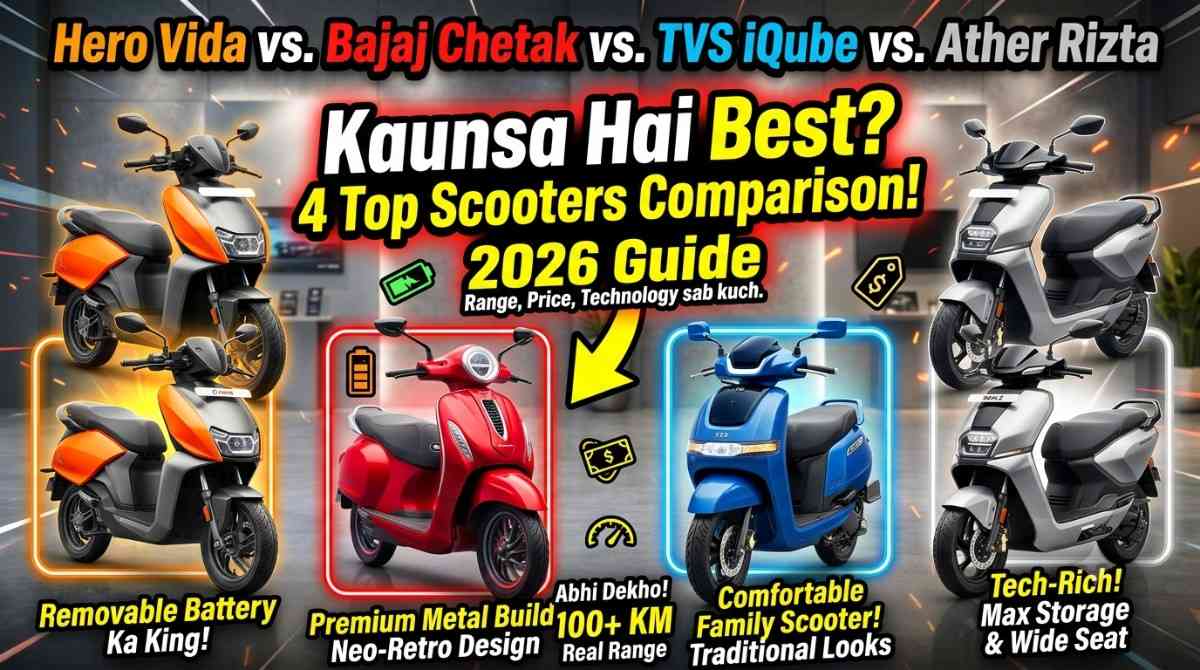
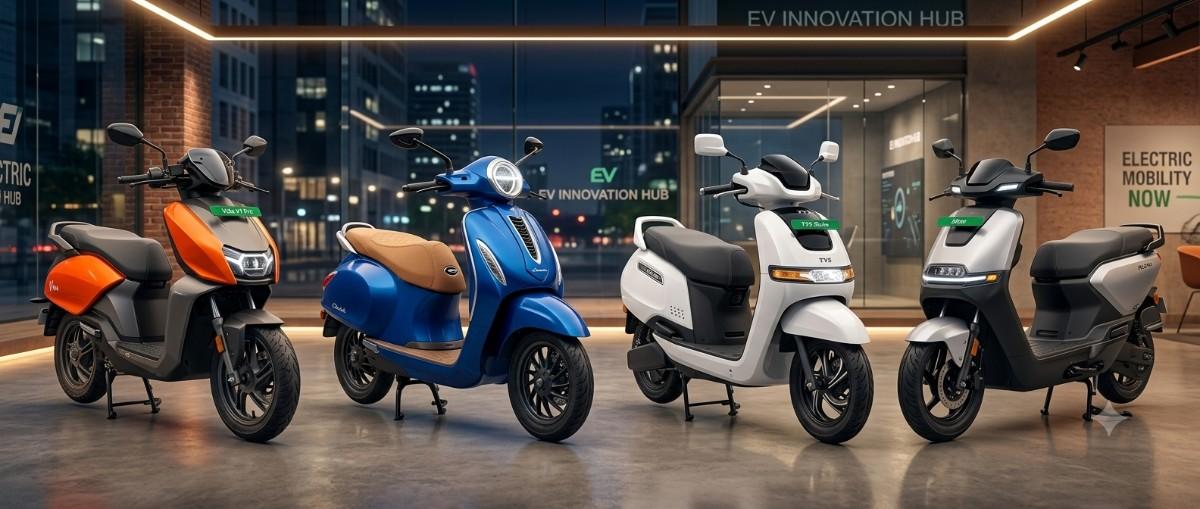
Choosing the right electric scooter no longer comes down to choosing between a few compromised options. The Indian EV market has matured rapidly, offering diverse options tailored to varying commuter needs—from removable batteries and retro styling to connected tech and high-capacity family haulers.
However, navigating battery capacities, advertised ranges versus real-world mileage, software packages, and post-purchase service can be daunting. Selecting an EV based purely on top-line figures often leads to buyer remorse, especially as battery health degrades over years of daily charging cycles.
This comprehensive guide breaks down the leading electric scooters in the market, analyzing their real-world usability, battery setups, ride dynamics, and ownership trade-offs to help you make an informed investment.
Best Electric Scooters in India
1. Hero Vida VX2: The Practical Flexibility Champion
Overview
The Hero Vida VX2 stands out as one of the most underrated offerings in the Indian EV space. While its unconventional styling may not appeal to everyone, its engineering prioritizes functional versatility, making it a strong contender for apartment dwellers without dedicated charging slots.
Battery & Range
The VX2 lineup is divided into two distinct battery configurations:
VX2 Go (2.2 kWh): Entry-level setup designed strictly for short urban errands.
VX2 Go (3.4 kWh): Features a dual-pack system utilizing two 1.72 kWh removable modules. Delivers an Indian Driving Cycle (IDC) claimed range of 142 km.
VX2 Plus (3.4 kWh): Shares the same 3.4 kWh dual-battery hardware as the 3.4 kWh Go variant, offering identical range figures alongside performance enhancements.
+-----------------------------------------------------------------------+
|                       Hero Vida VX2 Lineup                            |
+-----------------------------------+-----------------------------------+
|            VX2 Go                 |            VX2 Plus               |
+-----------------------------------+-----------------------------------+
| • 2.2 kWh or 3.4 kWh Options      | • 3.4 kWh Battery Pack            |
| • Standard Riding Modes           | • Dedicated Sports Mode           |
| • Practical Daily Commuter        | • 4.3-inch TFT Display            |
| • IDC Range: Up to 142 km         | • Faster Acceleration             |
+-----------------------------------+-----------------------------------+
Motor, Performance & Charging
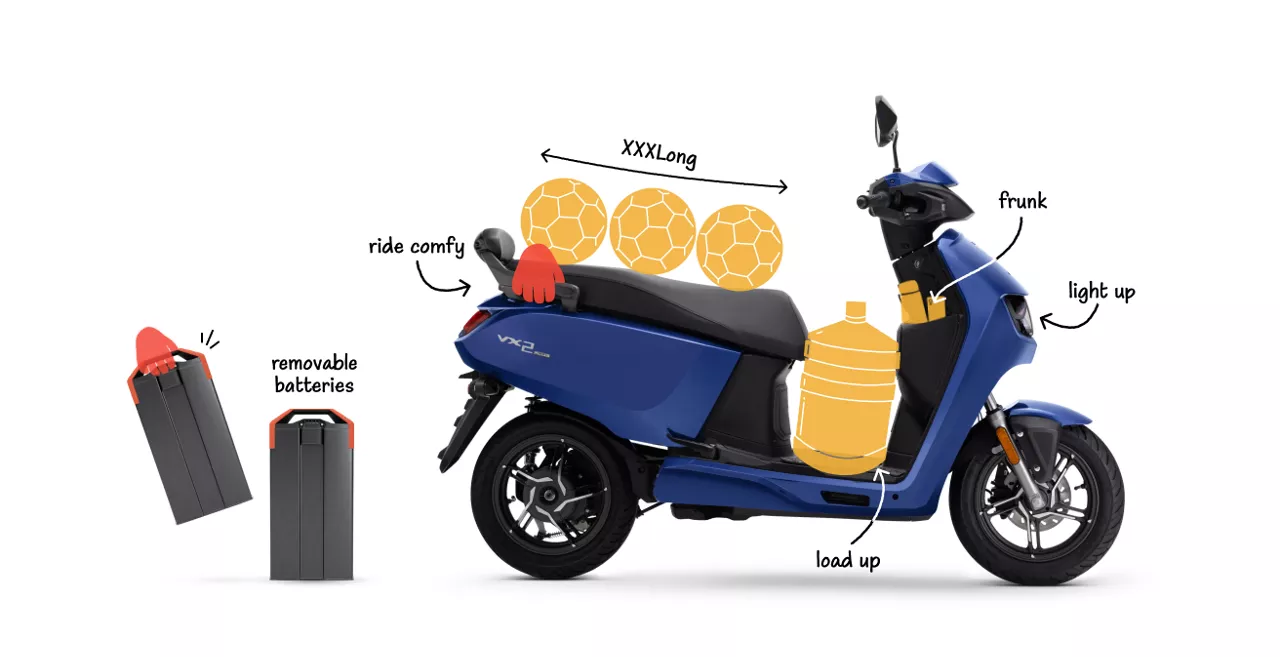
The primary highlight of the 3.4 kWh variants is the dual removable battery setup. Weighing approximately 11 to 12 kg each, these modules can be carried indoors for home or office charging.
For riders who prefer not to lug heavy battery packs upstairs, the VX2 also supports standard AC charging directly to the vehicle and is compatible with Ather’s public fast-charging grid.
Performance across the board is predictable and linear. The VX2 Plus variant adds a dedicated Sports Mode, unlocking higher top speeds and sharper throttle response for highway overtaking.
Ride Quality & Practicality
Suspension: Firmly tuned. It provides high-speed stability but feels stiff over sharp bumps and speed breakers.
Storage: Despite housing two removable battery bays, Hero engineered an adequate 21-liter under-seat storage compartment. While it won’t fit a full-face helmet, it accommodates daily groceries and a portable charger with ease.
Ergonomics: Neutral seating posture suitable for a wide range of rider heights and weights.
Pros
Removable batteries offer unmatched charging convenience for apartment residents.
Compatible with Ather’s extensive public fast-charging network.
Well-calibrated, predictable throttle delivery.
Decent under-seat storage despite the removable battery architecture.
Cons
Polarizing exterior aesthetics.
Stiff rear suspension setup on uneven roads.
2.2 kWh base model offers limited long-term range viability.
Best For
Riders living in high-rise apartments without dedicated ground-floor charging points who prioritize charging convenience.
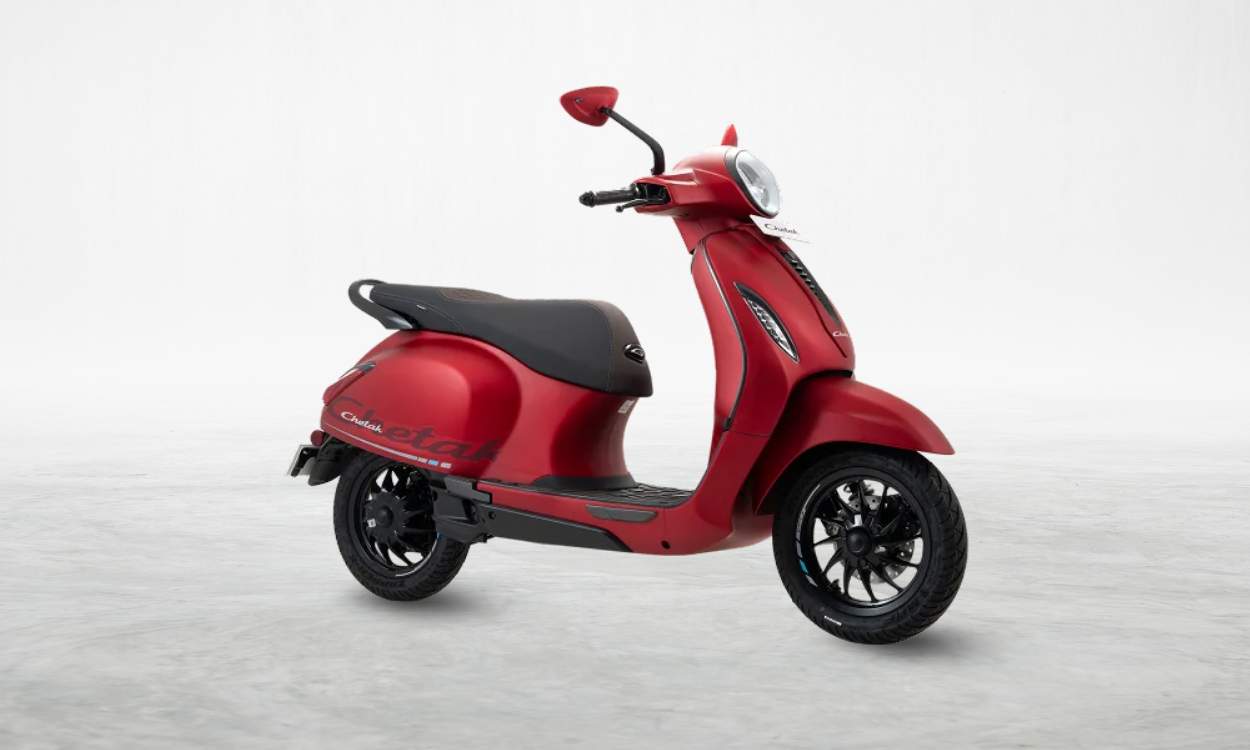
The Bajaj Chetak relies on heritage design cues, all-metal body construction, and premium fit-and-finish to secure its place near the top of the sales charts. It delivers a solid, rattle-free ride experience that appeals to traditional buyers transitioning from petrol scooters.
Battery & Range Options
Bajaj offers the Chetak across three fixed battery configurations:
2.5 kWh Variant: Delivers an IDC claimed range of 113 km, translating to a real-world range of roughly 70–80 km.
3.0 kWh Variant: Offers an upgraded IDC range of 127 km, providing a buffer for daily city commutes.
3.5 kWh Series: The flagship offering that yields higher top speeds, faster acceleration, and sustained long-distance usability.
Unlike the Vida, the Chetak uses a fixed battery setup. While this requires a dedicated charging spot in your parking area, it allowed Bajaj to optimize chassis balance and structural rigidity.
Braking performance varies significantly across the 3.5 kWh lineup:
The entry-level 3.5 kWh model uses front and rear drum brakes.
The higher-tier 3502 and 3501 variants feature a front disc brake setup, providing noticeably better stopping power.
To unlock the scooter’s full software capabilities, buyers can opt for the optional TecPac software package. This adds features such as geofencing, turn-by-turn navigation, hill-hold assist, data analytics, and custom display themes.
Ride Quality & Performance
The Chetak’s metal body construction gives it a grounded, planted feel at city speeds. Handling is neutral, and the suspension soaks up road imperfections gracefully without feeling floaty.
Pros
Premium metal bodywork with exceptional fit and finish.
Balanced chassis dynamics and comfortable suspension tuning.
Intuitive UI with rich connectivity options via the optional TecPac.
Proven reliability with a wide service footprint.
Cons
Fixed battery design requires a dedicated ground-floor charging outlet.
Key features locked behind the optional TecPac paywall.
Entry-level variants lack disc brakes.
Best For
Style-conscious urban commuters looking for a robust, neo-retro scooter backed by a widespread dealership network.
bajaj-chetak-
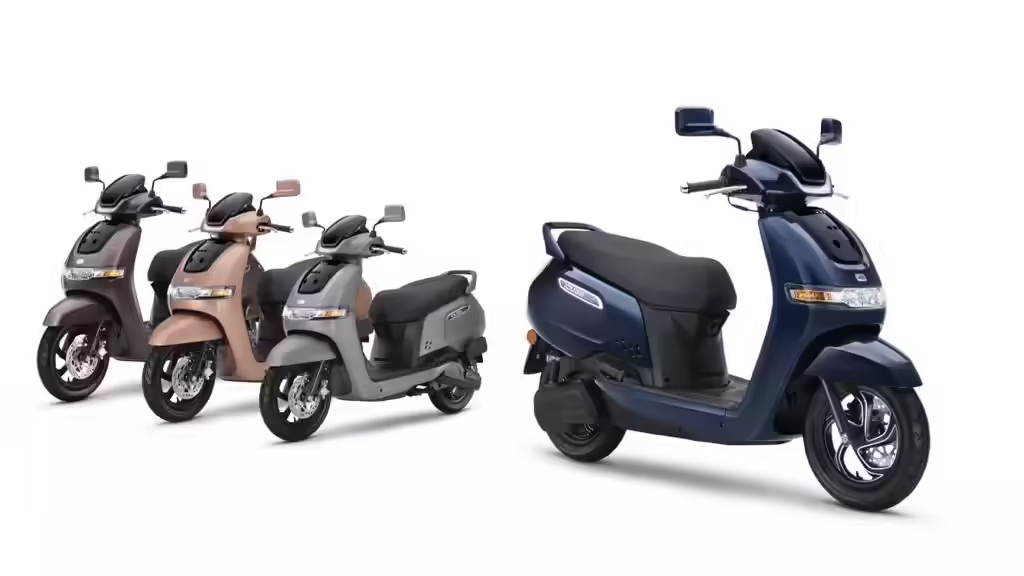
3. TVS iQube: The Conventional Family Commuter
Overview
The TVS iQube approaches electrification through a traditional lens. Designed to look, feel, and ride like a standard petrol family scooter, it bypasses avant-garde design experiments in favor of familiarity, ease of use, and passenger comfort.
Battery & Range
TVS caters to various budget tiers with four distinct battery choices:
2.2 kWh Variant: Affordable entry point aimed strictly at low-mileage city runs.
3.1 kWh Variant: The balanced mid-tier option for average daily commutes.
3.5 kWh Variant: Offers extended real-world range for heavy daily usage.
5.3 kWh Variant: The range-topping model packed with technology, yielding maximum distance per charge.
+-----------------------------------------------------------------+
|                    TVS iQube Range Hierarchy                    |
+-----------------+-----------------+-----------------+-----------+
|    2.2 kWh      |    3.1 kWh      |    3.5 kWh      |  5.3 kWh  |
+-----------------+-----------------+-----------------+-----------+
| Budget Entry    | Mid-Range       | Long Range      | Flagship  |
| Short Commutes  | Daily Driver    | Heavy Usage     | Max Range |
+-----------------+-----------------+-----------------+-----------+
Pricing Trends & Market Reality
The top-spec 5.3 kWh variant sits at the high end of the pricing spectrum. However, price rationalization across the EV sector has brought lower- and mid-tier iQube models closer to rival offerings.
For riders covering standard daily distances (under 40–50 km per day), the mid-spec 3.1 kWh and 3.5 kWh models offer a more sensible balance between upfront purchase cost and daily usability than the expensive 5.3 kWh flagship.
Design, Comfort & Ownership Experience
Design: Conservative styling that blends seamlessly into everyday traffic.
Comfort: Wide, plush seating with ample legroom and an accessible seat height, making it ideal for family members of all ages.
Service Considerations: While the vehicle itself is well-engineered, dealer service quality can vary by location. Prospective buyers should check local service center feedback before committing.
Pros
Familiar, conventional styling appeals to traditional buyers.
Excellent seat comfort and ergonomic setup for two riders.
Smooth, refined power delivery calibrated for easy city riding.
Diverse battery options across multiple price points.
Cons
Higher pricing tier-for-tier compared to some direct competitors.
Styling may feel overly conservative for younger buyers.
Service experiences can be inconsistent across regions.
Best For
Families seeking a seamless, hassle-free transition from conventional 110cc petrol scooters to electric mobility.
TVS iQube The Conventional Family Commuter
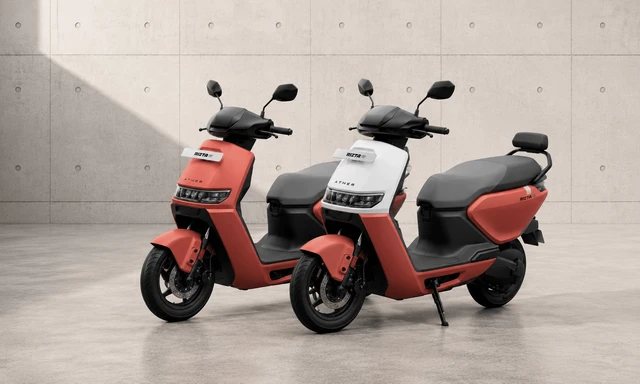
4. Ather Rizta: Tech-Rich Comfort for the Modern Family
Overview
Ather Energy built its reputation on the sharp, performance-oriented 450 series. With the Rizta, Ather shifted focus entirely toward practical family transportation. It combines modern software integration with generous physical proportions, setting new benchmarks for seat space and onboard storage.
Variants & Battery Configurations
The Ather Rizta is available in two primary trim levels—Rizta S and Rizta Z—offered with two battery options:
2.9 kWh Pack: Delivers an IDC claimed range of 123 km in Eco mode.
3.7 kWh Pack: Extends the IDC claimed range to 159 km in Eco mode.
Selecting the larger 3.7 kWh pack adds roughly ₹20,000 to ₹25,000 to the purchase price, but it provides necessary range headroom for longer daily commutes and accounts for natural battery degradation over time.
+-------------------------------------------------------------------+
|                        Ather Rizta Trim Matrix                    |
+---------------------------------+---------------------------------+
|            Rizta S              |            Rizta Z              |
+---------------------------------+---------------------------------+
| • 2.9 kWh or 3.7 kWh Battery    | • 2.9 kWh or 3.7 kWh Battery    |
| • DeepView LCD Display          | • Full-Color TFT Screen         |
| • Essential Smart Features      | • Auto-Hold & Advanced Tech     |
| • Standard Seat & Storage       | • Premium Backrest Included     |
+---------------------------------+---------------------------------+
Storage, Practicality & Ride Dynamics
Storage Capacity: The Rizta boasts one of the largest under-seat storage bays in its segment, easily accommodating helmets, bags, and daily groceries. An optional frunk (front trunk) further expands carrying capacity.
Ergonomics: Features an exceptionally long and wide seat engineered to seat two adults comfortably with space to spare.
Performance: Throttle calibration is smooth and progressive rather than aggressive. Riders looking for sharp acceleration may prefer the sports-focused Ather 450X or 450 Apex instead.
Pros
Class-leading under-seat storage space and cavernous seating comfort.
Polished software interface backed by reliable OTA updates.
Refined, smooth throttle tuning designed for passenger comfort.
Excellent build quality and chassis stability.
Cons
Higher price point when opting for the 3.7 kWh Z variant.
Lacks the punchy acceleration of the Ather 450 series.
Best For
Buyers seeking a spacious, tech-forward electric family scooter with maximum storage capacity and refined software.
Ather Rizta Tech-Rich Comfort for the Modern Family
The Elephant in the Room: Why Service Networks Matter
When evaluating an electric scooter, spec sheets and battery sizes only tell half the story. Long-term satisfaction heavily depends on post-purchase service support, spare parts availability, and software stability.
While brands like Ola Electric offer competitive spec-to-price ratios on paper, widespread customer complaints regarding long service delays, software glitches, and overburdened service centers make them harder to recommend unconditionally.
A slightly more expensive scooter backed by an accessible, responsive service network almost always delivers a better long-term ownership experience than a spec-heavy model with uncertain service support.
Comparative Specifications Breakdown
Feature / Model
Hero Vida VX2 (3.4 kWh)
Bajaj Chetak (3.5 kWh)
TVS iQube (3.5 kWh)
Ather Rizta (3.7 kWh)
Battery Type
Dual Removable (1.72 kWh x 2)
Fixed Pack
Fixed Pack
Fixed Pack
Claimed Range (IDC)
142 km
127+ km
125 km
159 km (Eco Mode)
Real-World Range (Est.)
95–105 km
90–100 km
90–100 km
105–115 km
Under-Seat Storage
21 Liters
~18 Liters
32 Liters
34+ Liters
Brake Setup
Front Disc / Rear Drum
Front Disc (3501/3502)
Front Disc / Rear Drum
Front Disc / Rear Drum
Target Audience
Apartment Dwellers
Style-Focused Riders
Traditional Families
Tech-Savvy Families
Electric Scooter Buying Guide: Key Factors to Consider
1. Match Battery Capacity to Real-World Needs
Manufacturer range figures use Indian Driving Cycle (IDC) test conditions, which rarely reflect real-world riding. Expect actual range to be 25% to 30% lower than claimed IDC numbers due to traffic, passenger weight, elevation, and aggressive throttle use.
Advertised IDC Range (e.g., 140 km)
       │
       ▼  Minus 25–30% (Traffic, Passenger Weight, Speed)
       │
Real-World Range (approx. 95–100 km)
Rule of Thumb: If your daily commute is 50 km, choose an EV with a claimed range of at least 110–120 km. Avoid entry-level 2.0–2.2 kWh batteries unless your daily running is strictly under 20–25 km, as capacity loss over 3–5 years will compromise daily usability.
2. Fixed vs. Removable Batteries
Removable Batteries: Essential for buyers living in high-rise apartments without ground-floor charging infrastructure. However, ensure you are comfortable lifting 11–12 kg battery modules regularly.
Fixed Batteries: Allow for better chassis balance, structural rigidity, and larger under-seat storage bays. Best for buyers with a dedicated ground-floor garage or charging point.
3. Software Features & Add-Ons
Many modern EVs lock advanced features like turn-by-turn navigation, hill-hold control, anti-theft tracking, and document storage behind subscription plans or upfront software packs (e.g., Bajaj TecPac, Ather Pro Pack). Account for these extra costs when budgeting.
EV Maintenance Tips for Long Battery Life
Avoid the 0% and 100% Extremes: Lithium-ion batteries experience the most strain at full charge or complete depletion. Keep your daily battery state-of-charge (SoC) between 20% and 80% whenever possible.
Manage Heat After Rides: Never plug your electric scooter into a charger immediately after a long, high-speed ride. Allow the battery pack to cool down for 20 to 30 minutes before charging.
Use Official Chargers: Always use the manufacturer-supplied charger or authorized fast-charging stations to protect the Battery Management System (BMS) from voltage spikes.
Maintain Tire Pressures: Under-inflated tires increase rolling resistance, drastically reducing real-world range and causing premature tire wear.
Keep Software Updated: Install official Over-The-Air (OTA) firmware updates promptly to ensure your BMS operates on the latest efficiency and safety algorithms.
Frequently Asked Questions (FAQs)
1. What is the difference between claimed IDC range and real-world range?
IDC (Indian Driving Cycle) range is measured under ideal laboratory conditions with constant speeds and low payloads. Real-world range accounts for stop-and-go traffic, varying rider weight, pillion passengers, road inclines, and headwind resistance, typically resulting in a 25–30% reduction from claimed figures.
2. Is it safe to charge an electric scooter overnight?
Modern electric scooters come equipped with smart Battery Management Systems (BMS) that automatically cut off power once charging reaches 100%. However, to maximize long-term lithium-ion health, it is best practice to unplug the vehicle once fully charged rather than leaving it connected for days.
3. How much does it cost to replace an electric scooter battery pack?
Battery replacement costs vary depending on capacity and chemistry, typically ranging between ₹30,000 and ₹60,000. However, most manufacturers offer 3-year or 30,000 km to 50,000 km battery warranties that cover excessive capacity degradation.
4. Can I ride an electric scooter in heavy rain?
Yes. Modern EV scooters carry IP67 ratings for their critical powertrain components, including the battery pack and motor. This ensures protection against water ingress during rain and mild waterlogging. Avoid riding through deep standing water that submerges the floorboard.
5. Should I choose a removable battery EV over a fixed battery EV?
Choose a removable battery EV (like the Hero Vida VX2) if you live in an apartment without a dedicated parking level socket. Choose a fixed battery EV if you have dedicated charging access, as fixed setups generally offer better storage capacity and handling balance.
6. Are fast chargers harmful to the scooter’s battery?
Frequent reliance on high-output DC fast chargers generates heat, which can accelerate long-term battery degradation over time. Use standard AC slow charging for daily overnight top-ups and reserve public fast charging for long trips or emergencies.
7. How often does an electric scooter require servicing?
Electric scooters have significantly fewer moving parts than internal combustion engine (ICE) vehicles. Service intervals typically occur every 5,000 km or 6 months to inspect brake pads, suspension bushings, steering head bearings, tire wear, and firmware updates.
8. Does cold or hot weather affect electric scooter performance?
Yes. Extreme ambient heat or cold impacts chemical reactions inside lithium-ion cells. High temperatures can cause the BMS to temporarily throttle performance to prevent overheating, while extreme cold can temporarily reduce total usable range.
Final Verdict
There is no single “best” electric scooterfor every buyer; the right choice depends on your specific lifestyle requirements:
Choose the Hero Vida VX2 if you live in a multi-story apartment and need the ultimate convenience of removable batteries combined with access to public fast-charging networks.
Choose the Bajaj Chetak if you value classic styling, all-metal build quality, and a robust ride feel backed by a trusted national dealership footprint.
Choose the TVS iQube if you want a straightforward family commuter that mirrors the familiar design and easy ergonomics of a conventional 110cc petrol scooter.
Choose the Ather Rizta if you want a spacious, tech-focused family scooter offering class-leading storage capacity, plush seating, and top-tier software integration.
Before making your final decision, visit local dealerships, inspect the post-purchase service facilities, and take a extended test ride with a pillion passenger to evaluate real-world comfort and performance.